
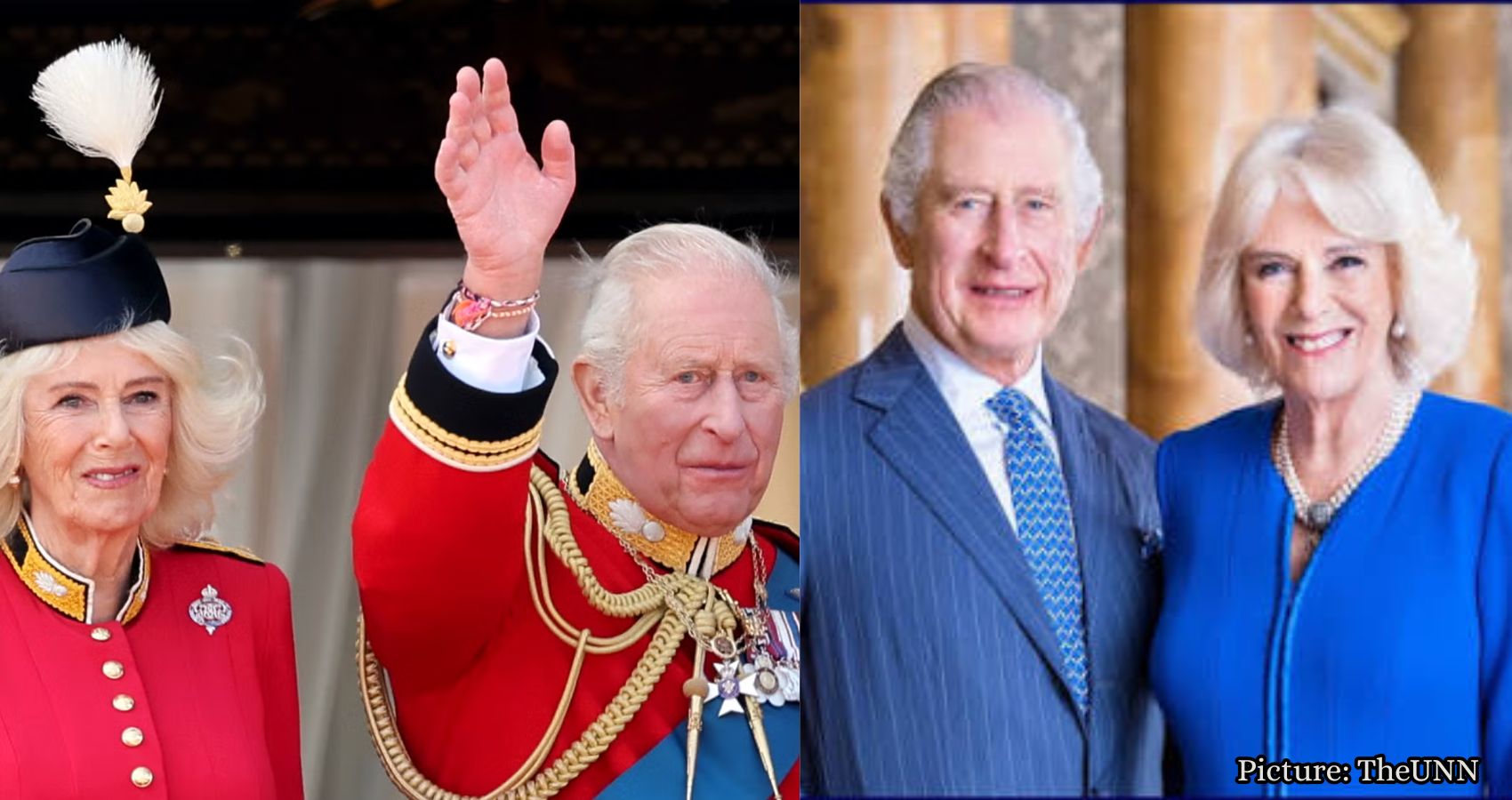
King Charles III and Queen Camilla will not reside at Buckingham Palace after its £369 million refurbishment, marking a significant shift in royal tradition and enhancing public access to the historic site.
In a historic departure from centuries of royal tradition, King Charles III and Queen Camilla will not move into Buckingham Palace upon the completion of its decade-long, £369 million structural refurbishment next year. According to the newly released annual Sovereign Grant accounts, the landmark building will continue to serve as the administrative, ceremonial, and operational headquarters of the British monarchy, but Clarence House will remain the King’s official London residence for the remainder of his reign.
Royal officials stated that the decision was made to expand public access to the state rooms, lengthen the tourism season, and avoid the logistical upheaval of relocating the monarchs and their staff. This development coincides with unprecedented structural transparency regarding royal finances, including the first-ever public disclosure of the King’s personal income tax liabilities.
King Charles III and Queen Camilla will not establish residency at Buckingham Palace when its comprehensive £369 million restoration project finishes next spring, according to official financial portfolios released by the Royal Household on Thursday.
The decision breaks with a continuous precedent stretching back to 1837, when Queen Victoria designated the 775-room palace as the official London residence of the reigning British sovereign. While the landmark structure will remain the administrative center of “Monarchy HQ” and host state banquets, garden parties, and credentialing ceremonies for foreign ambassadors, the King has opted to maintain his permanent urban residence at nearby Clarence House.
Royal trustees and palace administrators emphasized that the primary motivation for the residential adjustment is the maximization of public utility and commercial tourism. By keeping the private residential quarters unoccupied by the sovereign, security protocols can be structurally eased, permitting a broader flow of tourists and extending the seasonal opening of the State Rooms.
The revelation regarding the King’s living arrangements was presented within the broader framework of the annual Sovereign Grant report, which details the public funding mechanism allocated to the monarchy for official duties, payroll, and estate maintenance. The Sovereign Grant, which is mathematically anchored to a percentage of the profits generated by the independent land and property portfolio known as the Crown Estate, is projected to peak at £137.9 million for the 2026–27 fiscal year to absorb the concluding expenses of the Buckingham Palace restoration.
Following the scheduled completion of the renovation works in March 2027, the funding framework will undergo a legislated downward adjustment. A statutory review conducted by the Royal Trustees—a body comprising Prime Minister Keir Starmer, Chancellor of the Exchequer Rachel Reeves, and Keeper of the Privy Purse James Chalmers—recommended that the reference percentage of Crown Estate profits used to calculate the grant be recalibrated to 20.5% for the five-year period stretching from 2027–28 through 2031–32.
This policy adjustment will drop the baseline Sovereign Grant down to £99.9 million in 2027–28. This represents a significant long-term increase from the core grant of £51.8 million allocated during the 2024–25 period, a trajectory driven by expanding revenues within the Crown Estate’s offshore wind portfolio.
The extensive capital works at Buckingham Palace, known formally as the Reservicing Programme, commenced in 2017 under the reign of Queen Elizabeth II. The ten-year initiative was authorized by Parliament after an independent architectural survey concluded that the building’s infrastructure faced severe vulnerabilities.
Prior to the intervention, major components of the palace’s internal grid had not been systematically updated since the 1950s. The £369 million project has focused on replacing thousands of meters of aging vulcanized rubber electrical cabling, legacy lead plumbing, obsolete hot water pipework, and commercial-grade boilers that presented acute risks of catastrophic electrical fires or water damage to the historic structure and the Royal Collection art assets housed within.
Because both King Charles, 77, and Queen Camilla, 78, are well established within their domestic routines at Clarence House—where they have resided since their marriage in 2005—officials conceded that avoiding a late-life domestic relocation was a practical factor. The transition of personal staff, security infrastructure, and private property across the short distance separating the two estates was deemed an unnecessary disruption.
By keeping the sovereign out of permanent residence, the Royal Household plans to expand the palace’s operational capacity as a public attraction. Currently, the palace welcomes approximately 700,000 visitors annually, primarily during the summer openings of the State Rooms and selected winter tours. The new arrangement allows for longer seasonal openings and broader physical access to the newly renovated East Wing and the King’s Gallery.
“His Majesty retains huge affection for Buckingham Palace and a deep respect for its role in royal and public life,” a palace spokesperson stated during the official financial briefing, maintaining a poised and deliberate delivery. “It will be a buzzing hive of royal activity in every other way. The palace will continue in every traditional way to be the beating heart of the monarchy, just not its resting head.”
Despite these assurances, anti-monarchy advocacy groups and independent legislative watchdogs raised immediate transparency and expenditure concerns. Graham Smith, Chief Executive Officer of the republication campaign organization Republic, challenged the fiscal rationale of finishing a multi-hundred-million-pound residential refit only to leave the residential quarters unutilized.
“The government agreed to spend £369 million on refurbishing Buckingham Palace, and now Charles doesn’t want to use it,” Smith noted in a critical assessment of the figures. “Despite ongoing concerns about the huge cost of the royals, the grant will remain hugely inflated on its initial level of £31 million in 2012. If that had risen by inflation, the grant would stand at £45 million, not nearly £100 million. Clearly, the palace needs to be fully open to the public all year round, rather than kept under lock and key.”
To maintain the symbolic continuity of the state, official protocols will be adjusted to reflect the dual-operational status of the London properties. When the King is working within the capital, the Royal Standard will fly simultaneously from the roofs of both Buckingham Palace and Clarence House.
James Chalmers, the Keeper of the Privy Purse, clarified that while the King’s primary domestic base remains unchanged, the structural layout of the renovated palace still preserves a functional space for the sovereign.
“I can update you that after careful consideration, and to greatly increase opportunities for public access, the King and Queen have decided not to adopt Buckingham Palace as a personal residence,” Chalmers explained to reporters in a structured briefing room at the palace. “Their Majesties will, however, have access to private rooms within the palace where they can retire during the course of a working day, and which could be utilized as potential residential accommodation in times ahead. This is both a change from the past and a recognition of the future.”
The decision leaves open the long-term question of future occupancy. Prince William, the Prince of Wales, has recently established his primary family residence at Windsor and has reportedly dropped no hints that he intends to occupy the 775-room London palace when he eventually succeeds to the throne, signaling a broader, generational shift in how the royal real estate portfolio is utilized by the modern state, according to Source Name.