
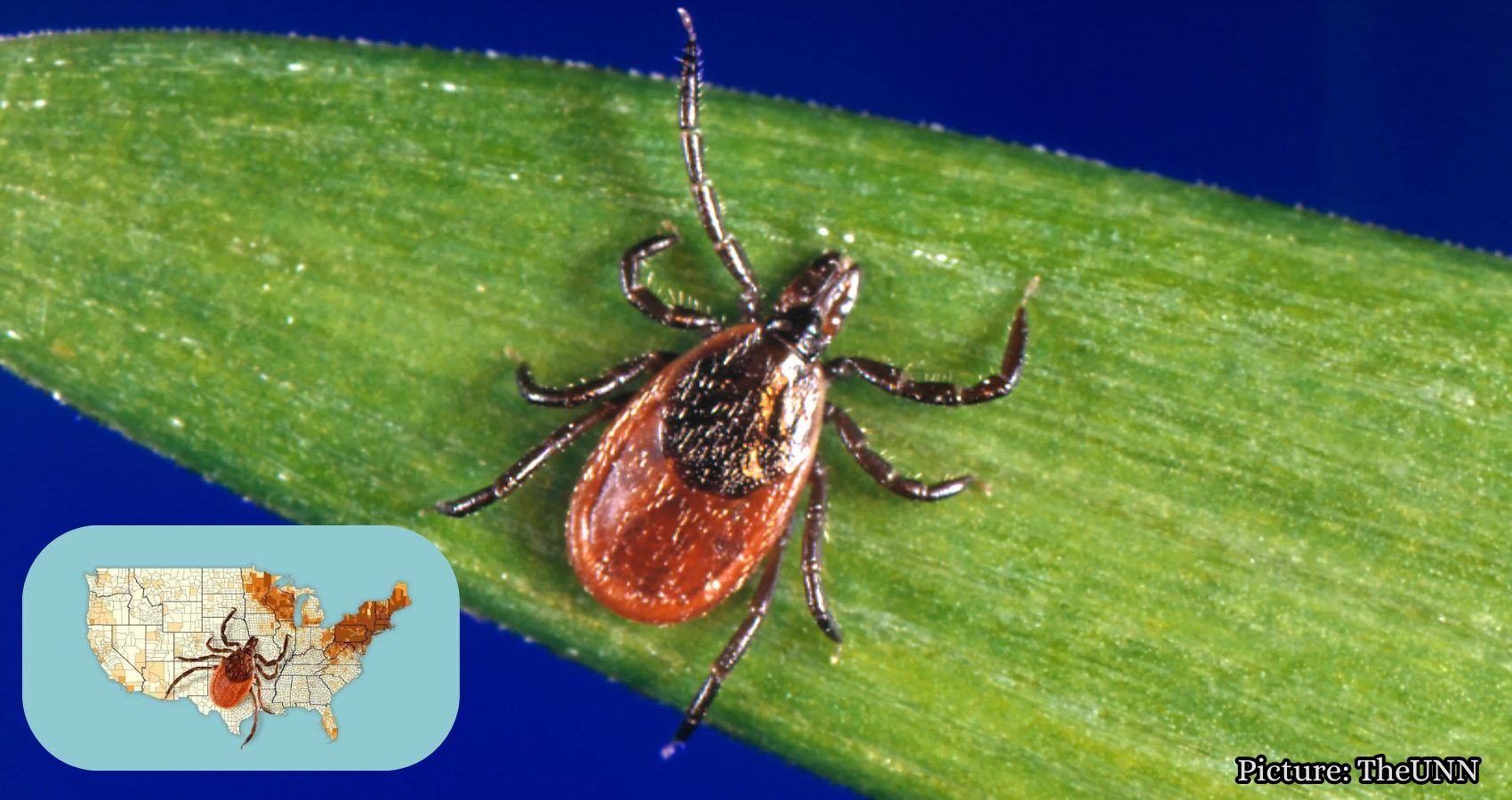
Powassan virus, a rare tick-borne illness, has reached record highs in the U.S. in 2025, with 76 cases reported and no available vaccine, raising public health concerns.
Powassan virus, a rare and potentially fatal tick-borne illness, has been making headlines as cases in the United States soar to unprecedented levels. The virus can be traced back to a tragic case in 1958 involving a young boy in Canada, which ultimately led to its identification.
The disease is named after the Ontario town where it was first discovered. Lincoln Byers, a four-year-old boy, succumbed to an illness that baffled medical professionals at the time. Years later, researchers identified a tick carrying the same virus on a dead squirrel, shedding light on the mystery and foreshadowing a growing public health challenge.
According to data from the Centers for Disease Control and Prevention (CDC), 2025 has seen a record 76 diagnoses of Powassan virus in the U.S., a stark increase from the previous average of just seven to eight cases annually. The virus is primarily transmitted to humans through the bite of infected woodchuck ticks or deer ticks, with transmission peaking from late spring to mid-fall when tick populations are at their highest and outdoor activities increase.
Public health experts are sounding the alarm about the virus’s rapid transmission, which makes it particularly dangerous. Dr. Jorge P. Parada, a medical advisor at the National Pest Management Association in Chicago, emphasized the urgency of the situation. “One of the most dangerous aspects is its rapid transmission,” he stated. “Powassan can be transmitted in as little as 15 minutes after the infected tick bites, while Lyme disease usually requires a 36- to 48-hour attachment time for transmission.”
While Powassan remains rare compared to Lyme disease, its speed of transmission raises significant clinical concerns. Dr. Marc Siegel, a senior medical analyst for Fox News, confirmed that Powassan transmits significantly faster than Lyme disease, with an incubation period of one to four weeks before symptoms appear.
Initial symptoms of Powassan virus infection can include fever, headache, vomiting, and weakness. Some individuals may remain asymptomatic, according to the CDC. However, the virus can escalate to severe neurological complications, such as encephalitis (inflammation of the brain) and meningitis (inflammation of the membranes surrounding the spinal cord).
In severe cases, patients may experience confusion, loss of coordination, difficulty speaking, and seizures. Approximately 10% of Powassan cases that involve severe neurological disease are fatal, and many survivors face long-term neurological issues.
Currently, there are no specific medications or vaccines available to treat or prevent Powassan virus. Clinical care is limited to supportive therapy, which may include intravenous fluids and respiratory support. While anyone can develop severe illness from the virus, those at the highest risk include children, older adults, and individuals with compromised immune systems.
The rising number of Powassan virus cases underscores the need for heightened awareness and preventive measures as the tick season approaches. Experts urge the public to take precautions when spending time outdoors, particularly in areas where ticks are prevalent.
As the situation evolves, continued monitoring and research will be essential in addressing this emerging public health threat, according to Fox News.