
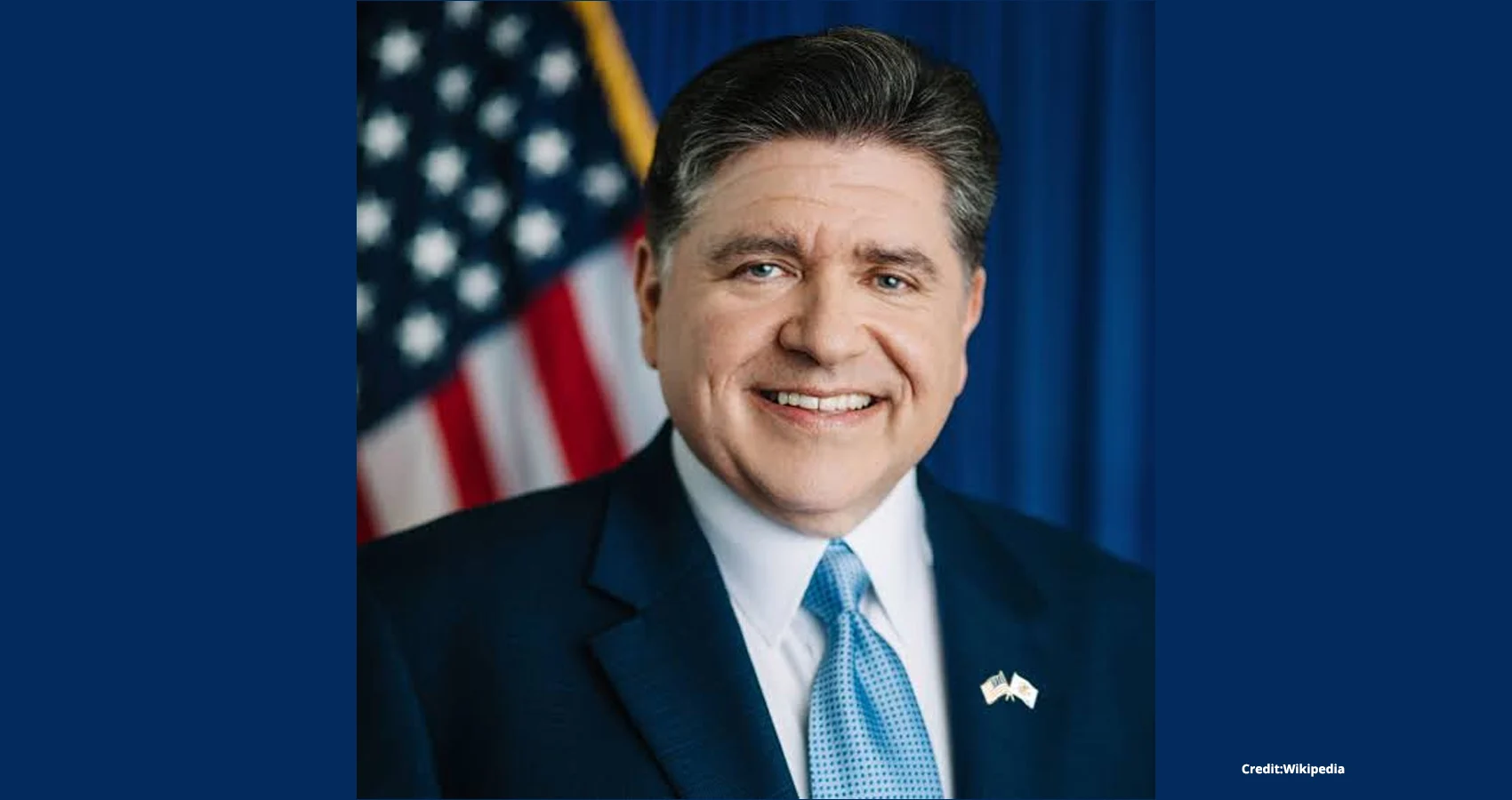
Illinois Governor JB Pritzker faces criticism for opting out of the Federal Scholarship Tax Credit program, with parents and advocacy groups accusing him of prioritizing politics over educational opportunities for children.
Illinois Governor JB Pritzker, a Democrat, has come under fire for his decision to opt out of the Federal Scholarship Tax Credit program, a move that has sparked accusations from parents and education advocacy groups that he is prioritizing partisan politics over the educational needs of children.
Pritzker announced his decision on Tuesday, stating that Illinois will not participate in the program, which was established under the One Big Beautiful Bill Act signed into law by former President Donald Trump last year. The governor characterized the program as a school voucher initiative, a claim that advocacy groups contest.
“At a time when public school education needs investments more than ever, we should not siphon money from public schools for private education—especially as the Trump Administration’s policies decimate education,” Pritzker said in a statement. “We have a responsibility to do right by all of our students. Taxpayer funding should not subsidize donations to private schools that could discriminate based on religion, sexual orientation, or other characteristics.”
The Federal Scholarship Tax Credit program allows individuals to receive federal tax credits for donations of up to $1,700 to authorized scholarship-granting organizations (SGOs). These organizations then distribute the funds to eligible families for various educational expenses, including private school tuition, tutoring services, and textbooks.
In an interview with Fox News Digital, Teach Coalition CEO Sydney Altfield expressed her organization’s disappointment with Pritzker’s decision to opt out of the program. She emphasized that not only does this decision prevent Illinois children and families from receiving scholarships, but it also means that the potential $2 billion in scholarship funds will likely flow to families in other states instead.
“Not only did he opt kids out of his state and families out of his state from receiving scholarships, but the program allows for Illinois residents to still claim the tax credit,” Altfield explained. “What that means is that money that should have and could have gone to students and families in Illinois will now just move over the border and flow out of state.”
Pritzker defended his decision, stating that opting out reaffirms his commitment to strengthening public schools in Illinois by ensuring that federal taxpayer resources remain available to the students and communities they are intended to serve. However, Altfield challenged Pritzker’s characterization of the program as a voucher scheme, asserting that it does not divert funds from public schools.
<p”In the same vein of him opting out, he completely misrepresented this program, saying that it is a voucher scheme. It is by definition not a voucher. It does not take a dollar from [the] public school systems,” Altfield stated. “All it does is incentivize taxpayers to use their federal tax dollars for scholarship money. And instead of it helping families in Illinois, it will now help families outside.”
Altfield further noted that public school students could benefit from the program, as the majority of Illinois students attend public schools. She argued that most taxpayers in the state would designate their tax dollars to support SGOs, which in turn would benefit public school students.
Critics have accused Pritzker of placing children in the middle of a partisan political battle over an issue that could foster bipartisan cooperation. While Pritzker opted out, other Democratic governors, including Jared Polis of Colorado, Kathy Hochul of New York, and Michelle Lujan Grisham of New Mexico, have opted into the program, joining numerous Republican governors.
Some states that have already opted into the program may see changes in leadership, as governors-elect signal intentions to withdraw. For instance, Colorado’s governor-elect, Phil Weiser, has indicated plans to exit the program.
“I think it’s really sad to see—to put kids in the middle of partisan politics,” Altfield remarked regarding Pritzker’s decision. “Many blue state governors—Gov. Hochul, Gov. Polis in Colorado, and the New Mexico governor—have put politics aside and have put kids first. I think that if governors can peel back whatever misconceptions they are reading and they can read the program for what it is, it is bipartisan. It will have bipartisan support because education, kids, and families are the ones that are going to be successful in this.”
Altfield expressed hope that more Democratic governors would consider opting into the program before the January 1 deadline, highlighting the potential benefits for families facing financial challenges amid rising concerns about affordability in Illinois and across the nation.
“We all know that affordability is the number one issue that Democrats and everyone is running on, and everyone is feeling a pinch of the penny across the country,” she said. “This is a real opportunity that has money flowing into the state of Illinois that could have helped families that are pinching every dollar. For the working mom of two or three or four, she may have one or two jobs, three jobs. Where is she sending her kid after school? Is she paying for after-school care? The tax credit program could have offered her a scholarship to help cover those costs.”
Altfield also pointed out that teachers often spend their own money on school supplies, estimating that they pay over $800 out of pocket each year. “Imagine if every low-income kid came to school with all of the school supplies needed. That teacher would not have to pay out of pocket. It’s small things like this that really add up in a pocketbook that are now not available to the families and the students in Illinois,” she concluded.
As the debate continues, the implications of Pritzker’s decision on educational opportunities for Illinois families remain to be seen, with advocates urging a reconsideration of the program’s potential benefits.
According to Fox News.