
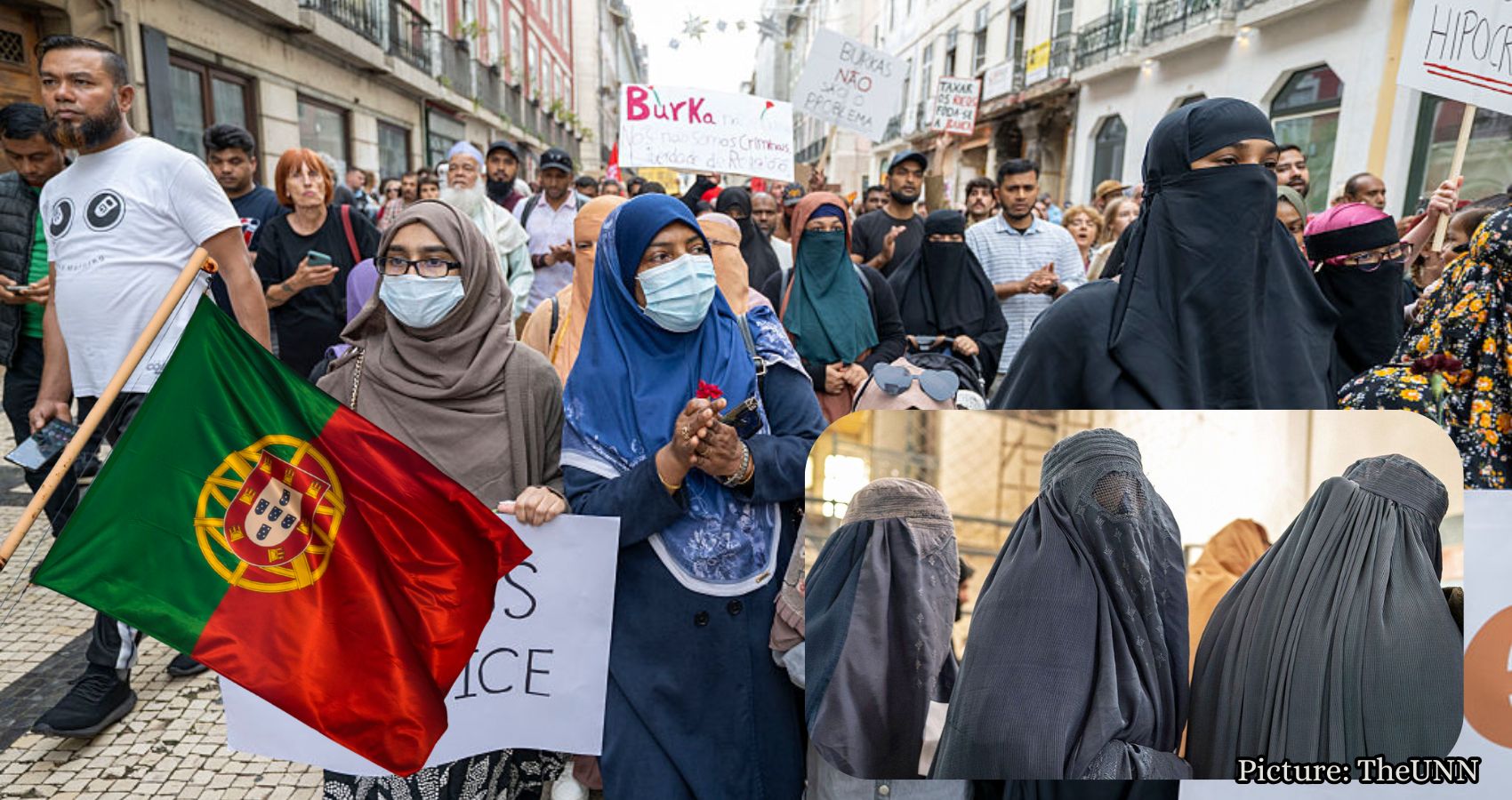
Portugal has enacted a law prohibiting face coverings in public, a measure primarily seen as targeting Muslim women, with specific exceptions outlined.
Portuguese President António José Seguro has officially enacted a law that largely prohibits individuals from covering their faces in public spaces. This legislation, often referred to as the “burqa law” by local media, has drawn attention for its perceived focus on Muslim women, according to a report by AFP.
The law includes several exceptions, allowing face coverings for health reasons, professional requirements, artistic expression, or due to weather conditions. Additionally, individuals are permitted to cover their faces while in places of worship, diplomatic missions, or when traveling on airplanes.
Violators of this new law may face fines ranging from 150 euros to 3,000 euros, which translates to approximately $175 to $3,500. The final version of the measure was adopted by the Portuguese parliament last month, reflecting a significant shift in public policy regarding face coverings.
According to the legislation, the ban specifically targets coverings that obscure a person’s face or hinder identification in public areas. It also prohibits any requirement for individuals to cover their faces based on gender, religion, age, or origin.
In a press release, President Seguro emphasized that an uncovered face is essential for fostering social trust, a fundamental aspect of Portuguese society. He stated, “Social integration, non-discrimination based on gender, and the security resulting from similar decisions by the European Court of Human Rights underpin this decision.” The president echoed the court’s belief that the face is central to human identity and communication, serving as a basic element for mutual recognition among citizens.
Furthermore, the president argued that requiring women to conceal their faces entirely creates an imbalance that contradicts the values of equality and dignity that are foundational to European democracies. He asserted that such practices are incompatible with the principles of parity that shape modern societies.
This law has sparked discussions about cultural identity, religious freedom, and women’s rights in Portugal and beyond. As European nations continue to grapple with issues surrounding immigration and integration, Portugal’s decision reflects a broader trend in the region regarding face coverings and public expression.
As the law takes effect, it remains to be seen how it will be enforced and how it will impact the lives of those affected, particularly Muslim women who may feel targeted by such regulations. The implications of this legislation will likely continue to be a topic of debate in both political and social spheres.
According to AFP, the enactment of this law marks a significant moment in Portugal’s legislative history, as it navigates the complexities of cultural diversity and national identity.