
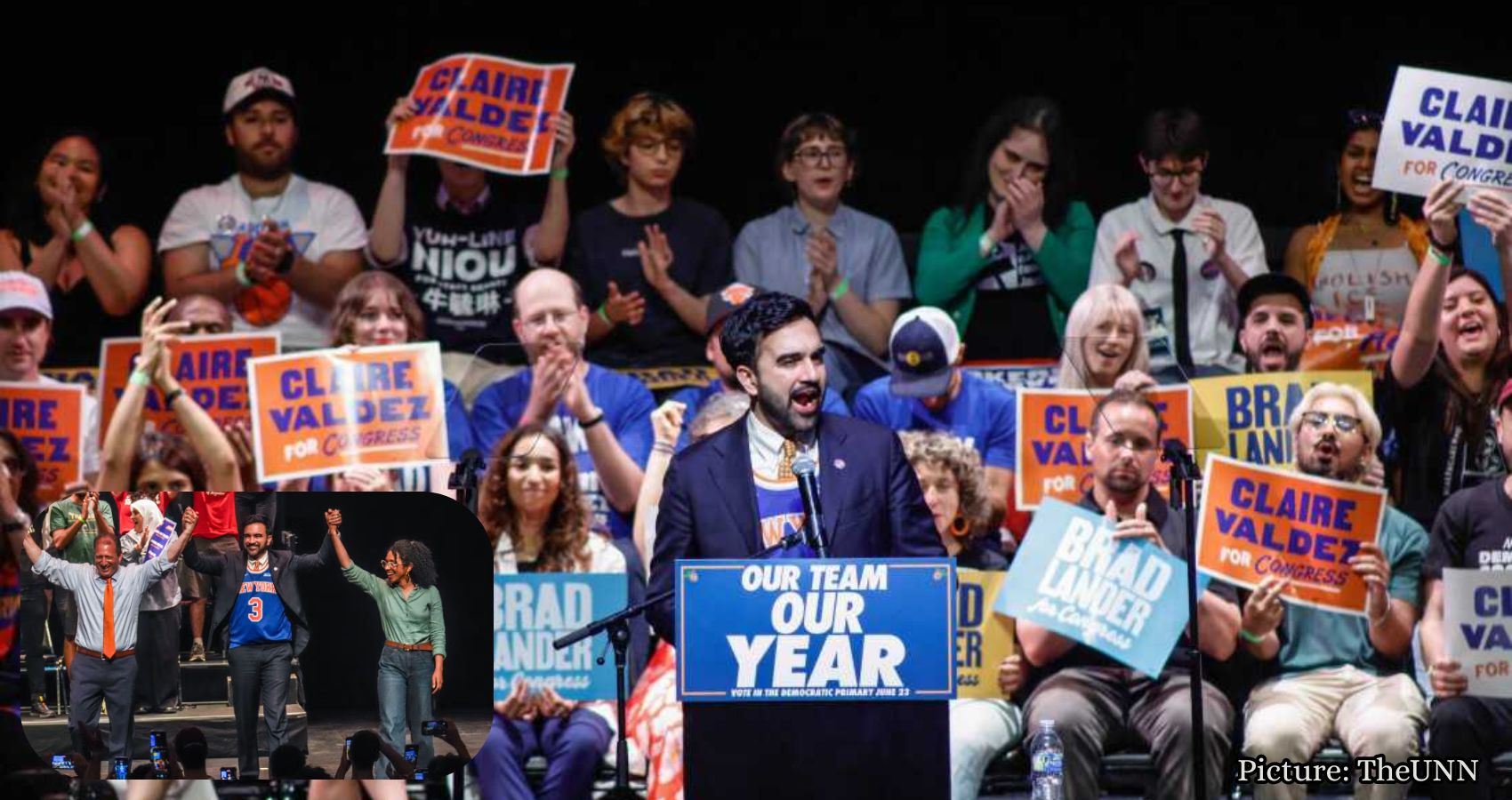
New York City Mayor Zohran Mamdani demonstrated his political influence by successfully endorsing progressive candidates in key Democratic primaries, reshaping the landscape of local politics.
New York City Mayor Zohran Mamdani made a significant impact in the recent Democratic U.S. House primaries, endorsing three progressive candidates who triumphed over establishment-backed opponents. This outcome not only resulted in the defeat of two incumbents but also paved the way for two self-identified democratic socialists to likely secure seats in Congress from their overwhelmingly Democratic districts.
Mamdani framed his endorsements as a means to elect “better Democrats” who would prioritize the needs of working people in the political arena. While his approach raised eyebrows among some Democratic leaders, the results underscored Mamdani’s growing influence within the party.
On the same election day, a fierce battle unfolded within the artificial intelligence industry, with two rival factions pouring millions into a House race that became a proxy for tech regulation debates.
Meanwhile, former President Donald Trump, after witnessing two of his endorsed candidates lose in earlier Republican primaries, took proactive measures to ensure success in South Carolina. He endorsed both candidates in a runoff, resulting in a victory for one of them.
When Mamdani took the stage in Brooklyn on election night, the crowd erupted in chants of “DSA,” a nod to the Democratic Socialists of America. This moment highlighted the rising prominence of a political movement that Mamdani is closely associated with, particularly as two of the candidates he endorsed identify as democratic socialists.
In the primary contest for the seat of retiring U.S. Representative Nydia Velázquez, state Assembly Member Claire Valdez emerged victorious over Brooklyn Borough President Antonio Reynoso, who had the backing of Velázquez. In another notable race, Democratic U.S. Representative Adriano Espaillat lost his reelection bid to Darializa Avila Chevalier, a Mamdani-supported candidate who has no prior public office experience but was active in organizing pro-Palestinian protests at Columbia University.
Additionally, former city comptroller Brad Lander, another candidate endorsed by Mamdani, defeated U.S. Representative Dan Goldman by positioning himself to the left of Goldman. This race was notably influenced by the ongoing conflict in Gaza, with Lander criticizing Goldman for his perceived lack of criticism towards Israel.
All three candidates who won their primaries are expected to secure their positions in Congress, further solidifying Mamdani’s allies in the legislative body come January.
In Manhattan, a crowded Democratic primary turned into a battleground between two influential factions within the artificial intelligence sector, largely due to the candidacy of New York Assemblyman Alex Bores. Bores, a former employee of Palantir, left the company citing ethical concerns and has been a proponent of one of the most comprehensive state-level AI regulation bills in the country. He indicated that this legislation would serve as a model for his approach to regulation in Congress.
Bores’ candidacy attracted significant financial attention, with a political group funded by investors in OpenAI spending over $7 million in attack ads against him. Conversely, a rival group associated with Anthropic came to his defense with more than $10 million in support.
Ultimately, Bores did not win the primary, which was claimed by Assemblymember Micah Lasher, a seasoned political figure backed by Democratic leadership. Lasher had previously criticized Bores, suggesting that he would be beholden to the interests of the tech companies that supported him.
“I have some news for the two big AI companies who’ve taken such an unusual interest in who won this congressional seat,” Lasher declared on election night. “I won’t be taking my cues from either of you when it comes to protecting our kids, our jobs, our environment.”
In addition to Bores and Lasher, the primary field included Jack Schlossberg, the grandson of former President John F. Kennedy, and former Republican lawyer George Conway.
The results of these primaries not only reflect the shifting dynamics within the Democratic Party but also signal a growing acceptance of progressive ideologies among voters in New York City, as evidenced by Mamdani’s successful endorsements.
As the political landscape continues to evolve, the influence of figures like Mamdani will likely play a crucial role in shaping future electoral outcomes, especially in a city known for its diverse political views.
According to The Associated Press, the implications of these primary results could resonate well beyond New York, potentially influencing national conversations around progressive policies and the future of the Democratic Party.