
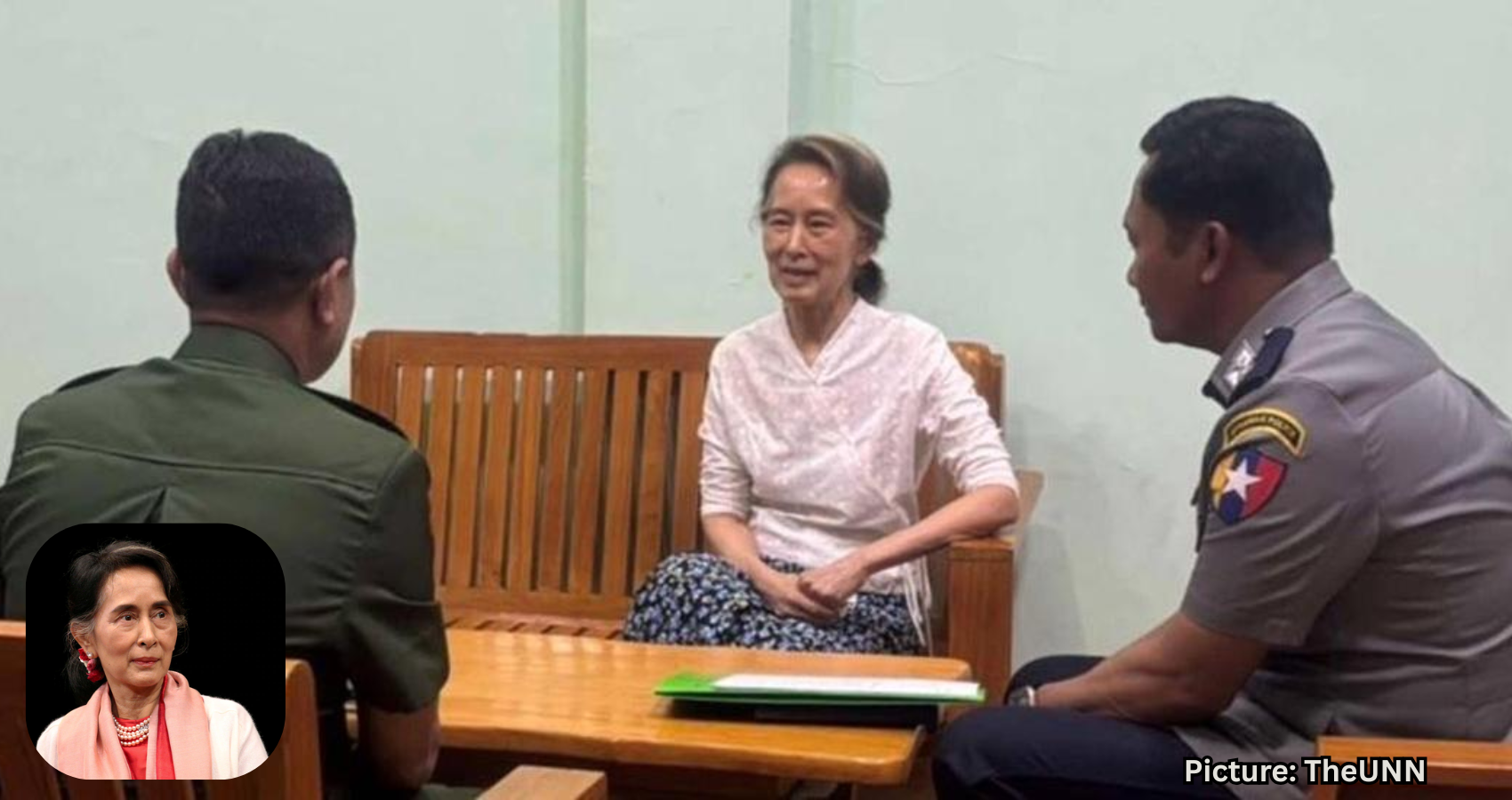
Myanmar’s military-led government has transferred Aung San Suu Kyi from prison to house arrest, a decision described as a gesture of goodwill amid ongoing political turmoil.
Myanmar’s military-led government has moved former state counsellor and civilian leader Aung San Suu Kyi from prison to house arrest, commuting the remainder of her sentence in a decision officials characterized as a gesture of goodwill.
On April 30, Myanmar’s Ministry of Information announced that President Min Aung Hlaing, the military chief who orchestrated the 2021 coup and currently heads the government, “has decided to commute the remaining sentences of Daw Aung San Suu Kyi, who is currently serving her sentence at Nay Pyi Taw Prison, to be served under house arrest.”
Aung San Suu Kyi was the state counsellor and de facto leader of Myanmar’s democratically elected civilian government, which was overthrown by the military in February 2021. Since the coup, she has faced multiple charges, resulting in a significant prison sentence.
Min Aung Hlaing, the senior general who led the coup and now leads the ruling junta, was elected president by a military-backed parliament on April 3, following elections conducted without the participation of Aung San Suu Kyi’s National League for Democracy (NLD), which has been banned since the coup. Following his election, Min Aung Hlaing indicated possible amnesties as part of efforts to promote what the military describes as social reconciliation, amid ongoing international isolation of the regime.
Myanmar has been grappling with increasing economic strain and persistent conflict with various ethnic armed groups since the coup. The Ministry stated that the decision to transfer the 80-year-old Aung San Suu Kyi, who is reportedly in frail health, to house detention was made “from a perspective of the state’s benevolence and goodwill.”
This move coincided with the Full Moon Day of Kasone, a significant Buddhist observance in Myanmar, and was made “in recognition of her humanitarian compassion.”
Under military rule, Aung San Suu Kyi was convicted on multiple charges, ranging from possession of unlicensed communication devices to corruption and sedition. Initially sentenced to a total of 33 years in prison, her sentence was later reduced to 22 years and six months. On April 30, authorities announced that it would be further reduced, with the remaining term to be served under house arrest.
Earlier this month, U Win Myint, Myanmar’s former president who served under the ousted civilian government, was released from detention on April 17, along with more than 4,300 prisoners in a mass amnesty marking the country’s New Year.
The National Unity Government, a shadow administration formed by ousted lawmakers and operating in exile, expressed its “sincere satisfaction” with the release of “certain political prisoners — including our President, U Win Myint — who were unjustly arrested and detained by the military dictatorship.”
Aung San Suu Kyi, the daughter of independence leader Aung San, has spent years in detention or under house arrest amid decades of political turmoil in Myanmar. She remains a central figure in the country’s pro-democracy movement, despite the challenges she faces under military rule.
According to IANS, the situation in Myanmar continues to evolve as the military government navigates both domestic and international pressures.