
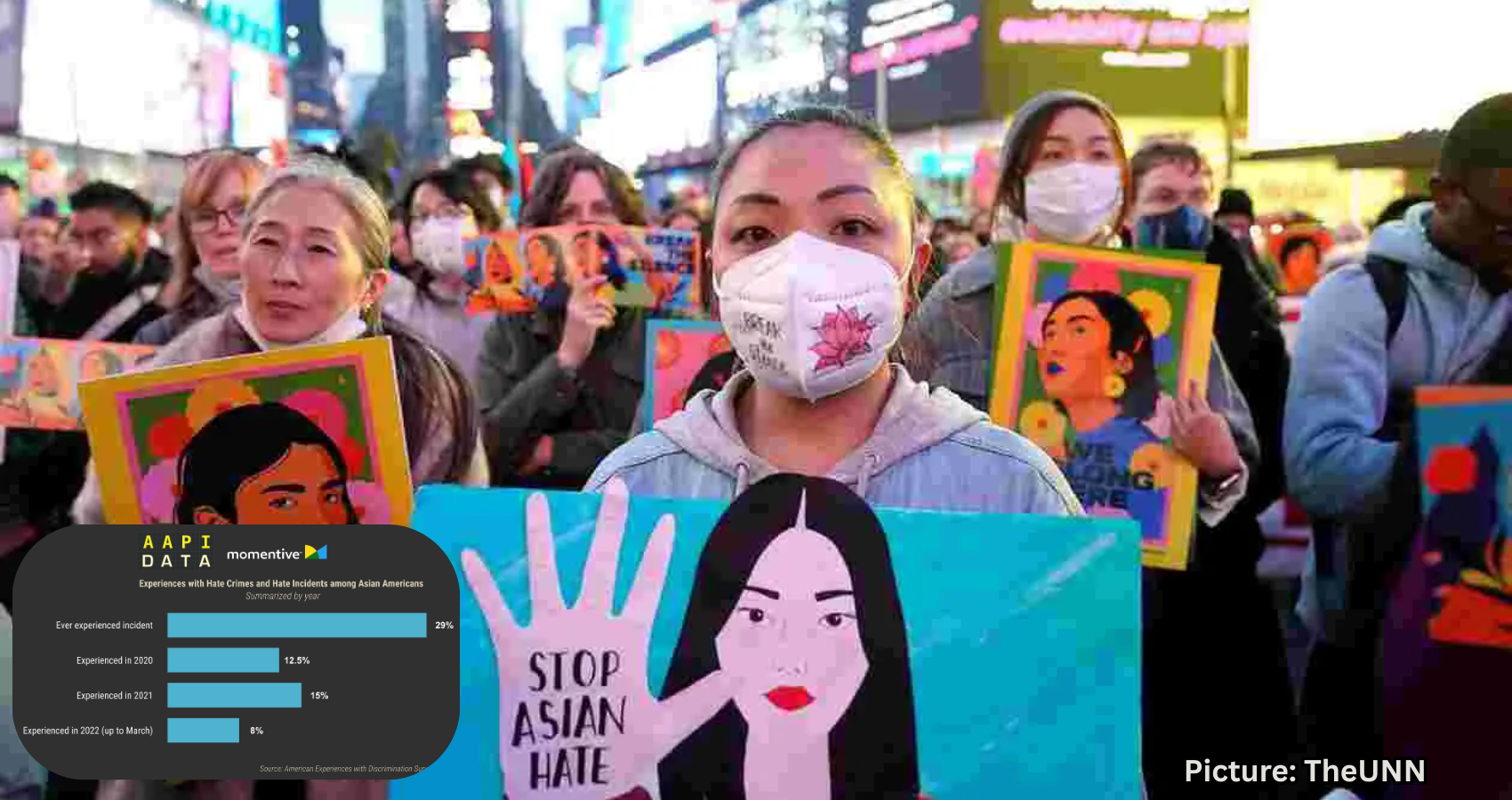
Nearly half of Asian American and Pacific Islander adults in the U.S. reported experiencing racial hate in 2025, marking the third consecutive year of elevated incidents, according to a new report.
A recent report from Stop AAPI Hate reveals a troubling reality for Asian American and Pacific Islander (AAPI) communities in the United States, highlighting the persistence of racism and discrimination years after the surge of incidents during the COVID-19 pandemic. Titled “Closing Doors, Widening Harm: Persistent Hate Against Asian Americans and Pacific Islanders in an Anti-Immigrant Climate,” the third annual State of Hate report indicates that nearly half of AAPI adults in the U.S. experienced a hate act in 2025 due to their race, ethnicity, or nationality. This data is derived from a nationally representative survey conducted by NORC at the University of Chicago.
The statistics show little change over the years. The report notes that 53 percent of respondents reported hate incidents in 2024, while 49 percent reported similar experiences in both 2023 and 2025. Harassment and institutional discrimination remain the most prevalent forms of hate. For Pacific Islander adults, the situation has deteriorated, with reported incidents rising from 47 percent in 2024 to 57 percent in 2025.
Beyond direct acts of hate, the report emphasizes the broader climate shaped by immigration policy and rhetoric. Approximately 53 percent of AAPI adults indicated that they or someone they know had been adversely affected by immigration policy changes or anti-immigrant sentiment in 2025, particularly under the administration of Donald Trump. This sentiment affects both citizens and non-citizens, as well as individuals born in and outside the U.S.
Among the most common fears and experiences reported, 36 percent of respondents stated they or someone they know had their immigration or citizenship status questioned or feared it could be revoked. Additionally, 30 percent reported fears or experiences of arrest, detention, or deportation, while 28 percent considered leaving the United States altogether.
The emotional toll of these experiences is significant. Among those who reported incidents of hate, nearly three-quarters indicated feelings of stress, and one in four exhibited symptoms of moderate to severe depression or anxiety—rates significantly higher than those who did not report such incidents.
“Our new research shows that Asian American and Pacific Islander communities in the U.S. have continued to face alarmingly high levels of racism and discrimination for three consecutive years, fueled and normalized by relentless anti-Asian rhetoric and policies from political figures—especially Donald Trump and his allies,” said Cynthia Choi, Co-Founder of Stop AAPI Hate and Co-Executive Director of Chinese for Affirmative Action. “While our survey has tracked this disturbing trend since 2023, our reporting center data, our previous research, and other sources show the surge began in 2020 during the COVID-19 pandemic—and anti-AAPI hate has remained elevated since then because xenophobic, politically motivated attacks against our communities have continued year after year.”
Choi also pointed to a combination of political and social factors that have sustained these levels of hate, including anti-Asian rhetoric during the pandemic, rising anti-Indian and anti-Chinese sentiment, and the amplification of xenophobic messaging during Trump’s 2024 campaign and current administration.
The report is not solely based on data; it also incorporates personal accounts from individuals affected by these incidents. One Indian woman from Georgia recounted a distressing experience at a fast food restaurant, where a woman approached her group and shouted derogatory remarks, threatening to report them to immigration authorities, despite them being U.S. citizens.
A multiracial Pacific Islander man described an online harassment incident that escalated into threats of immigration enforcement. He shared that after making a comment on social media, he received a message threatening to report him to ICE, expressing fear for his safety.
Similarly, a Korean woman in California recounted an encounter in which a stranger verbally assaulted her in a fast food restaurant, expressing a desire for her deportation as promised by Trump, and physically shoved her.
Researchers behind the report view these incidents as part of a larger pattern of violence. “Asian and Pacific Islander people have long endured the ‘trifecta of violence,’ whereby harmful ideologies like racism and xenophobia produce discriminatory policies—those policies, in turn, embolden both state actors and everyday individuals to commit acts of violence against those targeted by those ideologies,” said Stephanie Chan, Director of Data and Research at Stop AAPI Hate. “The trifecta of violence against AAPI people has been particularly evident from the COVID-19 pandemic through today, as there has been an unrelenting stream of racist political rhetoric and xenophobic policies that have created an environment where acts of hate against our communities become more likely.”
This report underscores the urgent need for awareness and action to address the ongoing challenges faced by AAPI communities in the United States, as they continue to navigate a landscape marked by discrimination and fear.
The post 49% of AAPI adults experienced racial hate in 2025, third year in a row appeared first on The American Bazaar.