
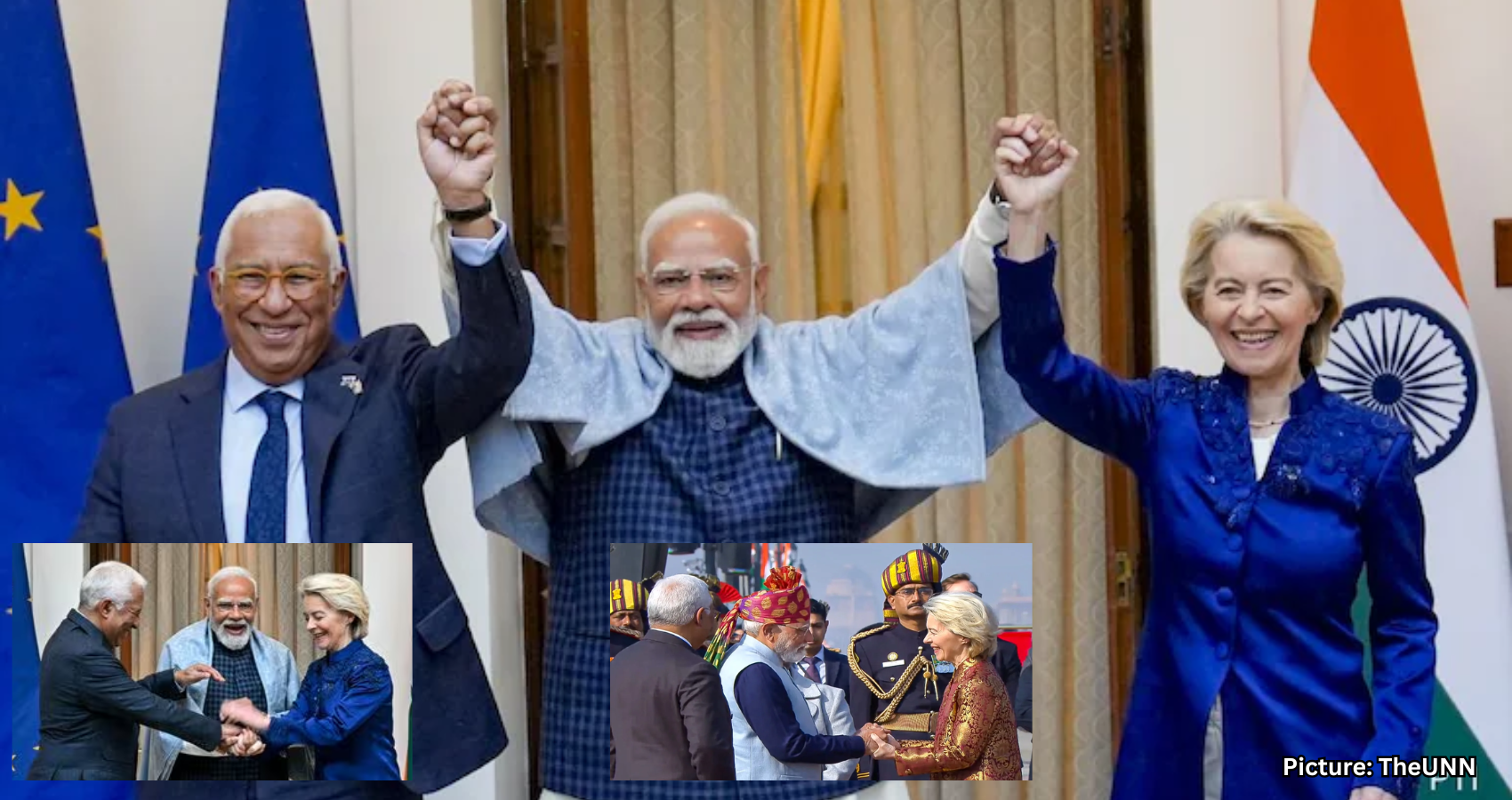
India and the European Union have signed a landmark Free Trade Agreement, heralded as the “mother of all trade deals,” which is poised to reshape global trade dynamics.
India and the European Union have officially signed a historic Free Trade Agreement (FTA), often referred to as the “mother of all trade deals.” This landmark agreement represents one of the largest and most ambitious economic partnerships in contemporary global trade, covering nearly a quarter of the world’s GDP and about one-third of global trade. The pact is anticipated to transform trade flows, reduce tariffs on thousands of products, boost investments, and strengthen geopolitical ties between two of the world’s largest markets.
Leaders from both sides have celebrated the agreement as a significant milestone, indicating a shift in India’s trade strategy and the EU’s efforts to diversify its economic partnerships amid escalating global trade tensions.
Indian Prime Minister Narendra Modi characterized the pact as “a model partnership between two major global economies that will create new opportunities for businesses, workers, and consumers.”
Why This Deal Is Considered Historic
The agreement is the culmination of nearly two decades of negotiations, reflecting its depth and complexity. Once fully implemented, the FTA will eliminate or significantly reduce tariffs on more than 95% of goods traded between India and the EU, making it one of the most comprehensive trade deals ever signed by India.
Under the agreement, Indian exports—including textiles, garments, leather goods, pharmaceuticals, engineering products, seafood, and gems—will gain enhanced access to European markets. Conversely, European exports such as automobiles, aircraft parts, machinery, chemicals, medical equipment, wines, and processed foods will benefit from lower import duties in India.
Additionally, the agreement is set to expand trade in services, including finance, IT, professional services, and transport, through improved market access. Provisions concerning investment, intellectual property, digital trade, sustainability, and labor standards aim to modernize long-term economic cooperation.
A trade policy expert noted, “This agreement doesn’t just cut tariffs — it rewires the economic relationship between two massive markets.”
What Gets Cheaper and Who Benefits
For Indian consumers, the deal could gradually lower prices on imported European products, including premium cars, electronics, luxury goods, chocolates, cosmetics, wines, spirits, and medical devices. For Indian businesses, the FTA opens doors to higher exports, enhanced global competitiveness, job creation, and increased foreign investment—particularly in manufacturing, textiles, pharmaceuticals, and technology sectors.
European companies will also benefit from improved access to India’s rapidly growing consumer base, which is estimated at over 1.4 billion people. An industry leader remarked, “This could unlock billions in trade, support millions of jobs, and accelerate India’s integration into global value chains.”
Sensitive Sectors Remain Protected
Despite its broad scope, the agreement carefully safeguards certain sensitive sectors, particularly in India. Products such as dairy, select agricultural goods, and small cars will remain shielded from full tariff liberalization to protect domestic producers. This balancing act reflects India’s effort to open markets while ensuring that vulnerable industries are not adversely affected by economic reforms.
Why the United States Is Paying Attention
The scale and ambition of the India–EU deal have drawn significant interest from the United States, particularly as global trade dynamics evolve. Trade analysts suggest that the pact could strengthen India–EU strategic alignment, reducing dependence on traditional trade partners, and challenge American influence in key sectors such as manufacturing, technology, and pharmaceuticals.
Moreover, the agreement may reconfigure global supply chains, providing alternatives to China-centric trade routes and intensifying competition for investment, innovation, and talent. A geopolitical analyst observed, “This agreement signals that India and Europe are shaping a new economic axis — one that could rebalance global trade power.”
Beyond Trade: A Strategic Partnership
The agreement extends beyond commerce, reinforcing strategic, technological, climate, and security cooperation between India and the EU. The partnership includes commitments to green energy, digital transformation, sustainable manufacturing, and defense collaboration. European leaders have described the pact as a step toward creating a “free trade zone of nearly two billion people,” highlighting its long-term geopolitical significance.
What Happens Next
While the agreement has been politically finalized, it must undergo legal vetting and ratification before full implementation. Trade benefits will be phased in over several years, allowing businesses and industries time to adapt. If executed effectively, the India–EU FTA could boost exports, create millions of jobs, attract global investment, and solidify India’s position as a major global economic power.
A Turning Point in Global Trade
The signing of this trade deal marks a pivotal moment in India’s global economic strategy, indicating a shift toward deeper integration with Western markets while maintaining strategic autonomy. As trade tensions rise worldwide, the India–EU agreement stands as a bold statement of cooperation, ambition, and shared economic vision—one that could reshape global commerce for decades to come, according to GlobalNetNews.