
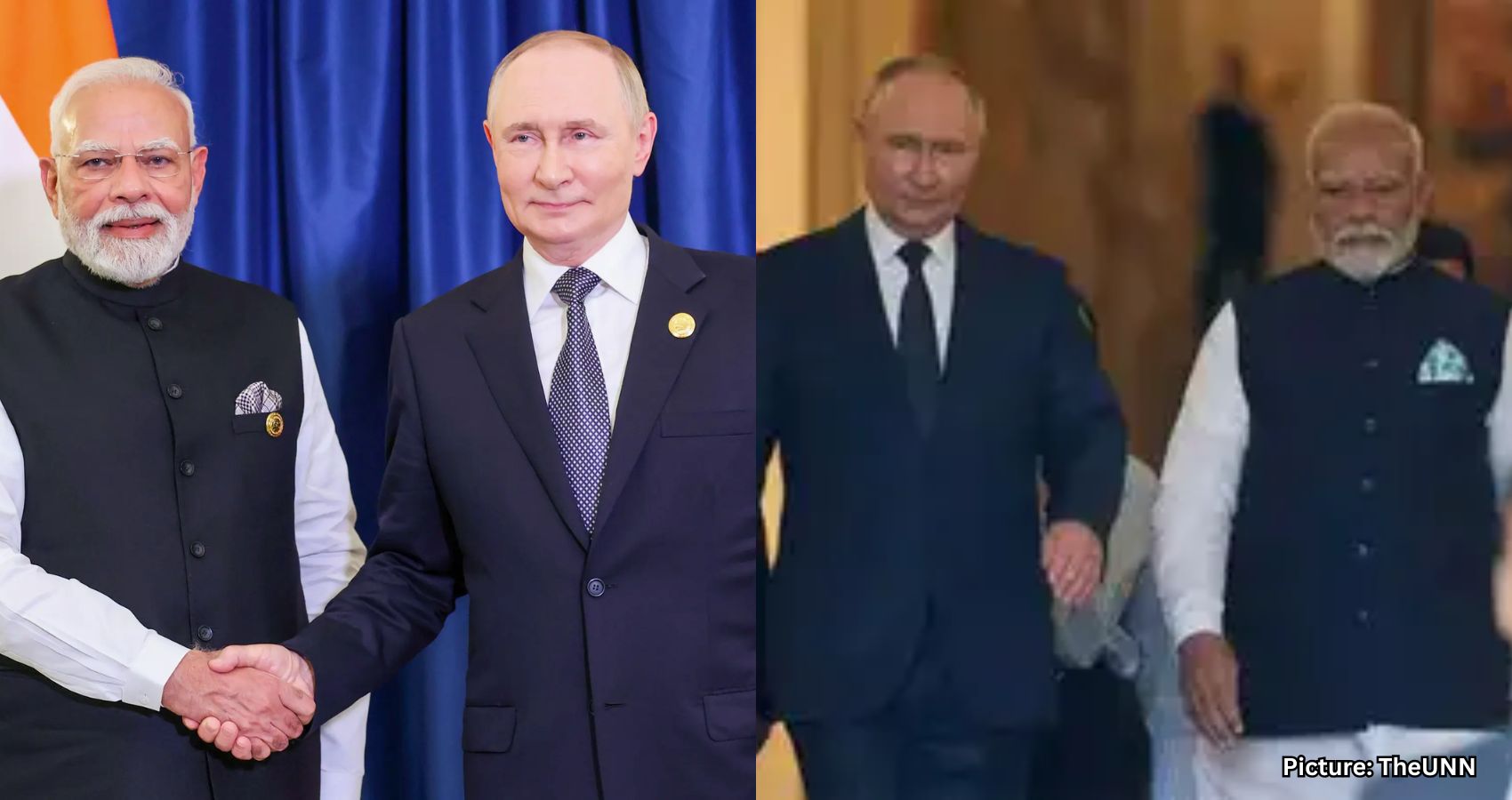
India is set to host Russian President Vladimir Putin in early December, emphasizing its commitment to strengthening ties with Moscow amid U.S. trade penalties over Russian oil imports.
India is preparing to welcome Russian President Vladimir Putin for a two-day visit on December 4–5, marking the 23rd annual India-Russia summit. This visit underscores New Delhi’s intent to bolster strategic and economic cooperation with Moscow, even as it faces significant trade penalties from the United States related to Russian oil imports.
During the summit, discussions are expected to center on expanding trade, enhancing defense cooperation, and fostering long-term strategic partnerships. Political risk analyst Ian Bremmer from Eurasia Group noted that the visit reflects India’s desire to maintain close ties with Russia, especially as it perceives the United States as increasingly unpredictable and views China as a strategic rival.
Chietigj Bajpaee, a South Asia expert at Chatham House, emphasized that the summit highlights India’s commitment to an independent foreign policy, irrespective of pressure from Washington. The Kremlin has characterized the upcoming visit as highly significant, with Putin and Indian Prime Minister Narendra Modi set to discuss their “special and privileged strategic partnership,” encompassing politics, trade, and economic collaboration. Several bilateral business and government agreements are anticipated to be signed during the summit.
Trade expansion is expected to take center stage at the summit, particularly as New Delhi aims to address the stark imbalance in bilateral commerce. According to the India Brand Equity Foundation, total trade between India and Russia reached $68.7 billion in the fiscal year ending March 2025. However, Indian exports accounted for only $4.9 billion, while imports from Russia surged to $63.8 billion.
Both nations have set an ambitious goal to elevate bilateral trade to $100 billion by 2030. India plans to increase exports of pharmaceuticals, chemicals, food products, and industrial machinery, while Russia is offering enhanced cooperation in civilian nuclear technology, including the construction of small modular nuclear reactors.
Defense and civil nuclear collaboration remain key pillars of the India-Russia relationship. However, some analysts express concerns about Russia’s ability to fulfill major arms deals due to ongoing supply-chain constraints. Between 2020 and 2024, Russia accounted for 36% of India’s total arms imports, followed closely by France at 33% and Israel at 13%, according to the Stockholm International Peace Research Institute. Nonetheless, Russia’s share has been steadily declining as India diversifies its defense suppliers.
India’s outreach to Russia occurs amid increasing economic pressure from the United States. The U.S. has imposed a cumulative 50% tariff on certain Indian goods as a penalty for India’s continued purchases of discounted Russian oil. These tariffs, among the highest imposed on any nation, took effect in late August.
Washington has accused New Delhi of importing Russian crude and reselling refined products internationally at a profit, effectively supporting Moscow’s war economy. Indian officials have defended their position, asserting that oil imports are essential to meet the energy needs of over 1.4 billion residents.
In an effort to maintain relations with the U.S., India has increased energy imports from American suppliers. Recently, Indian state-owned refiners signed a one-year agreement to import 2.2 million tonnes of liquefied petroleum gas from the U.S.
Meanwhile, recent U.S. sanctions on Russian energy giants Rosneft and Lukoil have temporarily slowed Russian crude shipments to India. However, analysts at Kpler anticipate that flows will rebound through alternative trading structures.
Geopolitical advisors estimate that the absence of a long-term U.S.-India trade pact could result in India losing up to $20 billion in trade surplus. In contrast, discounted Russian oil currently saves India approximately $8 billion annually, highlighting the economic stakes involved in New Delhi’s balancing act.
Putin’s visit to India coincides with renewed U.S. efforts to negotiate an end to the ongoing Russia-Ukraine war. Earlier this week, Putin engaged in extensive talks in Moscow with U.S. envoy Steve Witkoff and Jared Kushner. The Kremlin described these discussions as constructive, although no significant breakthroughs were reported.
India has a vested interest in achieving a peaceful resolution to the conflict, as it would alleviate international scrutiny of its partnership with Russia and contribute to stabilizing global energy markets.
Source: Original article