
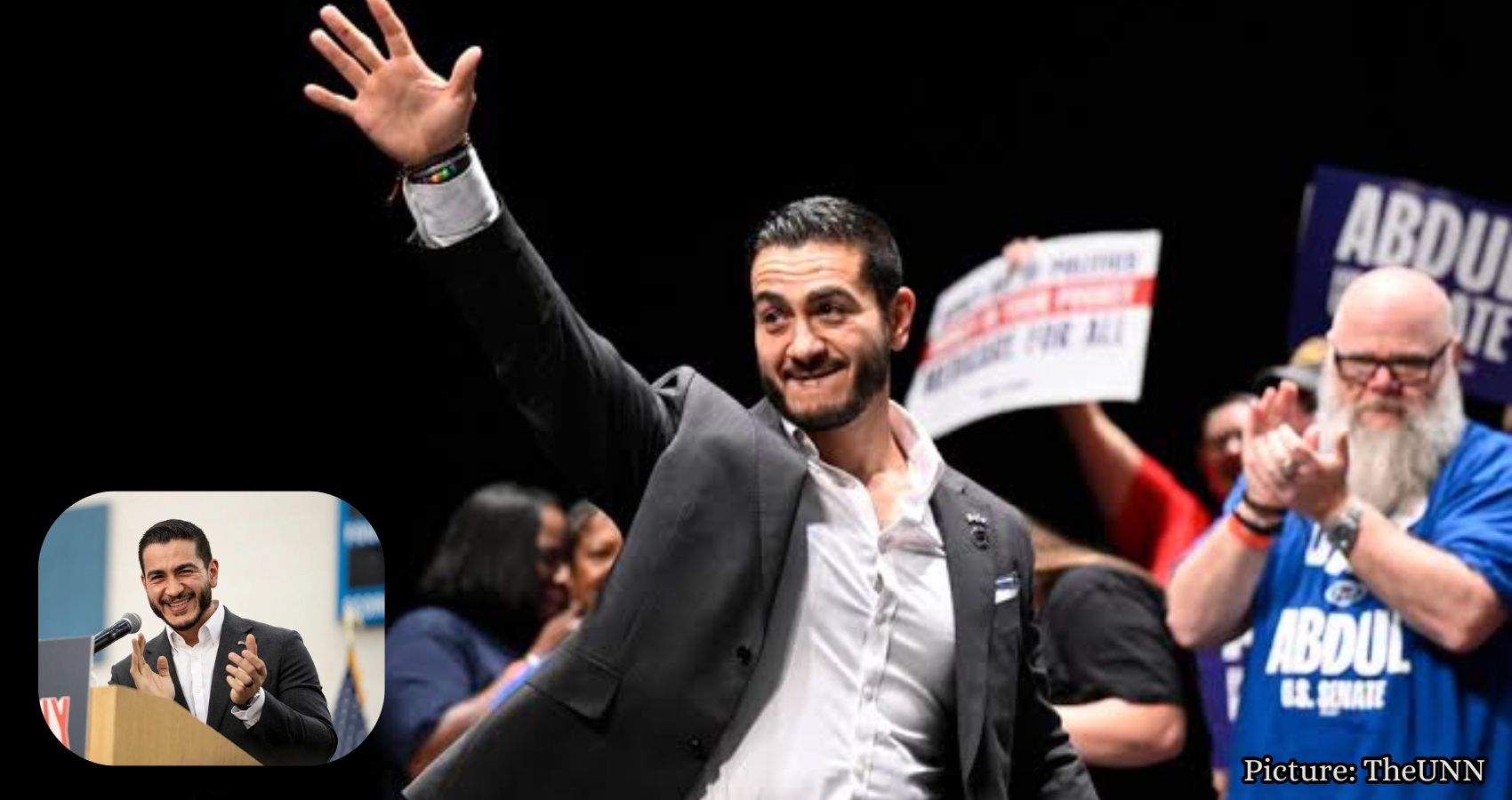
Democratic Senate candidate Abdul El-Sayed stands by his controversial “ogre on a pike” remark, clarifying it was aimed at Senator John Fetterman, not his primary opponent Haley Stevens.
Abdul El-Sayed, a Democratic candidate for the U.S. Senate in Michigan, refused to apologize for his “ogre on a pike” comment during a debate on Monday night. The remark, which drew criticism from both sides of the political aisle, was described by some as violent and, in certain interpretations, sexist.
During the final primary debate before the upcoming election, El-Sayed was pressed on whether he regretted his choice of words. He defended his statement and clarified that it was directed at Pennsylvania Senator John Fetterman, rather than his primary rival, Representative Haley Stevens.
“I was referring to a guy named John Fetterman,” El-Sayed stated, accusing Fetterman of abandoning the values on which he was elected. He claimed that Fetterman had “completely thrown those values in the mud.”
The controversy originated from comments El-Sayed made during a recent Zoom meeting with donors, as reported by Politico. In that discussion, he outlined his strategy for leveraging a potential victory in Michigan’s primary on August 4, as well as the November election, to advocate for a more progressive Democratic Party and to support future primary challenges, including one against Fetterman.
“Ideally, you put one ogre on a pike, and then everyone else gets the message,” El-Sayed said, according to audio obtained by Politico. Although he did not mention Stevens by name during the call, some Democrats interpreted the metaphor as a reference to her.
Representative Hillary Scholten, a Democrat from Michigan who has endorsed Stevens, condemned El-Sayed’s remark as a “violent, vulgar” threat. She emphasized that candidates should focus on lowering the political temperature rather than escalating tensions.
Neera Tanden, a former Biden administration official and current leader of the left-leaning think tank Center for American Progress, also weighed in. She connected El-Sayed’s comment to broader concerns about sexism in the primary race, stating, “Calling your female opponent an ogre you want to put on a pike is not beating the rap that this race has some serious sexism.”
Despite the backlash, El-Sayed did not retract his metaphor. Instead, he argued that senators should be willing to challenge colleagues who stray from the values they campaigned on. He also accused the United Democracy Project, a super PAC linked to the pro-Israel lobbying group AIPAC, of launching character attacks against him on behalf of Stevens.
In defending himself, El-Sayed invoked his family, stating, “I was raised by strong women.” He dismissed claims that his rhetoric toward women was disrespectful, arguing that criticisms of his past comments about figures like former First Lady Michelle Obama and Michigan Governor Gretchen Whitmer were “inconsistent with the truth.”
Stevens responded by highlighting other remarks attributed to El-Sayed during the leaked donor call, which included disparaging comments about Whitmer, former Senator Debbie Stabenow, and state Senator Mallory McMorrow, who recently dropped out of the race.
“Only he can account for saying that Whitmer is bought and paid for, or that no one cares about Debbie Stabenow, or that Mallory McMorrow isn’t smart enough,” Stevens remarked. She later added a pointed note regarding El-Sayed’s clarification: “Thank you for clarifying that you didn’t call me an ogre.”
Stevens’ campaign spokesperson, Arik Wolk, accused El-Sayed of resorting to personal insults and focusing on his national political ambitions rather than addressing the needs of Michigan residents. “Abdul continues with personal insults and making this race about his personal political ambitions and the other 49 states,” Wolk stated. “Haley is focused on getting things done for Michigan, and only Michigan.”
Republicans also seized upon El-Sayed’s remarks. The Republican National Committee characterized his debate response as a “double down” on calling Fetterman an “ogre.” Michigan Republican strategist Dennis Lennox argued that El-Sayed’s candidacy was primarily about advancing the hard left’s agenda on a national scale.
The imagery of a “pike” has previously sparked political controversy. In 2020, former Trump White House strategist Steve Bannon suggested he would place the heads of Dr. Anthony Fauci and then-FBI Director Christopher Wray “on pikes” outside the White House as a warning to federal officials. Following backlash, platforms like X (formerly Twitter) suspended Bannon’s podcast account, while Facebook and YouTube removed the video containing the remarks for violating policies against violent content.
Earlier that same year, a separate “head on a pike” controversy arose during former President Donald Trump’s first impeachment trial. An unnamed Trump confidant reportedly warned Republican senators that they would face severe consequences for voting against the president. This claim was echoed by then-House impeachment manager Adam Schiff, who expressed hope that it was not true. Republican senators quickly disputed the account, with some asserting they had not experienced any threats from the administration.
As the Michigan Senate primary approaches, El-Sayed’s comments continue to reverberate, raising questions about the tone and direction of the Democratic Party in the state and beyond, according to Politico.