
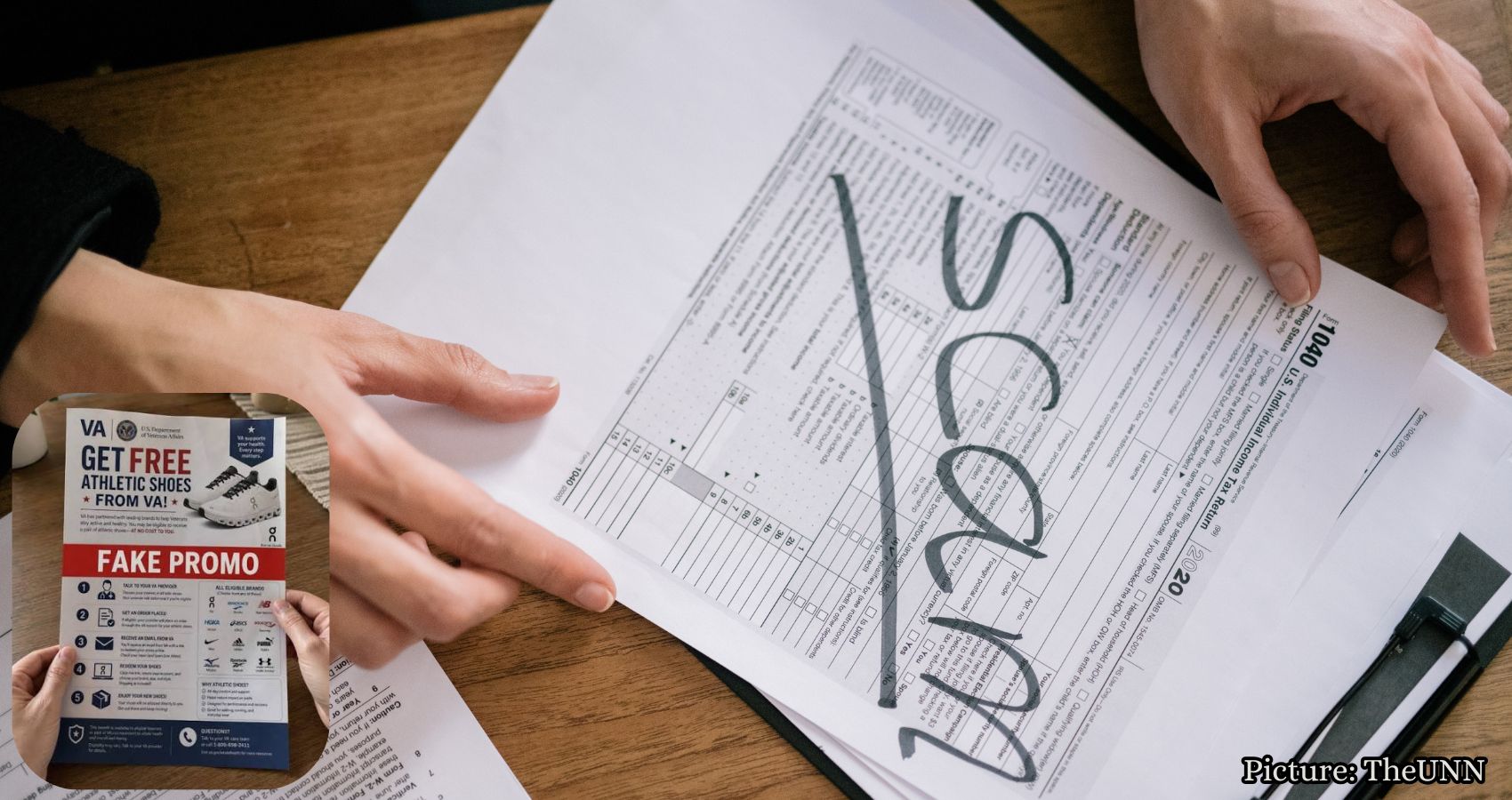
A fraudulent flyer promising free athletic shoes is misleading veterans by using VA branding and real contact information to solicit sensitive personal data.
A deceptive flyer claiming to offer free athletic shoes from the Department of Veterans Affairs (VA) has emerged, raising concerns about the potential for identity theft among veterans. The flyer, which mimics official VA branding and includes legitimate phone numbers, is designed to trick veterans into sharing sensitive personal information.
At first glance, the flyer appears legitimate, featuring a health and wellness message that encourages veterans to take advantage of the supposed offer. However, the VA has confirmed that this promotion is not affiliated with any official VA program and is entirely fraudulent.
The scam is reportedly spreading through both physical flyers and online posts, misleading veterans with promises of free athletic shoes “at no cost to you.” The flyer showcases popular shoe brands and outlines steps to “redeem” the shoes, creating a false sense of legitimacy by suggesting a connection to a VA provider.
This tactic is particularly effective because it preys on the familiarity and trust veterans have in government communications. The flyer’s design, which closely resembles official VA materials, combined with health-related language, makes the offer seem like a legitimate wellness benefit.
While a free pair of shoes may seem harmless, the underlying risk is significant. Scammers often use such offers as a gateway to obtain personal details, including Social Security numbers, VA login information, and financial data. Once scammers have this information, they can target victims again through follow-up calls, texts, or emails.
One notable aspect of the flyer is its inclusion of the MyVA phone number. Although this detail might lend an air of authenticity, it is crucial to remember that scammers frequently mix real information with fake offers to lower victims’ defenses.
The VA has issued a warning to veterans to verify any offers through official channels, such as VA.gov or local VA facilities, before responding. The flyer may seem innocuous, but it could lead to phishing attempts, bogus forms, or requests for sensitive information.
To protect themselves, veterans are advised to refrain from sharing, forwarding, or filling out any forms associated with the flyer. Instead, they should alert fellow veterans and family members about the scam without disseminating the flyer itself, as this could inadvertently spread the fraudulent message.
Developing smart habits can help individuals identify fake VA communications. Veterans should directly visit VA.gov or use their official VA accounts rather than relying on flyers, social media posts, or forwarded messages. Scammers may create fake websites that look official, so it is essential to type web addresses directly into the browser or search for the VA page independently.
Veterans should also safeguard their personal information. The VA will never request login credentials via email, and any free offer that requires sensitive data should raise red flags. Treating personal details, such as Social Security numbers and medical information, as confidential is crucial in avoiding scams.
If veterans suspect they have encountered fraud, they can report it through VSAFE.gov or by calling 1-833-38V-SAFE. Reporting such incidents helps the VA and other agencies track scams targeting veterans.
Using strong antivirus software can provide an additional layer of protection against malicious links, risky QR codes, or fake websites associated with scams. Veterans should also consider utilizing data removal services to minimize the amount of personal information available online, which can be exploited by scammers.
For those who may have already engaged with the scam, it is vital to change VA.gov passwords immediately. Utilizing a trusted password manager to create and store strong, unique passwords, along with enabling multifactor authentication, can further enhance security. Vigilance is key; monitoring accounts for suspicious activity is essential after any potential breach.
In summary, while the allure of a free pair of shoes may seem appealing, veterans must remain cautious and verify any offers through official VA channels. Instead of forwarding fraudulent flyers, sharing a simple message warning others about the scam can help prevent further victimization.
For more information on protecting against scams, veterans are encouraged to visit VA.gov or contact their local VA facility. Awareness and caution are the best defenses against fraud.
According to CyberGuy, staying informed and vigilant can help veterans avoid falling prey to scams that exploit their trust.