
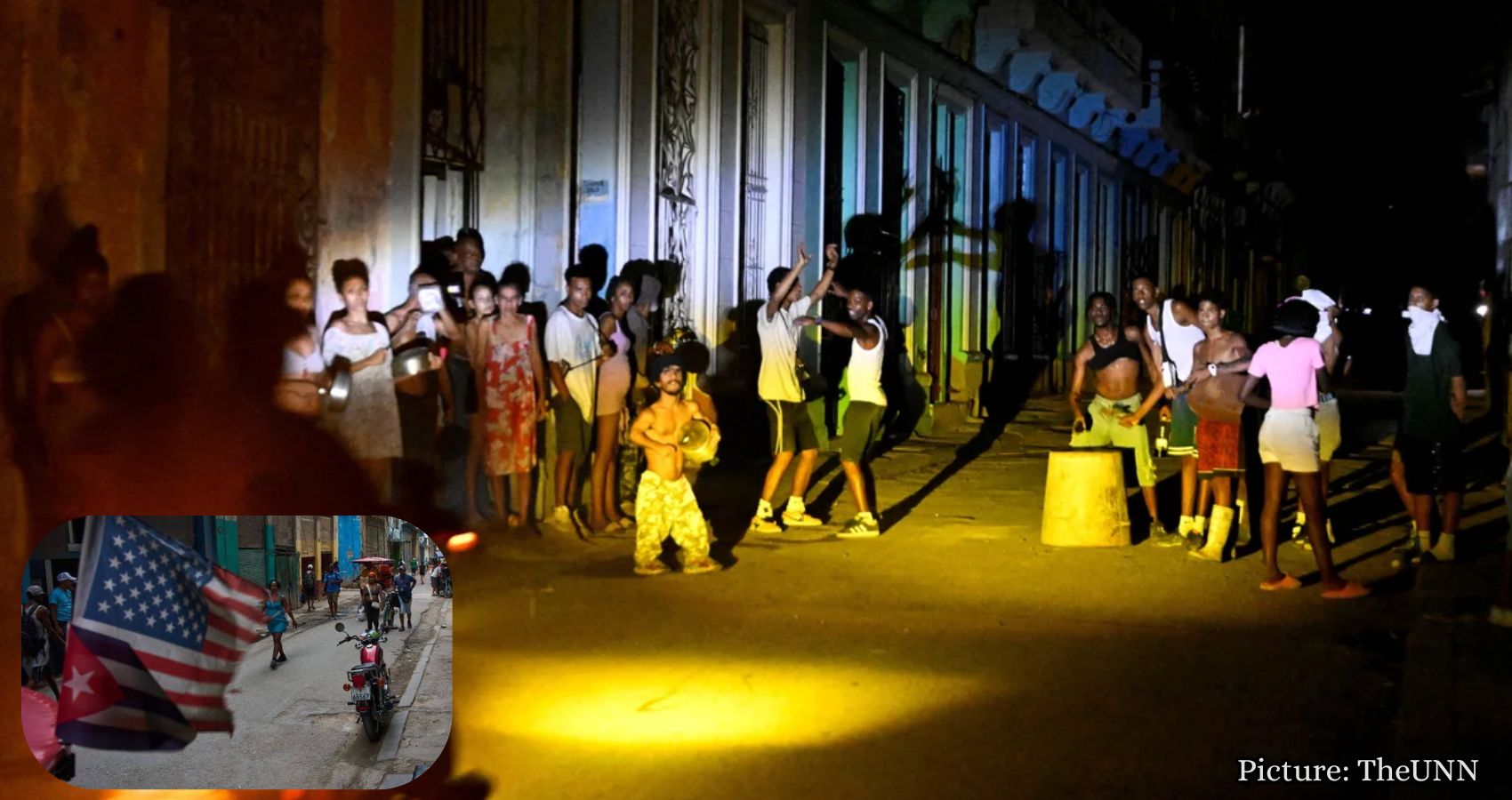
Cuba experienced its third major blackout of the year on Monday, leaving millions without electricity as the nation grapples with a worsening energy crisis.
Cuba was plunged into darkness on Monday due to a nationwide blackout, exacerbating the country’s ongoing energy crisis. The outage affected approximately 10 million people before limited electricity service was gradually restored in some regions.
The state-run Electric Union of Cuba announced on Monday morning that a “total disconnection of the National Electric Power System” had occurred, and investigations into the causes were underway. The island has been facing increasingly frequent power outages in recent years, driven by chronic fuel shortages and a deteriorating electrical infrastructure.
The situation has been aggravated by U.S. sanctions, particularly those imposed by former President Donald Trump in January, which included threats of tariffs on countries supplying oil to Cuba. These sanctions have significantly impacted the island’s ability to secure necessary fuel supplies.
During Monday’s blackout, public transportation services were largely suspended, and officials reported that tens of thousands of surgeries were canceled across the nation, according to the Associated Press.
Authorities later confirmed that one generating unit had resumed operations approximately two hours after the blackout. The Electric Union stated, “Microsystems are already operational throughout the country, to ensure protection for vital services.”
Vicente de la O Levy, Cuba’s energy minister, indicated that efforts were underway to restore power while attributing part of the crisis to U.S. actions. He stated, “Vital services continue to be protected, amidst this complex situation exacerbated by the energy blockade we face.”
Cuban President Miguel Díaz-Canel echoed these sentiments, describing the U.S. energy blockade as a “genocidal” measure. He criticized U.S. policies, claiming they aim to induce social unrest in Cuba by restricting fuel access. “While the U.S. tries to induce a social explosion through asphyxiation by blocking fuel access to #Cuba, the UNE mobilizes to reverse the SEN outage,” Díaz-Canel said, referring to the National Electric Power System. He praised the efforts of electrical workers as “heroic” in the face of these challenges.
The energy crisis in Cuba intensified earlier this year following a U.S. military operation that resulted in the capture of Venezuelan President Nicolás Maduro, which halted oil exports from Venezuela—a critical fuel source for the island. Cuba produces only about 40% of the fuel it requires, and a Russian tanker delivered approximately 730,000 barrels of oil to the country in March. However, these supplies were depleted by the end of April.
In response to the ongoing fuel shortages, the Cuban government has implemented scheduled power outages, with some areas experiencing blackouts lasting over 24 consecutive hours. Earlier this year, a blackout in early March affected western provinces, while a separate outage in mid-March resulted in a complete island-wide blackout.
The situation remains precarious as Cuba continues to navigate its energy challenges amid external pressures and internal infrastructure issues, leaving millions in uncertainty regarding their access to electricity.
According to The Associated Press, the ongoing energy crisis has had far-reaching implications for daily life in Cuba, affecting everything from healthcare services to public transportation.