
How Smit Machchhar held a wounded aircraft — and how passengers who had worn a uniform may have finished what he started
The knife came out over the empty desert between Jordan and Saudi Arabia.
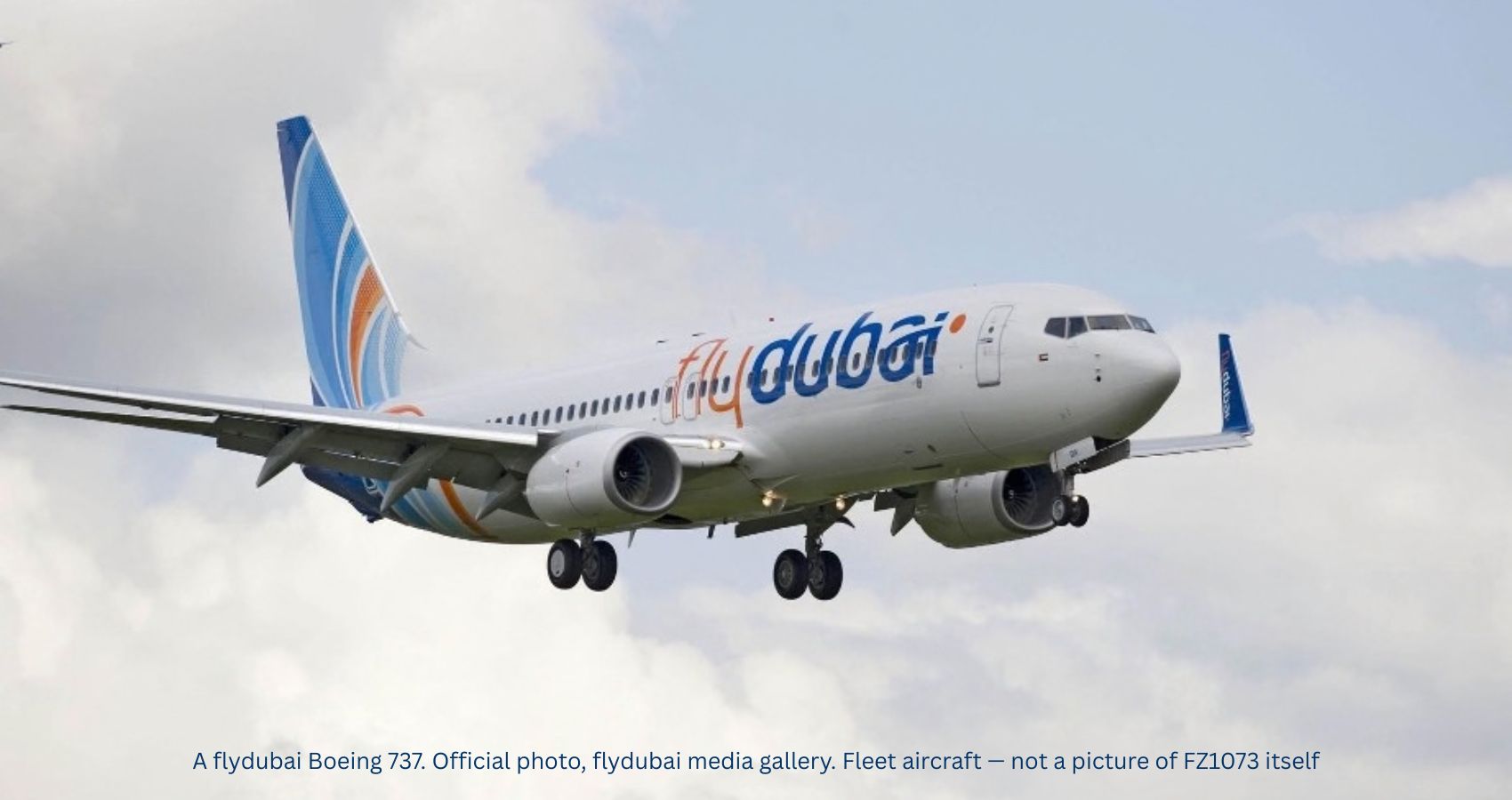
flydubai flight FZ1073 had left Dubai at 7:05 in the morning, a Boeing 737 MAX 8 registered A6-FKF, bound for Ben Gurion. One hundred seventy-four passengers were aboard, twenty-seven of them children, most of them Israeli. In the left seat sat Capt. Smit Machchhar — an Indian national from Gujarat, a former SpiceJet line training captain, nearly ten thousand hours on the 737. In the right seat sat his first officer, an Omani who had been with the airline about nine months.
Then the first officer pulled a knife and started stabbing the captain.
That is the account Israeli officials, including Prime Minister Benjamin Netanyahu, have given. flydubai has confirmed only an “altercation” in the flight deck. The airline has not named either man. It has not used the word terror. The plane, however, told its own story. It fell more than fourteen thousand feet in under thirty seconds. It squawked 7700, then 7500 — the international hijack code — then 7700 again. Israeli fighters went up. The Boeing turned its nose away from Israel and toward Tabuk.
Machchhar, stabbed in the head and hands, did not let go of the airplane. Passengers later told Netanyahu he unlocked the cockpit door before he lost consciousness. That single act — a wounded Indian captain opening the door instead of sealing it — is what let the cabin into the fight.
THE CABIN THAT MOVED
They heard screaming. They saw blood. And then people near the front did what people who have been trained to move toward a threat tend to do. They moved.
Israel is a country that puts almost every citizen through national service. The IDF does not only produce soldiers. It produces a civilian population that has practiced, under stress, the unglamorous work of closing a distance, pinning a man, and not waiting for someone else to decide. No passenger has been publicly identified as acting “as a soldier.” None needs to be. The instinct is the point. On FZ1073 that instinct — split-second, unsentimental, physical — is what finished the job Machchhar had started.
Tzvika Manes, who runs the underwriting arm of Bank Leumi, was among those who helped restrain the first officer. Yaniv Hayoun spoke afterward with the prime minister. An Israeli dentist, Shota Musayev, packed Machchhar’s wounds and kept him alive until the wheels touched Saudi concrete. Two more flydubai captains were sitting in the back in civilian clothes — deadheading because a possible reroute might have broken the original crew’s duty limits. They took the seats. They landed the jet.
Everyone walked off. Including the twenty-seven children.
THE MAN IN THE LEFT SEAT
Smit Machchhar is not a celebrity pilot. He is a working captain. He flew SpiceJet from 2011 to 2022, rose to senior commander and line training captain in Mumbai, then took a direct-entry left seat at flydubai in June 2022. His file is the file of a professional: 9,750 hours, Boeing 737-800 and MAX, a business degree from Welingkar, a father, based in Dubai. The Indian Embassy in Riyadh says he is in hospital in Tabuk and receiving care.
He is also, in the oldest sense of the word, a guest who repaid a debt that was never presented as a bill.
A COUNTRY THAT DID NOT HUNT THEM
Jewish communities have lived on the Indian subcontinent for two thousand years — Cochin, the Bene Israel of the Konkan, the Baghdadi merchants of Bombay and Calcutta. Historians still argue over dates and ships. They do not argue, much, about the larger fact. India is one of the few civilizations on earth in which Jews were not subjected to the systematic, state-backed persecution that defined so much of the Jewish story elsewhere. No expulsions on the Iberian model. No Pale. No camps. Synagogues stood. Trade continued. People stayed.
That history does not make every Indian responsible for every Israeli. It does give a particular charge to a morning like this one. An Indian citizen, flying an Emirati airplane toward Tel Aviv, was stabbed by a man from a country that has no diplomatic relations with Israel. He held the yoke anyway. He opened the door. Israeli passengers — products of a republic that trains its civilians because it has had to — crossed that threshold and ended the attack. The plane that was supposed to become a weapon became, instead, a hospital run and a landing.
Nations write communiqués about friendship. This was friendship with blood on the glare shield.
WHAT IS KNOWN, AND WHAT IS NOT
The first officer has not been named. Israeli officials say he is Omani. Saudi authorities have him. Shin Bet and Mossad have been reported as part of the inquiry. He has not been charged. flydubai has suspended every flight to and from Israel and asked the public not to guess at motives. Israel’s transport minister has opened a review of whether putting an Omani crew member on an Israel route broke the aviation understandings that followed the Abraham Accords. The UAE’s civil aviation authority is investigating. The tail rudder of A6-FKF was photographed damaged on the Tabuk apron.
Netanyahu called it a most serious security incident and said one pilot “apparently tried to crash the plane with everyone on board.” That is the Israeli government’s working theory. It is not yet a verdict.
What does not require a verdict is the sequence that saved the cabin. An Indian captain absorbed the first violence and opened the door. Israelis who have spent years being taught that hesitation is a luxury closed that door from the other side. A dentist from a country that trains its people to treat the wounded under fire kept the captain breathing. Two extra pilots who happened to be commuting did the flying.
One hundred seventy-four people walked off a jet that had been pointed at the ground.
History will sort the motive. The morning already sorted the men.
Sources: flydubai statements; Tabuk airport; Prime Minister Netanyahu; India Today; The Jerusalem Post; Ynet; Reuters; CNN; Flightradar24; The Economic Times; News18. Captain identity from reporting and professional records — not an airline confirmation. First officer unnamed by authorities. Historical note on Indian Jewish communities reflects the scholarly consensus on the absence of systematic state persecution; it is not a claim that no Jew in India ever suffered harm.
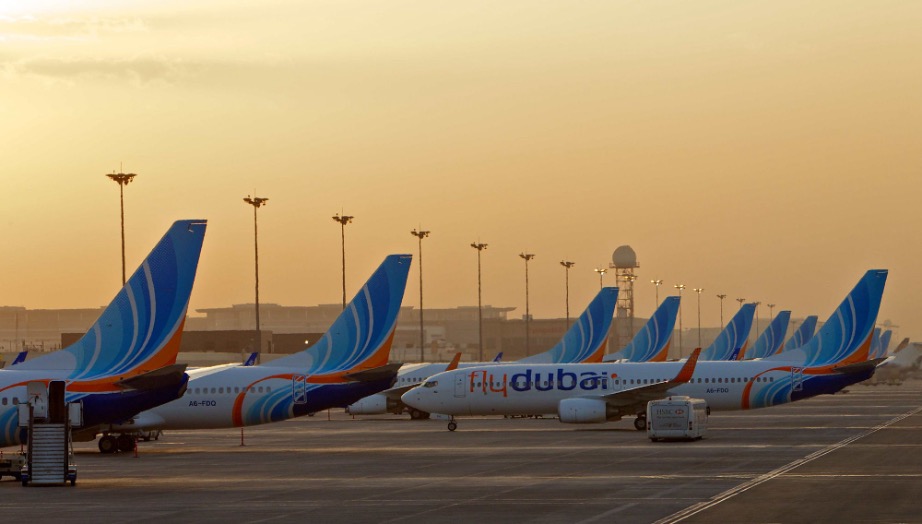
Photos: flydubai official media gallery (news.flydubai.com/media). Editorial use with credit. Fleet publicity photographs, not images of flight FZ1073.