
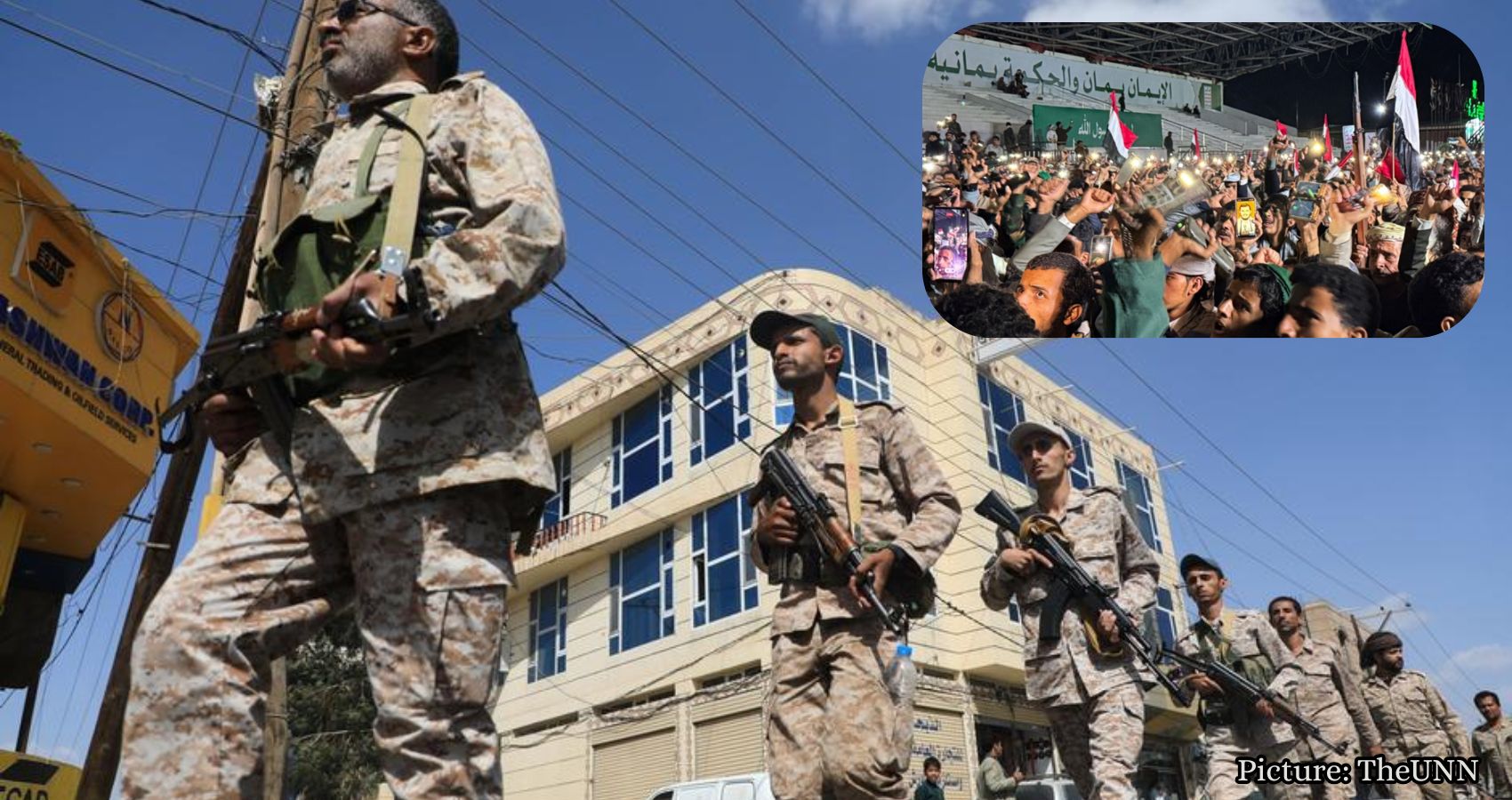
The recent capture of the Yemeni port city Mokha by Iranian-backed Houthi rebels has escalated tensions between the U.S. and Iran, raising concerns over global energy supplies.
The capture of the Yemeni port city Mokha by Iranian-backed Houthi rebels has significantly heightened tensions in the ongoing conflict between the United States and Iran. This development has prompted urgent calls for military action from Saudi Arabia and raised alarms about potential disruptions to global energy supplies.
The Houthi rebel group, which receives support from Iran, has reportedly taken control of Mokha, a strategic port city in Yemen. This escalation has drawn a swift response from Saudi Arabia, which backs Yemen’s internationally recognized government. Reports indicate that Saudi officials are urging President Trump to consider military action against the Houthis. In response, the U.S. has deployed over 100 military advisors to assist Saudi forces engaged in the conflict.
In a related escalation, Saudi Arabia announced the shutdown of its East-West Pipeline, a critical artery for transporting oil across the country. This decision followed an attack on the pipeline by multiple drones launched from Iraq, resulting in injuries and raising concerns about the security of Saudi oil infrastructure. The East-West Pipeline has a capacity to transport up to 7 million barrels of crude oil, making it vital for the kingdom’s ability to export oil to the Red Sea, particularly as Iran has restricted movement through the Strait of Hormuz.
The takeover of Mokha, located approximately 50 miles from the Bab el-Mandeb Strait, grants the Houthis a strategic position to influence shipping lanes in the Red Sea. The Bab el-Mandeb Strait is a crucial maritime corridor through which about 12 percent of global trade passes, making any threats to its security a matter of international concern. Analysts warn that the Houthis could leverage this advantage to target shipping operations or even attempt to close the strait, which would significantly disrupt global oil supplies already strained by ongoing geopolitical tensions.
Brett Erickson, managing principal at Obsidian Risk Advisors, emphasized the potential consequences of a complete shutdown of the Bab el-Mandeb Strait, stating, “You’re losing millions of barrels per day.” He noted that while alternative shipping routes through the Suez Canal exist, the additional time required to reroute oil would lead to considerable market disruptions. This situation arises as Brent crude oil prices have surged to around $105 per barrel, with West Texas Intermediate (WTI) priced at approximately $100.
Ahmad Sharawi, a senior research analyst with the Foundation for Defense of Democracies, pointed out that even partial disruptions to the Bab el-Mandeb Strait could deter shipping insurers and major companies from operating in the area. This presents a significant challenge for Saudi Arabia, which has increasingly relied on the Red Sea route as an alternative to the Strait of Hormuz due to heightened risks in that region.
The Houthis’ control over Mokha is regarded as the most significant territorial gain for the group since the signing of a ceasefire agreement in 2022, which aimed to end Yemen’s protracted civil war. Their recent advances come amid renewed hostilities, including missile and drone attacks on Saudi military targets in recent weeks. Yemeni government forces have responded with airstrikes against Houthi positions near Mokha, reflecting the ongoing volatility in the region.
Saudi Crown Prince Mohammed bin Salman has reportedly urged President Trump to take more decisive military action against the Houthis, with discussions occurring in the days leading up to these developments. While the U.S. has not yet committed to direct military strikes, it has agreed to share intelligence with Saudi forces to help identify targets associated with the Houthi rebels.
Despite the Saudi military’s capability to launch airstrikes against Houthi positions, experts argue that air power alone may not be sufficient to reclaim territory lost to the rebels. Ground forces may be necessary to establish a more effective counteroffensive. However, the fragmented nature of Saudi-backed forces complicates their military strategy, as various factions within the coalition have struggled to coordinate effectively against the Houthis.
Houthi spokesperson Yahya Saree has claimed that maritime navigation remains safe for shipping companies, excluding those affiliated with Saudi Arabia. He warned that military escalations could continue until the blockade on Yemen is lifted, indicating the potential for further conflict.
The recent attacks on Saudi oil infrastructure highlight the vulnerabilities of the kingdom’s energy sector. Satellite imagery has shown significant damage to oil pumping stations in Saudi Arabia following drone attacks. While some analysts argue that the shutdown of the East-West Pipeline may not have an immediate catastrophic impact on energy markets, the context of ongoing tensions in the region raises alarms about the overall security of oil supplies.
As oil prices spike, Sabrina Singh, former Pentagon deputy press secretary, noted that the Houthi advancements pose a risk of extending the existing conflict into a broader regional crisis that could destabilize the global economy. She highlighted that Saudi Arabia has had to reroute oil exports through the Red Sea and Suez Canal as a result of the evolving threats, further stressing the precarious nature of global oil markets.
As the situation unfolds, the convergence of military, geopolitical, and economic factors will continue to shape the dynamics of the conflict in Yemen and its broader implications for international energy security, according to Source Name.