
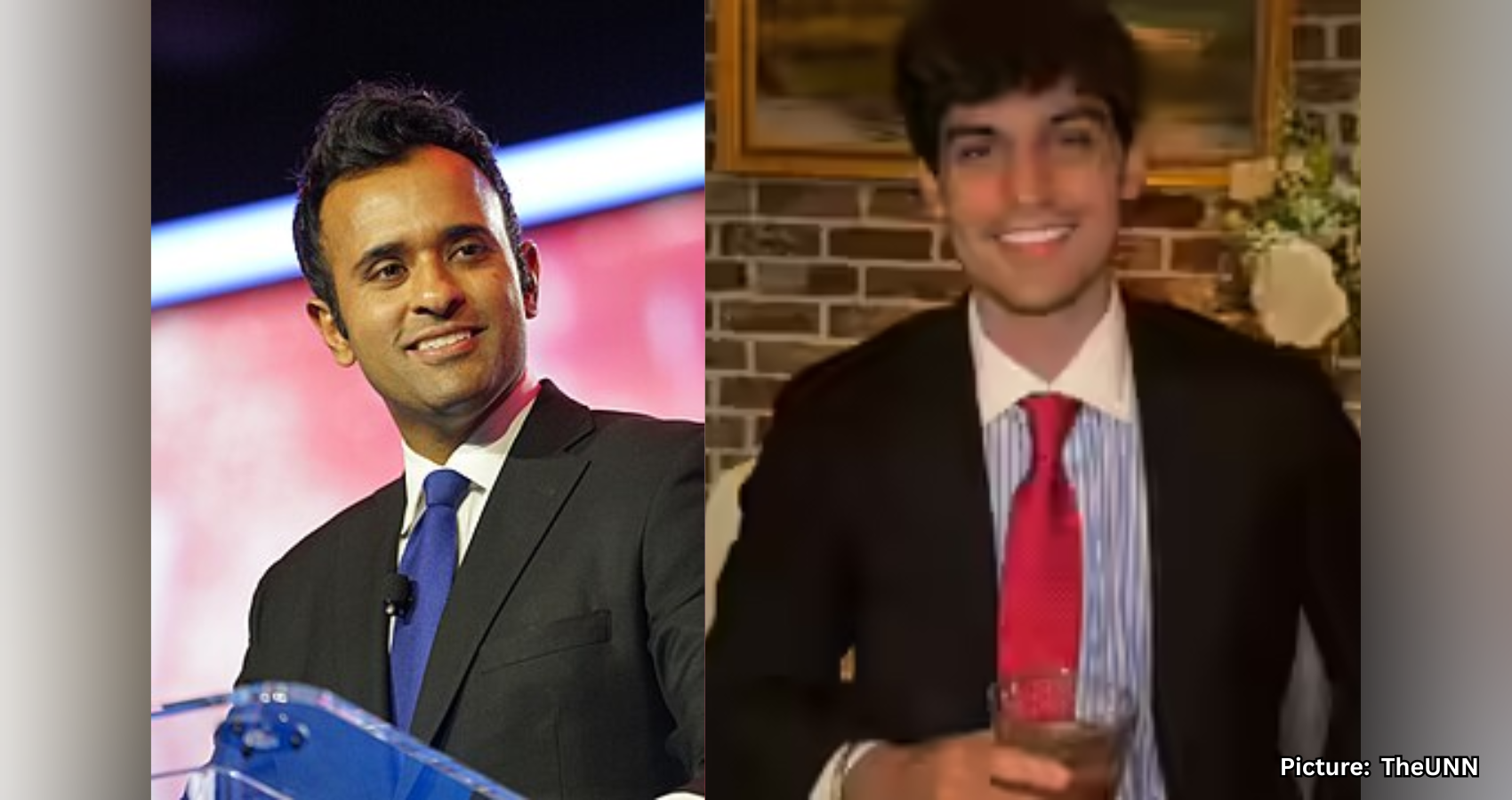
Nalin Haley, son of former South Carolina Governor Nikki Haley, has publicly challenged Vivek Ramaswamy’s views on the similarities between Hinduism and Christianity, sparking a broader discussion on religious identity.
Nalin Haley, the son of former South Carolina Governor Nikki Haley, has taken issue with Ohio Republican gubernatorial candidate Vivek Ramaswamy’s characterization of shared values between Hinduism and Judeo-Christian beliefs. In a post on X dated September 30, Haley asserted that the two religions possess distinct beliefs and should not be conflated.
Haley’s remarks were prompted by a post from conservative commentator Dinesh D’Souza, who had commented on Ramaswamy’s religious views. In his response, Haley stated, “I don’t think people realize this is worse than saying ‘I’m not Christian and I have my own views.’” He emphasized that Hinduism and Christianity are fundamentally different and do not share the same values or beliefs, while also advocating for the right of both Hindus and Christians to maintain their individual beliefs.
“But it becomes a problem when we lie and say that they’re the same,” Haley continued. “It contorts both religions into something they’re not.” He further clarified that his comments were not racially motivated, asserting, “Literally nothing I said has to do with race.” Haley expressed a desire to remain true to his identity while addressing disagreements regarding his views.
Haley’s post was a direct response to D’Souza’s assertion that Ramaswamy, despite not identifying as Christian, shares the “same Judeo-Christian values” that underpin the United States. D’Souza noted that Ramaswamy attended Catholic school, reads the Bible, and is “as MAGA as the rest of us,” while also mentioning that former President Donald Trump is expected to campaign for him in Ohio.
Ramaswamy, who identifies as Hindu, has previously articulated a distinction between his religious identity and the values he claims to share with Christians. During his 2024 presidential campaign, he explicitly stated, “I am not Christian,” while arguing that Hinduism and Christianity share values such as sacrifice, duty, and belief in God. He has also referenced his Catholic education and familiarity with the Bible in discussions about his faith.
In a separate explanation of his beliefs, Ramaswamy expressed his conviction in one true God, asserting that God resides within each individual. He compared this belief to the Christian notion that all people are equal because they are made in the image of God. Ramaswamy has consistently stated that he shares what he refers to as the “Judeo-Christian values” foundational to the country, while making it clear that he does not identify as Christian.
This ongoing debate has resurfaced during Ramaswamy’s campaign for Ohio governor, where his Hindu faith has become a focal point in broader discussions about religion, identity, and the Republican Party. According to a report by the Christian Monitor in September, Ramaswamy has sought to highlight shared American ideals, even as questions linger within segments of the Republican coalition regarding the role of Christianity in American political identity.
Haley’s recent comments contribute another layer to this complex discussion, drawing a line between sharing specific moral or civic principles and asserting that two religions possess identical beliefs. His remarks also reflect a broader trend of outspoken commentary on immigration and identity. Just days prior, on September 26, Haley called for an end to legal immigration and the H-1B visa program, linking immigration to the affordability crisis in the United States.
The dialogue surrounding Ramaswamy’s religious identity and the implications for his political aspirations continues to evolve, with Haley’s challenge highlighting the nuanced and often contentious intersections of faith and politics within the Republican Party.
The post originally appeared on The American Bazaar.