
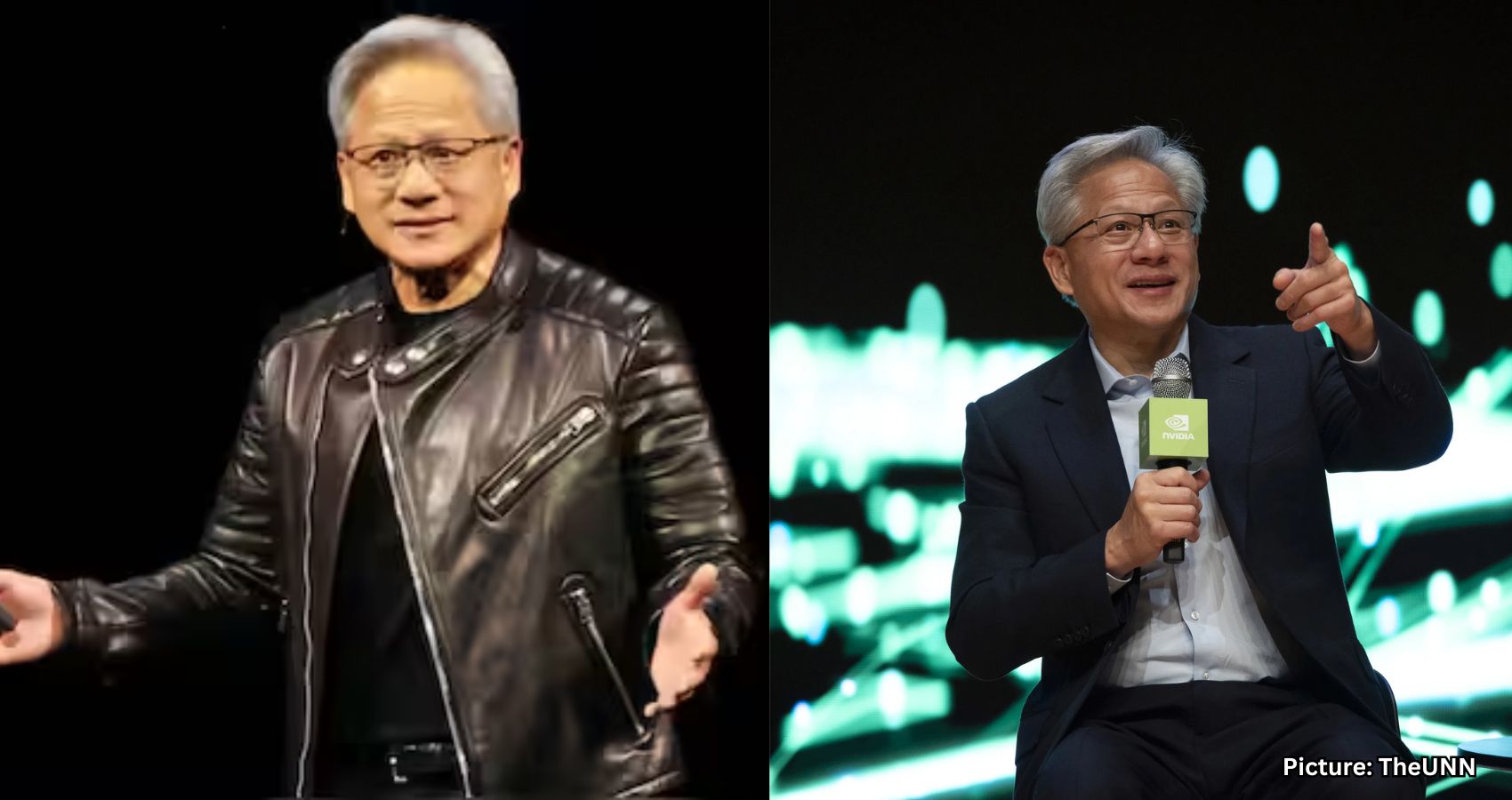
Nvidia CEO Jensen Huang recently commented on the diminishing importance of basic math skills in the age of artificial intelligence, sparking debate about the cognitive impacts of AI on students.
Jensen Huang, the CEO of Nvidia, has stirred discussion regarding the cognitive effects of artificial intelligence (AI) on students, particularly in relation to basic math skills. During an appearance on the Ezra Klein Show, Huang responded to concerns raised by Klein about a Chinese study that examined the impact of AI on the educational performance of 26,000 students who began using AI tools at different intervals.
The study’s findings indicated that while students who utilized AI were able to complete their assignments more quickly, there was significant evidence suggesting a decline in essential cognitive skills necessary for problem-solving. Huang acknowledged this trend, stating, “Try to get a kid to do long division right now. The multiplication table is starting to be forgotten. Doing square roots, my goodness,” adding, “Basic math is being forgotten. Does it matter?”
Klein challenged Huang’s assertion, asking, “That’s my question for you.” Huang responded, “Yeah. I don’t think it does. I don’t think it does.” He expressed confidence that society would adapt and develop new skills, albeit different from traditional ones.
In a candid moment, Huang shared a personal anecdote, admitting, “There are a lot of skills that don’t matter. My first confession, I actually don’t know my address… one day I had to pump gas — it was a few years ago. They needed my ZIP code, and I panicked. I didn’t know my ZIP code. I don’t know my telephone number. I forget these things. I can live with it.”
Despite some pushback from Klein, Huang maintained that while society may lose certain intellectual dexterity, it would gain enhanced capabilities in systems thinking. He suggested that AI could handle mundane details, such as remembering personal information, allowing humans to focus on more complex tasks.
Huang’s remarks have drawn criticism, particularly from commentators who argue that the real dangers of AI extend beyond the specter of uncontrollable superintelligence. Reports indicate that the increasing reliance on AI tools may be contributing to a decline in cognitive and social skills among children and teenagers, as many turn to AI companions for interaction.
Recently, Huang also declared the arrival of artificial general intelligence (AGI), following the launch of OpenAI’s latest advanced AI model, GPT-6 Astra. His comments reflect a growing trend among tech leaders to reassess the implications of AI on education and cognitive development.
The ongoing debate surrounding the role of AI in education raises important questions about the balance between technological advancement and the preservation of fundamental skills. As AI continues to evolve, the challenge will be to ensure that students are equipped with the necessary tools to thrive in an increasingly automated world.
These discussions highlight the need for educators, parents, and policymakers to consider the long-term effects of AI on learning and cognitive development, particularly as younger generations navigate a landscape shaped by rapid technological change. The future of education may depend on finding ways to integrate AI while still fostering critical thinking and problem-solving skills among students.
According to Futurism, Huang’s comments have sparked a broader conversation about the implications of AI on human cognition and the skills necessary for future success.