
Fresno’s Khalsa Community Center addresses the mental health needs of Punjabi-speaking seniors, providing culturally relevant support to combat isolation and loneliness in the Sikh community.
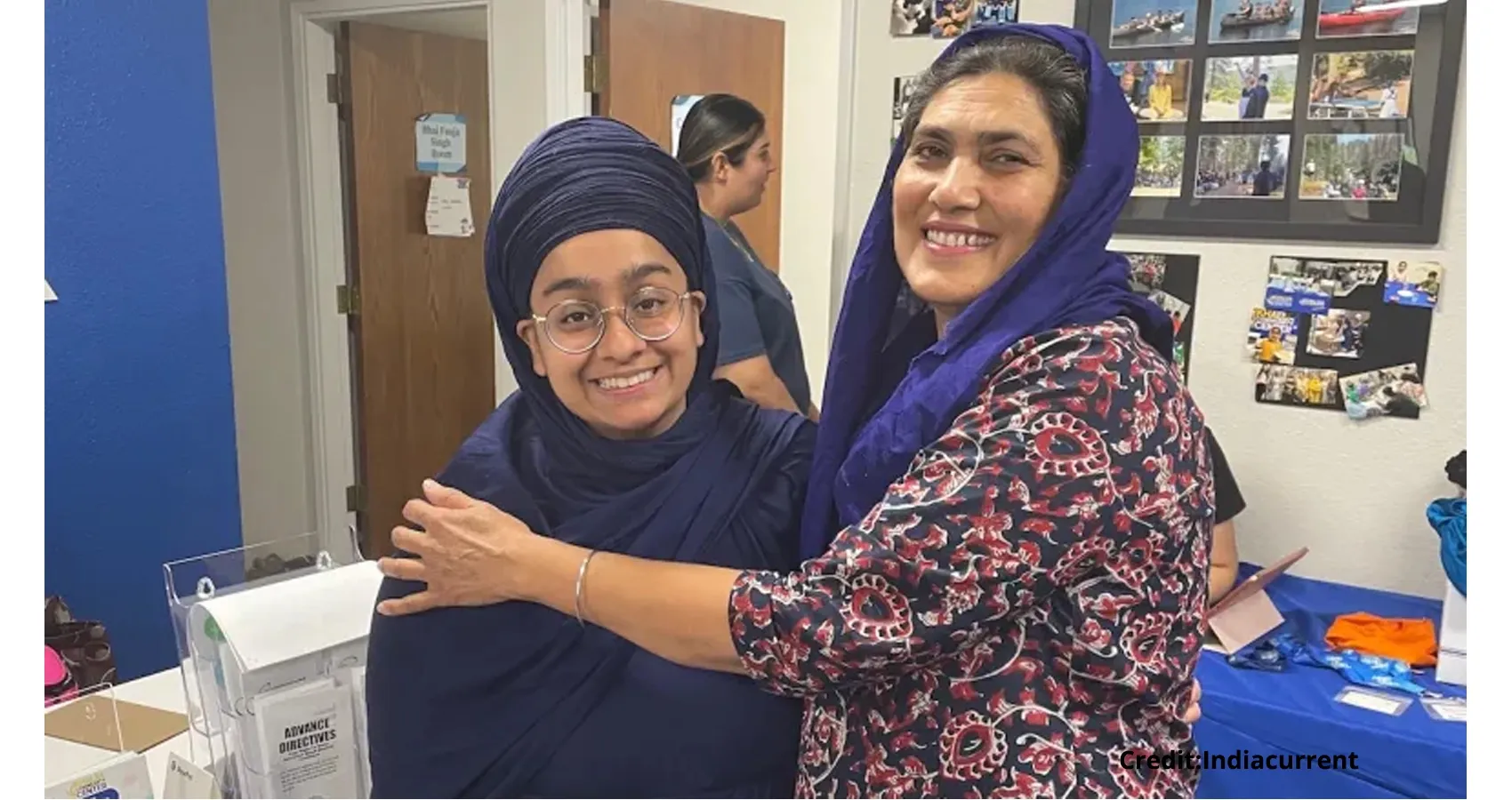
Harjit Kaur, a 66-year-old Sikh originally from Punjab, India, discovered the Khalsa Community Center through a friend. Now residing in Fresno, California, she was pleasantly surprised to learn about a local space where Sikh seniors could engage in community activities and events.
Like many South Asian seniors living in multi-generational households, Harjit Kaur shares her home with her adult children and grandchildren, adhering to longstanding cultural traditions. However, when her family members leave for work or school, she often finds herself alone, grappling with feelings of isolation. This loneliness is compounded by a significant language barrier; while she speaks fluent Punjabi, her English skills are limited. As a result, navigating life in a new country can be particularly challenging for her.
Prableen Kaur, Executive Director of the Khalsa Foundation California (KFC), emphasizes that many seniors like Harjit Kaur experience profound loneliness at home, creating what she describes as an epidemic of isolation within the community. The Khalsa Community Center, founded in July 2024, aims to provide essential services, educational support, and culturally rooted programs specifically for the Punjabi Sikh community.
The language barrier, combined with limited access to transportation, further restricts these seniors’ ability to socialize, exacerbating their mental health challenges. “They’re lonely, they’re isolated, they don’t have the community that they had back home, where they could walk out and have friends everywhere,” Prableen Kaur explains.
Before establishing the Khalsa Community Center, Prableen Kaur volunteered with the Khalsa Foundation, an international nonprofit dedicated to serving the Sikh community in the United Kingdom. After relocating to California, she founded KFC in 2018 to address the needs of the region’s Sikh population, which is estimated to be between 250,000 and 500,000, making it one of the largest Sikh diasporas outside South Asia. The community is primarily concentrated in Central Valley cities like Fresno, where many members work in agriculture and trucking.
Punjabi is not only the primary language spoken within this community but also a vital aspect of their cultural and spiritual identity. It is the language of the Guru Granth Sahib, the holy book of the Sikh faith, which underscores its significance beyond mere communication.
Recognizing the community’s struggles with mental health issues, Prableen Kaur noted that there were few resources available in Punjabi to address these concerns. To meet this pressing need, KFC established the Khalsa Community Center in Fresno, which offers mental health services through a full-time therapist who provides therapy in Punjabi.
“From the start, we wanted to involve seniors as much as possible because they’re such an overlooked part of our community,” Prableen Kaur states. However, the approach to mental health services for seniors in the Sikh community differs from traditional therapy models. Many seniors were raised in South Asia, where mental health issues are often stigmatized, and the vocabulary to discuss these concerns does not easily translate into English.
Dr. Preet Kaur Sabharwal, a licensed clinical psychologist based in the Bay Area, highlights the lack of community outside immediate family as a significant issue for South Asian seniors. As the co-founder of the South Asian Mental Health Consortium, she advocates for mental health resources tailored to the South Asian community, organizes conferences, and trains practitioners interested in serving this demographic.
Sabharwal points out that many seniors refrain from asking their children for help due to cultural perceptions of weakness, and they may feel embarrassed discussing medical issues or fear becoming a burden to their families. “When they were back home, there weren’t any formalized services, but someone would always show up,” she recalls. “The door was always open; someone would come over for chai; everyone in your neighborhood had the same culture; they spoke the same language.”
Community engagement became the cornerstone of the senior programming model developed by Prableen Kaur and her team. They organized gatherings conducted in Punjabi, allowing seniors to enjoy tea and snacks, listen to spiritual discourses about Sikh tenets, and participate in games like bingo.
“They just wouldn’t come otherwise,” Prableen Kaur explains, emphasizing the importance of language in fostering community connections. While some gurdwaras, or Sikh places of worship, offer similar events, the Khalsa Community Center distinguishes itself by employing a therapist who speaks Punjabi and shares a Sikh cultural background. This cultural understanding enhances the therapeutic experience, as it allows for more meaningful conversations around mental health.
Prableen Kaur and her team also provide transportation for seniors who struggle to find rides. “I had never imagined that they would give me a ride. They picked me up and even dropped me off after the event!” Harjit Kaur shares, expressing her appreciation for the community programs. “It’s great for my mental health,” she adds. “Whenever I feel stressed, I hope that there is a program coming up at the center. I feel totally refreshed when I return home afterwards.”
Over the past two years, the Khalsa Community Center has served more than 150 senior clients, with many, like Harjit Kaur, becoming regular attendees. The center has witnessed an increase in event participation, growing from around 20 attendees in its early days to over 30 currently, with new participants frequently joining.
Despite the positive impact of the center’s programming, quantifying its effects on clients’ mental health remains challenging, particularly given the cultural differences surrounding mental health in the United States. Since its inception, the center has consistently maintained a waitlist for services, with 15 individuals still awaiting assistance as of August 2026.
The Khalsa Community Center began with a small team and a $750,000 grant from the state of California’s Children and Youth Behavioral Health Initiative. However, the demand for services continues to outpace their capacity. Prableen Kaur is actively seeking to engage medical insurance companies to cover their services, which would help alleviate some financial burdens, although these conversations have been frustrating.
“We’re the only ones providing a Punjabi-speaking therapist, and they said that’s why we have translators,” she explains. “They said your community doesn’t need this.” To meet the growing demand, the center requires additional practitioners to support its sole therapist.
Dr. Sabharwal faced similar challenges when she expressed her desire to work with the South Asian community, encountering skepticism from academic advisors who believed the community did not engage with therapy. However, her experiences have led her to realize that traditional training often does not apply when serving this demographic. “We need to help support not just the community, but also the providers because they’re not going to be trained to serve this community,” she asserts.
In response, Sabharwal established the South Asian Mental Health Consortium, which conducts workshops and training for practitioners interested in working with the South Asian community.
Sabharwal believes that the model of culturally congruent mental health care developed by the Khalsa Community Center could be beneficial if replicated among other language groups. While she acknowledges the complexities of adapting this model for all South Asian languages, she sees potential in languages like Hindi, which is widely spoken in India and among Hindi speakers in the U.S.
Recently, the center received a significant $6 million grant from the California Department of Health Care Services, contingent upon raising an additional $600,000. This funding will enable them to expand their services and hire more practitioners. Until then, Prableen Kaur and her team continue to offer rides to seniors, ensuring they can access the support they need.
“They have my WhatsApp number, so they literally call me and be like, ‘Hey, can you come pick me up?’” Prableen Kaur says. “If we sort that out for them, then there’s no complaint.”
According to India Currents, the Khalsa Community Center is making strides in addressing the mental health needs of Punjabi-speaking seniors, fostering a sense of community and belonging among its clients.