
Trump-endorsed candidates experienced mixed results in recent primary elections across Florida and Wyoming, while a socialist candidate achieved a surprising victory in the Sunshine State’s Senate race.
In the recent primary elections held on Tuesday night, results varied significantly for candidates endorsed by former President Donald Trump across Florida and Wyoming. Some candidates faced defeats in key congressional races, while others emerged victorious.
The elections spanned from sunny South Florida to the cold expanses of Alaska, with critical federal and gubernatorial races that will influence the balance of power in Congress. Observers are closely analyzing these results to assess Trump’s influence within the Republican Party and the rising presence of socialist candidates.
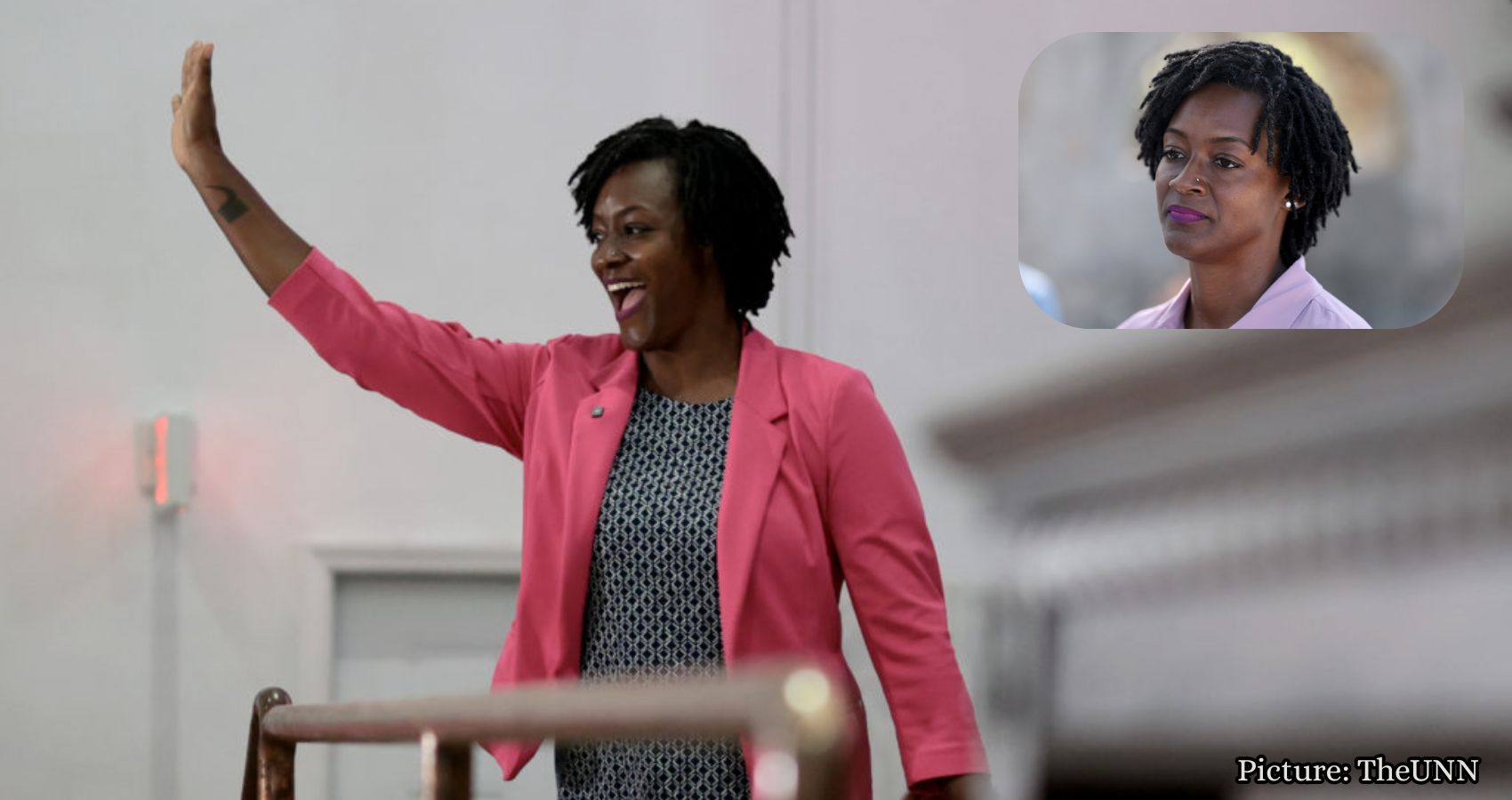
One of the most notable outcomes was in Florida, where a socialist candidate achieved a stunning upset in the Democratic primary for U.S. Senate. Angie Nixon, a member of the Democratic Socialists of America (DSA) and a Democratic state representative, defeated retired Air Force Lt. Col. Alexander Vindman by nearly 12 points. This victory was particularly surprising given that Vindman had a significant financial advantage, outspending Nixon nine-to-one. He raised approximately $16.3 million, while Nixon’s campaign budget was around $1 million. Despite this disparity, Nixon’s grassroots support propelled her to victory.
Nixon will now face Republican incumbent Sen. Ashley Moody in the general election, setting the stage for a competitive race.
Trump’s endorsements yielded mixed results across various races. In Florida, Rep. Byron Donalds, a Trump-endorsed candidate, secured victory in the Republican gubernatorial primary, garnering 47% of the vote. He will compete against former Republican congressman-turned-Democrat David Jolly in the upcoming election.
Additionally, Ashley Moody, who was also endorsed by Trump, won a special primary election to complete the remainder of Marco Rubio’s Senate term, which extends until 2028. Moody was appointed to the Senate seat after Rubio joined the Trump administration.
Rep. Randy Fine, another Trump-backed candidate, easily won reelection in Florida’s 6th Congressional District. However, not all Trump-endorsed candidates fared well. Rep. Cory Mills, who faced multiple scandals and an ongoing House Ethics Committee investigation, lost his race to challenger Ryan Elijah. Mills had been endorsed by Trump earlier this year but struggled under the weight of allegations against him.
In a surprising twist, Catalina Lauf, who received a last-minute endorsement from Trump, lost her bid to fill Donalds’ seat in Florida’s 19th Congressional District. Media executive Jim Schwartzel won the five-way race with 29.1% of the vote, while Lauf finished with 22%.
In Wyoming, the primary elections told a different story. Trump-endorsed Rep. Harriet Hageman won decisively in the U.S. Senate primary, defeating cattle rancher Sam Mead with a commanding 62% of the vote. However, in the gubernatorial primary, Republican voters opted for state Sen. Eric Barlow over Trump’s choice, Megan Degenfelder, who is the state’s superintendent of public instruction. Barlow secured 50% of the vote, while Degenfelder received 29.7%.
In the House races, Wyoming’s Secretary of State Chuck Gray won a competitive five-way primary, positioning himself for the general election. The state’s political landscape remains solidly Republican, with no Democrats elected in statewide races since 2006.
Despite the mixed results, Trump took to social media to celebrate what he deemed “great WINS” on the night of the primaries.
In Florida’s newly redrawn 20th Congressional District, Rep. Debbie Wasserman Schultz, a veteran Democrat, successfully defeated four challengers, including self-proclaimed socialist activist Elijah Manley. Manley raised nearly $1 million for his campaign but ultimately placed third behind former Broward County Mayor Dale Holness.
Wasserman Schultz’s campaign faced criticism for her decision to run in a district that some argued should be represented by a candidate of color. Manley, who emphasized the need for fresh leadership, expressed discontent with Wasserman Schultz’s candidacy in a district described as “historically Black.”
In another closely watched race, Rep. Jared Moskowitz defeated socialist challenger Oliver Larkin in Florida’s 25th Congressional District by a margin of 64% to 36%. Moskowitz, who positioned himself as a centrist Democrat, emphasized his independent-minded approach in the face of Larkin’s progressive platform.
Meanwhile, in Alaska, the primary elections were characterized by a non-partisan “top-four” system, allowing candidates from all parties to compete. Incumbent Republican Sen. Dan Sullivan faced multiple challengers, including former Democratic Rep. Mary Peltola. At the time of the race’s call, Sullivan was in second place, while Peltola held a narrow lead.
As the political landscape continues to evolve, the results of these primaries will undoubtedly shape the upcoming general elections in November. The outcomes reflect not only the influence of Trump within the Republican Party but also the growing presence of socialist candidates in traditionally Democratic strongholds.
These developments highlight the ongoing shifts in American politics, as candidates from various ideological backgrounds vie for control of Congress and state offices. The results will be closely monitored as both parties prepare for the challenges ahead, with the potential for significant implications in the 2024 elections, according to Fox News.