
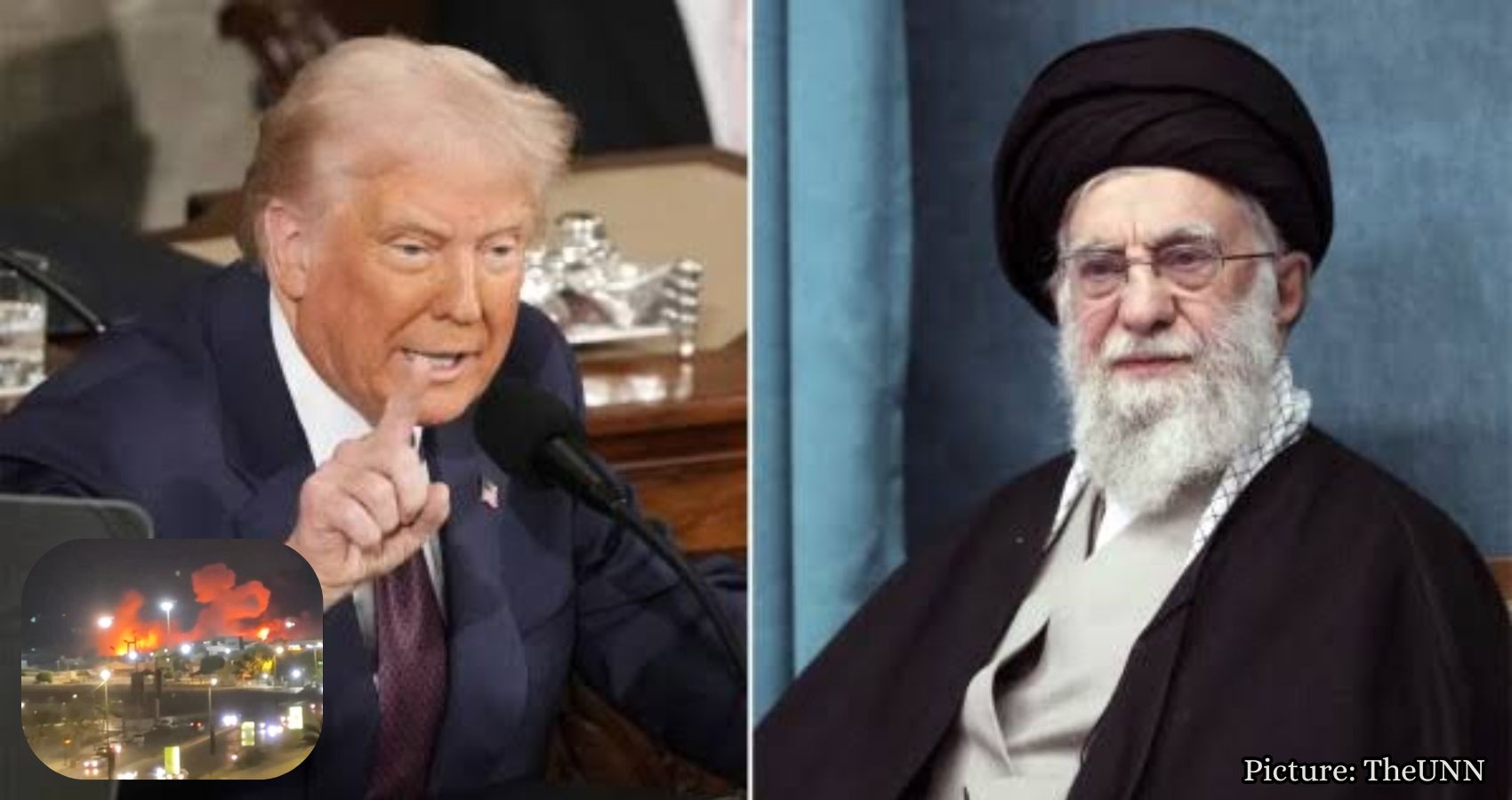
Analysts warn that Iran may respond to tightening U.S. sanctions with military strikes on American assets and Gulf infrastructure as tensions escalate this fall.
National security analysts are raising alarms that Iran could initiate military strikes as early as this fall, targeting high-value assets in response to escalating U.S. economic sanctions. This warning follows reports from the Abu Dhabi National Oil Company (ADNOC) that two vessels were struck while transiting the Strait of Hormuz, as reported by the United Arab Emirates’ state-run WAM news agency. Fortunately, ADNOC confirmed that there were no injuries and that the situation was under control, while the UAE foreign ministry condemned the Iranian attacks.
In a related development, Treasury Secretary Scott Bessent announced that Washington is preparing to implement unprecedented economic measures against Iran. “Watch this space for more announcements coming next week because we are going to apply measures like we have never seen in the history of economic isolation on a country,” Bessent stated in an interview with Newsmax.
Behnam Ben Taleblu, a senior fellow at the Foundation for Defense of Democracies, indicated that Tehran is likely to increase military pressure as sanctions tighten. “Come early fall, what we can expect is for them to kinetically push back against Trump’s economic policy,” Taleblu told Fox News Digital. He noted that if the president continues to embrace economic pressure as a strategy, similar to actions taken in 2019, the Iranian regime may resort to military responses to escape economic containment.
Taleblu elaborated that diminishing oil revenues and the U.S. naval blockade could prompt Tehran to broaden its target list across the region. “This means they would embrace the kinetic tool, and that’s how they would get out of the economic containment regime that the U.S. seems to be defaulting to want to put on them,” he explained. He anticipates an increase in attacks on ships, U.S. bases, and Arab infrastructure in the Persian Gulf. Furthermore, he suggested that the regime would likely prioritize targets based on their immediate and long-term economic value, potentially provoking a direct or indirect U.S. response.
The warnings come amid a deadlock in negotiations between Washington and Tehran. A senior Iranian source revealed to Reuters that there have been no discussions regarding an extension of the U.S.-Iran ceasefire agreement as of August 12. Iran has insisted that the U.S. return to the nuclear pact and establish a definitive timeline for fulfilling its obligations.
The interim memorandum of understanding, signed in June, called for the “immediate and permanent termination of military operations on all fronts.” However, the agreement unraveled after Trump declared on July 7 that the pact was “over.” Under the terms of the agreement, both sides had a 60-day window to negotiate a final deal addressing key security concerns, including Iran’s nuclear program. This deadline is set for August 17, with the control of the Strait of Hormuz remaining a significant point of contention.
Hossein Taeb, the newly appointed head of Iran’s Basij paramilitary force, asserted on Thursday that the Strait of Hormuz remains “under Iran’s control and management.” His comments contradicted Trump’s assertion the previous day that the U.S. held “total control” over the vital waterway.
Taleblu remarked that the Iranian regime is employing familiar tactics, suggesting a dual approach of aggression and diplomacy. “The regime is relying on tried and true tactics here, which is, you know, a knife in the back and a handshake in the front to many of America’s traditional Gulf partners,” he said. He believes that Iranian escalation and diplomatic pressure are aimed at maneuvering the Trump administration back into the memorandum of understanding.
According to Taleblu, the Iranian regime is keen to avoid granting the Trump administration the optics of victory, particularly regarding the Strait of Hormuz. He noted that Trump has characterized the sanctions-driven strategy as a “low-key” approach, but Taleblu concluded, “These are high-impact tools.” He cautioned that the escalation witnessed in the summer of 2019 could serve as a precursor to future developments.
As tensions continue to rise, the international community remains watchful of Iran’s next moves and the potential implications for regional stability.
These insights were shared by Behnam Ben Taleblu, according to Fox News Digital.