
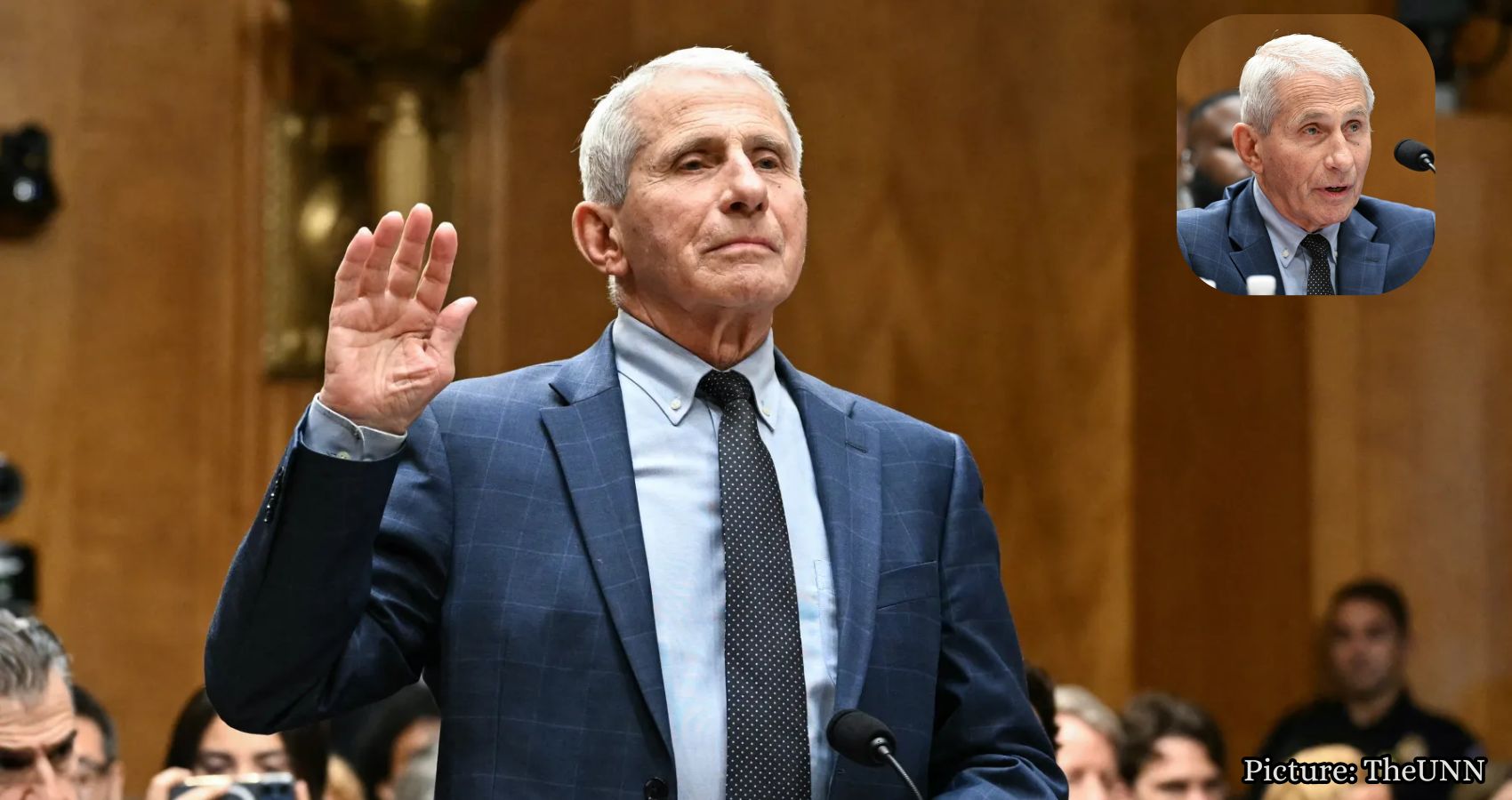
Dr. Marc Siegel discusses newly released texts from Dr. Anthony Fauci, suggesting a slow response to evolving COVID-19 guidance and questioning the former advisor’s adaptability during the pandemic.
Dr. Marc Siegel, a senior medical analyst for Fox News, has raised concerns regarding Dr. Anthony Fauci’s handling of COVID-19 guidance, following the release of text messages that reveal a perceived lack of adaptability in response to evolving scientific evidence.
The texts, which were made public by Senators Ron Johnson, R-Wis., and Rand Paul, R-Ky., provide insight into private discussions among Fauci and other top health officials as they navigated the complexities of the pandemic. Siegel, in a Monday evening interview, characterized Fauci as at times “too dogmatic” and slow to pivot as new information emerged.
While acknowledging Fauci’s expertise as a “top immunologist” and “top vaccinologist,” Siegel expressed concern that Fauci often ventured beyond his areas of specialization. “I respect that a lot,” Siegel stated, but added that Fauci’s rigidity in sticking to certain ideas, despite changing evidence, was problematic.
Siegel pointed out that Fauci’s decisions regarding lockdowns, school closures, and masking often strayed into areas outside his medical training. “It’s not surprising that he would, for lack of a better word, flip-flop on those areas,” he remarked.
In discussing the newly released texts, Siegel noted that Fauci appeared to be guiding public officials and leaders from behind the scenes, which he believes is not an appropriate role for a health advisor. Among the topics addressed in the texts was the issue of COVID-19 vaccination during pregnancy.
Siegel, a proponent of vaccines including mRNA technology, emphasized the importance of vaccination for expectant mothers, acknowledging the risks posed by COVID-19 to this demographic. He stated that early in the pandemic, recommending vaccination during pregnancy was reasonable based on the information available at that time.
However, as the virus evolved and the vaccines’ effectiveness waned, Siegel argued that the public discourse surrounding vaccination should have adapted accordingly. “As the vaccine changed and the virus mutated, and as the vaccine became less protective, that needed to be entered into the public debate about the vaccine — and Dr. Fauci wasn’t fast enough to do that,” he said.
Siegel also referenced a study that raised concerns about a potential link between a second vaccine dose and early miscarriage. He expressed skepticism that Fauci and other officials were sufficiently responsive to this emerging evidence. “I don’t think that Dr. Fauci and others may have been quick enough to consider that,” he noted.
Despite ongoing research supporting vaccination during pregnancy, Siegel questioned whether contradictory evidence was adequately considered as it emerged. “It’s a little eyebrow-raising to me that it appears he was trying to dismiss a study” suggesting a potential risk of miscarriage, he remarked.
Siegel emphasized that decisions regarding vaccination should ultimately rest with patients and their healthcare providers, rather than being dictated by government officials. “I don’t like when the government superimposes their views, especially if they’re incorrect or if they are ill-informed,” he said. “But I still think it should be between the patient and the doctor.”
He further criticized the slow adaptation of policies to reflect changing evidence about vaccine effectiveness. “I think the problem was that the mandates continued,” Siegel stated. “We were too slow to pivot on this vaccine, and that led to a lot of public distrust.”
When asked about the difference between Fauci’s private discussions and the public messaging, Siegel acknowledged a significant gap. “There’s a difference between public and private discourse here,” he said. “There should be none.”
As more messages are released, Siegel plans to closely examine how Fauci’s guidance evolved alongside the scientific evidence. “I’m looking at one thing: Where was the evolution of guidance and thought and staying within your lane as more and more information came out?” he said. “Or did this develop more and more into dogma and megalomania? I don’t know. That’s what I’m disturbed about.”
Siegel cautioned, however, against hastily judging the communications from the pandemic era without considering the context of what was known at the time. “To be fair to Dr. Fauci, things need to remain in context,” he said. “When did this happen? What was going on at the time? What did we know and what did we not know?”
He concluded by emphasizing the importance of humility in the face of uncertainty. “We were learning on the job. We were learning as we went. We knew nothing about this thing, and it just blew over us,” Siegel said. “That uncertainty made a willingness to change course all the more important. Humility is the best way to go — not dogma,” he added, according to Fox News.