
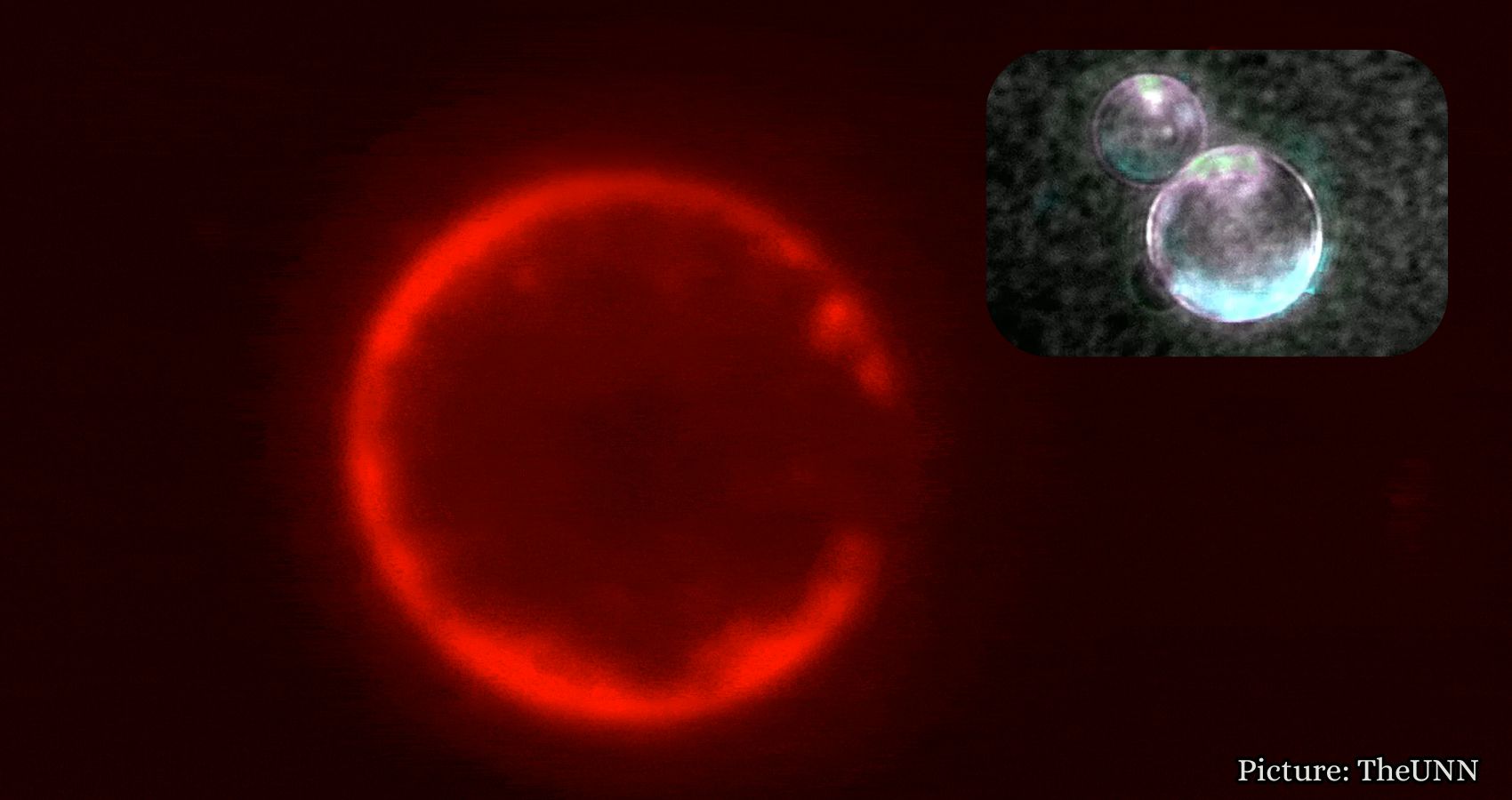
A team of researchers at the University of Minnesota has developed the SpudCell, a synthetic cell-like structure that challenges traditional definitions of life in synthetic biology.
A team of researchers at the University of Minnesota has unveiled the SpudCell, a groundbreaking synthetic cell-like structure capable of growth, division, and competition. This innovative creation raises significant questions about the definition of life within the field of synthetic biology.
The SpudCell is a notable advancement in synthetic biology, as it performs functions typically associated with living organisms, including feeding, growing, dividing, and competing. This development not only marks a milestone in the field but also prompts broader inquiries into the essence of life itself.
The creation of the SpudCell is part of a long-standing effort in synthetic biology, which focuses on constructing new materials and processes by leveraging biological principles. Researchers have previously achieved various applications in this field, including the development of substances that can temporarily replace blood in medical emergencies, enhance drug delivery systems, and advance regenerative medicine aimed at repairing damaged tissues and cells.
Unlike earlier attempts to fabricate lifelike cells, which often involved disassembling living cells down to their most fundamental components, the SpudCell has been constructed from the ground up using non-living chemical elements. This novel approach marks the first instance in which a synthetic cell built in this manner has successfully completed a full life cycle, giving rise to subsequent generations of SpudCells.
The SpudCell’s creation follows decades of research in synthetic biology, a field that has rapidly evolved since its inception. Historically, synthetic biology began as a niche scientific endeavor in the early 2000s but has since expanded into a robust discipline with potential applications across various sectors, including healthcare, agriculture, and environmental management. The notion of creating cellular systems that mimic or even surpass natural biological functions has driven numerous projects worldwide.
The announcement of the SpudCell has sparked reflection among scientists regarding the trajectory of synthetic biology and the implications of this research on our understanding of life. John Glass, who leads synthetic cell research at the J. Craig Venter Institute, commented on the ambiguity surrounding the definition of life, stating, “Keep in mind that ‘alive’ is not a precisely defined condition. As U.S. Supreme Court Justice Potter Stewart said about pornography: ‘I know it when I see it.’ Being alive is sort of like that.” His remarks highlight the complexities involved in classifying synthetic constructs like the SpudCell within traditional biological frameworks.
Despite the promising capabilities of the SpudCell, the consensus among synthetic biologists is that no artificial cell has yet crossed the threshold into being classified as truly “alive.” The researchers behind the SpudCell do not claim to have created life, acknowledging that their creation still possesses limitations that differentiate it from natural living cells.
Currently, the SpudCell exhibits several critical constraints, such as its reliance on specific chemical conditions for growth and division, which are not characteristic of biological life as we understand it. These limitations underscore the ongoing debate among scientists regarding the fundamental characteristics that define life, such as self-sustaining processes, homeostasis, and the ability to respond to stimuli.
This exploration of synthetic cells raises important ethical and philosophical questions about what it means to create life and the potential applications of such technologies. As researchers continue to develop systems that blur the lines between synthetic and natural life, discussions surrounding bioethics will become increasingly relevant. Issues such as the potential for creating synthetic organisms that could unintentionally disrupt ecosystems or be weaponized must be addressed by the scientific community and policymakers alike.
The development of the SpudCell opens the door to a myriad of future possibilities in synthetic biology, including the potential for tailored biological systems that could be used in a range of applications, from medicine to environmental science. Researchers envision a future where synthetic organisms could be engineered to perform specific tasks, such as breaking down pollutants, producing biofuels, or serving as sophisticated delivery systems for pharmaceuticals.
Moreover, the implications of such advancements extend beyond practical applications to fundamental questions about life, ethics, and the responsibilities of scientists in the realm of synthetic biology. As the field continues to evolve, it is imperative that researchers, policymakers, and ethicists engage in ongoing discussions to navigate the challenges and opportunities presented by these groundbreaking technologies.
For instance, the creation of synthetic cells capable of replicating and evolving could lead to innovations in biomanufacturing, where living systems are harnessed for sustainable production processes. However, it also raises concerns about the potential for unregulated use of such technologies, emphasizing the need for comprehensive regulatory frameworks to govern synthetic biology research.
In conclusion, the SpudCell represents a noteworthy achievement in synthetic biology, illustrating the remarkable potential of scientific innovation while simultaneously prompting profound questions regarding the nature of life itself. As research in this area progresses, the scientific community will undoubtedly continue to grapple with the definitions, limitations, and ethical considerations associated with the creation of lifelike systems. The ongoing dialogue between scientific advancement and ethical responsibility will play a crucial role in shaping the future of synthetic biology and its integration into society, according to GlobalNet News.