
India continues to drive global economic growth, according to the IMF, despite challenges from the Iran conflict and rising energy prices.
WASHINGTON, D.C. – The International Monetary Fund (IMF) has reaffirmed that India remains a significant engine of global economic growth, even amid the economic challenges posed by the ongoing conflict in Iran and increasing energy prices. On June 25, the IMF highlighted that while India has shown resilience, it is not entirely insulated from the disruptions affecting global energy markets.
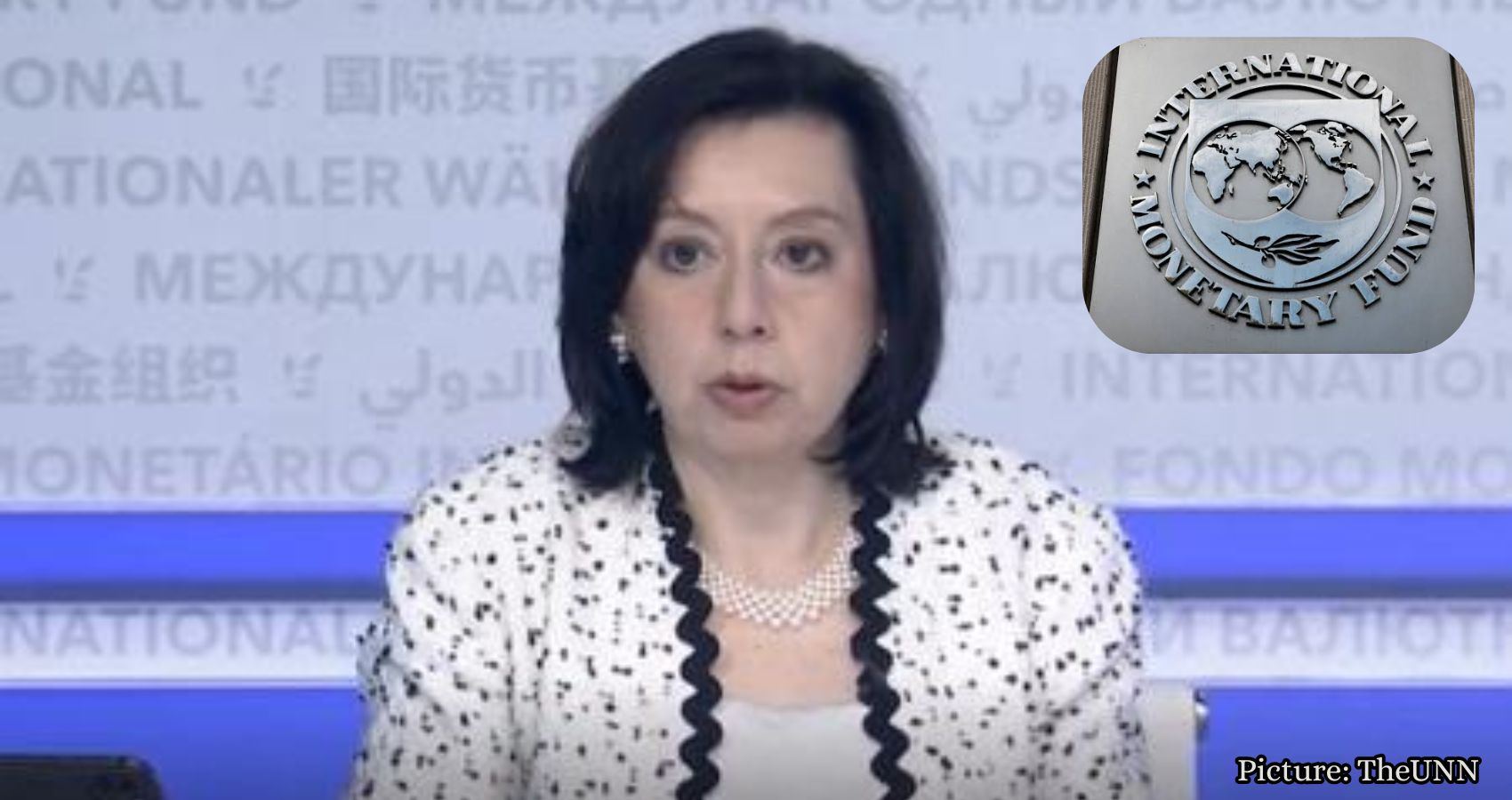
Julie Kozack, Director of the IMF’s Communications Department, emphasized that India’s economy has demonstrated remarkable strength, primarily fueled by robust domestic demand. “What I can say is that despite the impact of the war and global headwinds from the global economy, or externally, India’s economy has been growing robustly, and it has been supported, particularly by very strong domestic demand within India,” Kozack stated.
The IMF has maintained its projection for India’s economic growth at 6.5 percent for the fiscal year 2026-27, a figure that reflects an upward revision made earlier in April. Kozack noted, “We had projected growth at 6.5 percent in fiscal year 26-27, and that was a slight upgrade compared to what we had had in January. So, 6.5 percent is still quite strong growth.”
This optimistic forecast is attributed to the strong economic momentum carried over from the previous year, along with a reduction in U.S. tariff rates, which has helped mitigate the impact of soaring global energy prices.
Kozack also pointed out that India’s economic performance exceeded the IMF’s expectations during the first quarter of the calendar year. “Right now, we see that there’s strong momentum that has continued in the first quarter of this calendar year. The economy in India had been growing in the first quarter at 7.8 percent, and that was above what we had built into our projection for April for the first quarter,” she explained.
When asked about the potential effects of the Middle East conflict and disruptions around the Strait of Hormuz on India’s energy-dependent economy, Kozack acknowledged that the global energy shock has had widespread repercussions. “I think it’s clear that the energy shock has had an impact globally and no country has really been untouched by the global shock,” she said.
Kozack further elaborated on India’s situation, noting that the country has faced supply disruptions and higher prices due to its reliance on imported energy. “We did see that India did face supply disruptions with respect to energy. India was also affected by higher prices, like most countries in the world, because of the energy price shock, and of course, because India imports quite a lot of energy, we saw then, of course, the effect,” she added.
Despite these challenges, the IMF’s outlook for India remains positive, underscoring the nation’s role as a key player in the global economy. The resilience of India’s domestic demand and the government’s economic policies are expected to continue supporting growth in the coming years, according to the IMF.
As the global economy navigates through these turbulent times, India’s ability to maintain its growth trajectory will be closely monitored by economists and policymakers alike, reflecting its importance on the world stage.
According to IANS, the IMF’s insights reinforce the notion that India is well-positioned to withstand external pressures while continuing to contribute significantly to global economic dynamics.