
The Supreme Court’s recent ruling in Wolford v. Lopez strikes down Hawaii’s concealed-carry restrictions, igniting debate over the state’s reliance on historical Black Codes to justify its gun laws.
The U.S. Supreme Court has delivered a significant ruling regarding gun rights in Hawaii, striking down the state’s private-property concealed-carry restriction in a 6-3 decision in the case of Wolford v. Lopez. The ruling has drawn attention to Hawaii’s reliance on a Reconstruction-era Black Code to defend its firearm regulations, prompting criticism from legal advocates and gun rights groups alike.
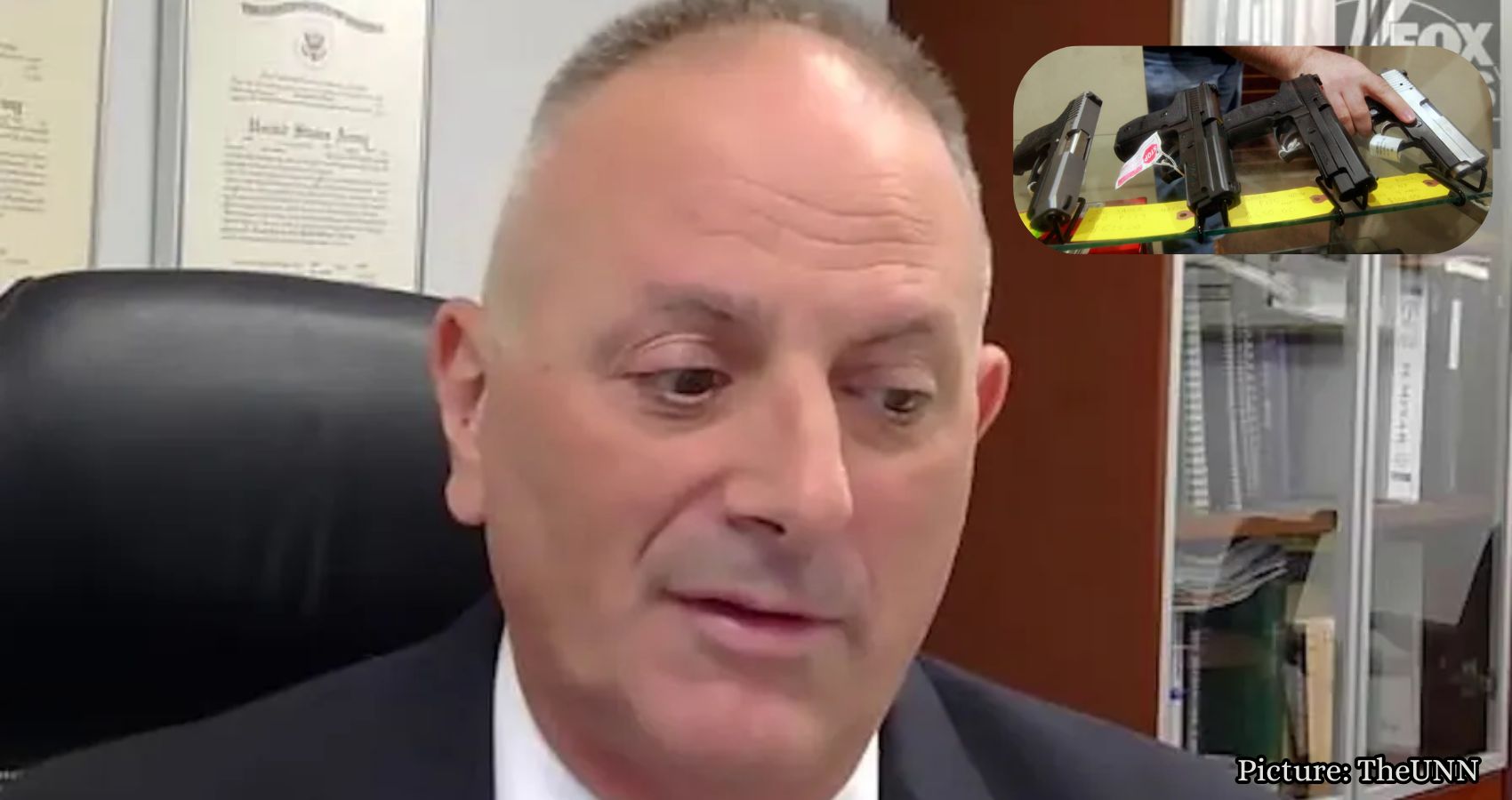
The Court’s decision means that Hawaii cannot require licensed gun owners to obtain explicit permission before carrying firearms onto private property that is open to the public. This policy, which gun rights advocates have labeled the “vampire rule,” effectively barred lawful gun owners from entering businesses while armed unless they were “invited in.” Attorney Kevin O’Grady, who represented the plaintiffs in the case, expressed his dismay at the state’s justification for the law.
“It is disgraceful that any state would rely on a law specifically aimed at taking away the Second Amendment rights or any constitutional right of Black Americans as it was at that time,” O’Grady told Fox News Digital. He further criticized Hawaii’s stance, stating, “We fully expected that the Supreme Court would identify that as the kind of law that one absolutely should not look to determine whether or not something is constitutional.” O’Grady emphasized that the law was a clear violation of constitutional rights.
A central issue in the case was Hawaii’s attempt to justify its law under the Supreme Court’s 2022 ruling in New York State Rifle & Pistol Association v. Bruen. In that decision, the Court established that modern gun regulations must align with the historical tradition of firearm regulation in the United States. Hawaii referenced several historical laws, including an 1865 statute from Louisiana that was part of the post-Civil War Black Codes, which prohibited carrying firearms onto another person’s property without consent.
Justice Samuel Alito, writing for the majority, dismissed Hawaii’s argument, labeling the Louisiana statute a “tainted artifact” created to disarm newly freed Black Americans. He stated that such a law “cannot be taken seriously” as evidence of the Second Amendment’s original public meaning. The majority opinion underscored the Court’s view that laws designed to oppress certain groups cannot serve as a legitimate basis for modern legal interpretations.
In contrast, Justice Ketanji Brown Jackson, in her dissent, raised concerns about the Court’s approach to the historical context of the Black Codes. While she acknowledged the racist intent behind these laws, she argued that the Court should have first addressed whether the Louisiana law itself violated the Second Amendment or if the issue lay in its racially discriminatory enforcement.
Jackson posited that the Court might have overlooked an important constitutional question. “It might well be that the Black Codes are invalid inputs for Bruen’s test,” she wrote, “but only if they violated the Second Amendment — which may or may not be the case.” She contended that the Court should have provided a more thorough examination of the historical laws before dismissing them as irrelevant.
This perspective drew criticism from various quarters. Critics pointed out that the Fourteenth Amendment was enacted specifically to address the injustices perpetuated by laws like the Black Codes, which denied newly freed Black Americans their constitutional rights, including the right to bear arms. Hannah Hill, vice president of the National Association of Gun Rights, responded to Jackson’s dissent, stating, “I would simply point her to what Justice Alito pointed out in the majority ruling — it was in response to these types of laws that the Fourteenth Amendment was enacted in the first place.” Hill emphasized that the constitutional amendment was a direct response to the deprivation of rights experienced by Black Americans.
Tyler Yzaguirre, president of the Second Amendment Institute, echoed similar sentiments, asserting that the Black Codes were not legitimate expressions of the nation’s constitutional tradition. “Those laws were examples of government using its power to deprive Americans of a fundamental right,” Yzaguirre remarked, supporting the Court’s decision to reject the notion that such laws could define the historical limits of the Second Amendment.
Despite the ruling, businesses in Hawaii retain the authority to prohibit firearms on their premises by posting or enforcing a “no firearms” policy. However, the Supreme Court clarified that the state cannot treat every business as off-limits to licensed gun owners unless the owner explicitly states that firearms are permitted.
The implications of this ruling are likely to resonate beyond Hawaii, as it sets a precedent for how historical laws are interpreted in the context of modern gun rights. The debate surrounding the Second Amendment and its application continues to evolve, reflecting the complex interplay between historical context and contemporary legal standards.
As discussions about gun rights and regulations persist, the Wolford v. Lopez case serves as a pivotal moment in the ongoing dialogue about the Second Amendment and its interpretation in today’s society, according to Fox News Digital.