
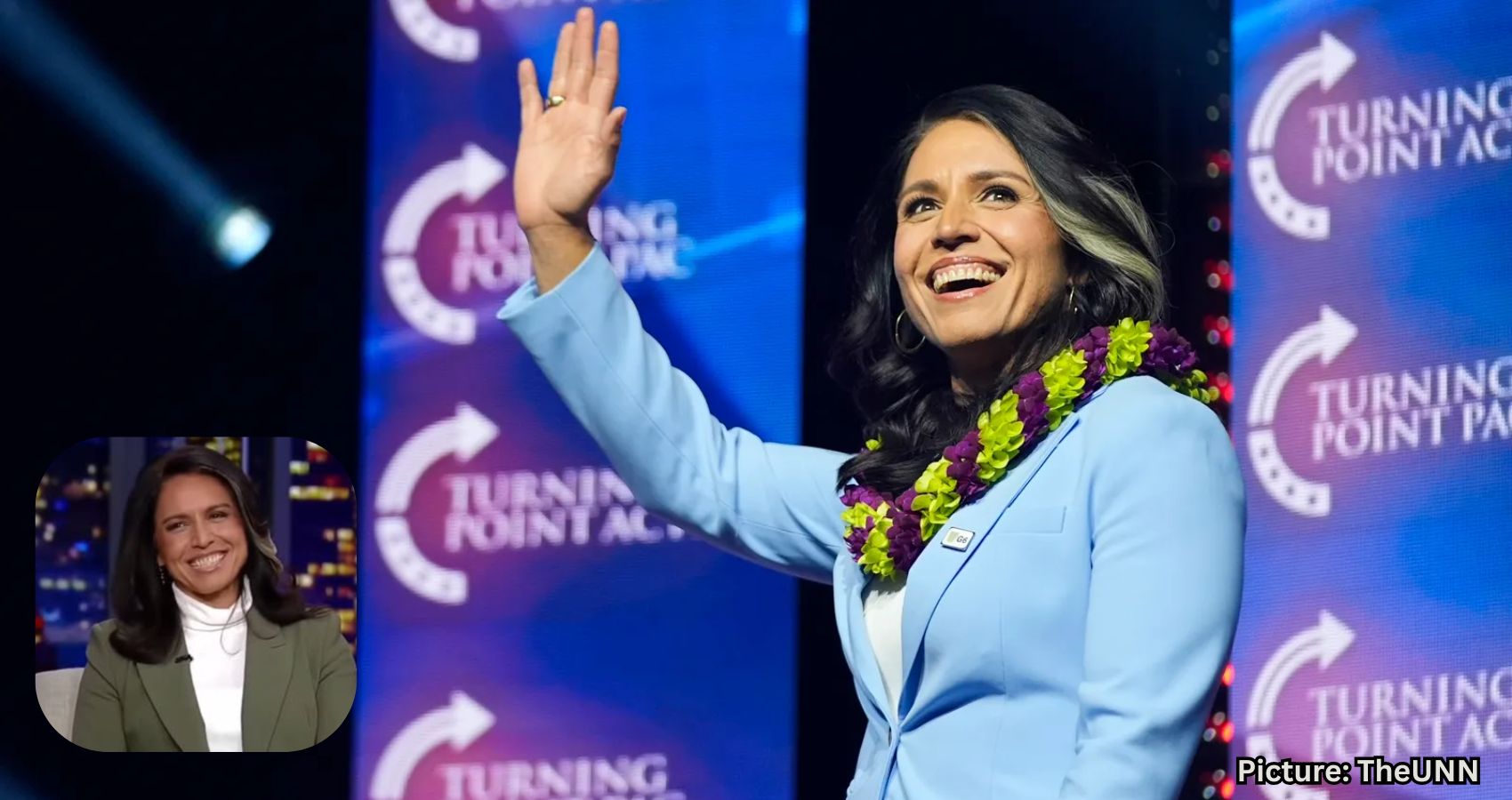
Former Congresswoman Tulsi Gabbard’s resignation as Director of National Intelligence raises questions about the influence of her spiritual guru, Chris Butler, on her political career, according to a recent investigative report.
Tulsi Gabbard’s recent resignation from her role as Director of National Intelligence (DNI), where she oversaw 18 intelligence agencies, has sparked controversy following a report from The Washington Post. The report suggests that a reclusive spiritual guru may have played a significant role in shaping Gabbard’s political trajectory.
The Washington Post’s investigation, which spanned a year, aimed to uncover the source of “hundreds of confidential memos” that provided political and policy guidance to Gabbard during her tenure in Congress. This scrutiny intensified after her nomination for the DNI position by former President Donald Trump.
According to the report, investigators discovered a mysterious email domain associated with “Nine Isles” and encrypted memos sent to individuals close to both Gabbard and Chris Butler, a 78-year-old religious leader whom Gabbard has referred to as her guru.
The findings suggest a connection between Gabbard’s public statements and actions and the guidance contained in these memos. The report also highlighted what it described as a “secretive effort” to enhance Gabbard’s public support online.
Gabbard was raised in Butler’s breakaway Hare Krishna group, known as the Science of Identity Foundation (SIF). Her parents held prominent positions within the organization, which is characterized by its unique form of Hinduism that emphasizes devotion to Krishna and includes specific practices related to meditation, yoga, and diet. Critics, including former members, have labeled the group a cult, alleging that it isolates followers from the outside world, a claim the organization has denied.
Former devotees of Butler have alleged that he exerted control over his followers’ major life decisions, demanding total obedience and secrecy. They contend that Butler has long sought to extend his influence into the political realm, with Gabbard’s rise in Washington viewed as a key part of that ambition.
One former member recounted, “I was raised to believe Chris Butler was God’s voice on Earth, and if you questioned him or offended him in any way, you were effectively offending God.” Another former devotee suggested Butler harbored aspirations beyond religious leadership, stating, “He wanted, he said, to rule the world.”
Rebecca Saltzburg, a former SIF member who worked on several of Gabbard’s congressional campaigns, provided evidence indicating that Butler’s influence extended to Gabbard and her family, as reported by The Post.
Between 2014 and 2016, during Gabbard’s time in Congress, the investigation revealed that she frequently employed arguments that aligned with talking points attributed to documents linked to the SIF. For instance, an email directive encouraged legislative action against nations whose citizens had joined the Islamic State, leading Gabbard to introduce a similar bill in Congress shortly thereafter.
The report also claimed that coordinated online activities were employed to bolster Gabbard’s public image, including social media accounts managed by Butler’s supporters that consistently defended and praised her political endeavors. One message stated, “DNI Gabbard is a true patriot and will be missed.”
Butler has previously criticized U.S. intelligence and defense institutions, labeling them as “madmen,” according to former associates.
In response to the report, a spokesperson for Gabbard dismissed the allegations as “a blatant example of anti-Hindu bigotry.” Supporters of Butler have also refuted claims that he personally authored the directives attributed to him, with associate Sunil Khemaney taking responsibility for their creation.
However, The Washington Post’s analysis indicated that certain indicators suggested Butler himself might have been the source of the memos, including references to his upbringing in Hawaii. The investigation reviewed 173 pages of material, finding that first-person references and biographical details were more closely aligned with Butler than with his associates.
This unfolding narrative raises significant questions about the intersection of personal beliefs and political careers, particularly in the context of Gabbard’s unique background and her relationship with Butler.
The implications of this investigation could resonate beyond Gabbard’s career, potentially influencing perceptions of the intersection between spirituality and politics in the broader American landscape.
The report by The Washington Post has ignited discussions about the influence of personal relationships on political decision-making, particularly in cases where spiritual leaders may play a role in shaping the views and actions of public figures.
As the story develops, it remains to be seen how these revelations will impact Gabbard’s future and the public’s perception of her political legacy.
For further details, refer to The Washington Post’s investigation.