
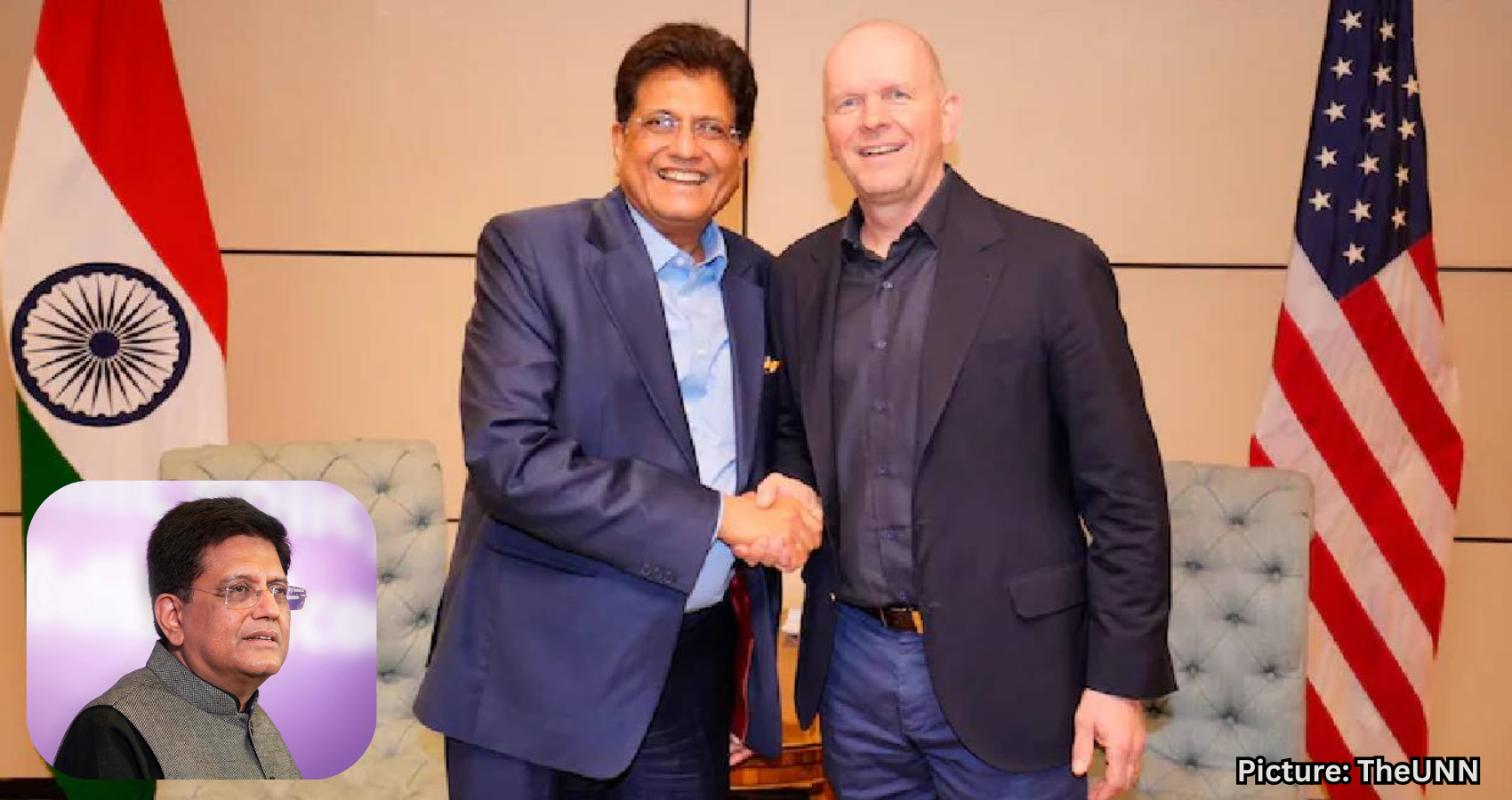
Indian Commerce Minister Piyush Goyal’s recent meetings in New York signal significant progress toward finalizing an interim trade agreement with the U.S., aimed at enhancing bilateral economic relations.
In a significant diplomatic effort to strengthen economic ties with the West, Indian Union Minister of Commerce and Industry Piyush Goyal engaged in a series of high-level meetings with top corporate executives and institutional investors during a pivotal visit to New York City. Addressing an audience of over 50 global business leaders at a closed-door roundtable hosted by the Consulate General of India and the US-India Strategic Partnership Forum, Goyal provided an optimistic update on the status of bilateral trade relations, announcing that a much-anticipated India-U.S. interim trade agreement is nearing finalization.
This push for economic diplomacy follows a three-day trade delegation to Canada and comes just days before an official American negotiating team is set to arrive in New Delhi to finalize key sub-clauses related to market access, customs facilitation, and non-tariff regulatory barriers. This underscores India’s strategic aim to position itself as a reliable, reform-oriented alternative in global manufacturing and supply chains.
During his visit, Goyal met with influential financial, technology, and pharmaceutical executives, launching a targeted initiative to accelerate long-term institutional investment and secure a landmark bilateral trade pact. These high-stakes engagements marked a critical moment in India’s broader economic diplomacy strategy as the country actively promotes its domestic structural reforms to global capital markets.
At the roundtable on May 28, Goyal provided what attendees described as a confident and encouraging update on long-stalled bilateral trade negotiations. According to corporate briefers present, Goyal assured industry leaders that the interim trade agreement between New Delhi and Washington is structurally close to completion. This announcement signals a potential breakthrough in trade relations, with a U.S. technical negotiating team scheduled to visit New Delhi from June 1 to June 4 to finalize operational legal texts regarding customs facilitation, harmonized tariffs, and market access.
The centerpiece of Goyal’s New York visit involved intensive one-on-one meetings with CEOs of major financial institutions and private equity funds. In the heart of Manhattan’s financial district, Goyal highlighted India’s robust Digital Public Infrastructure (DPI), particularly the Unified Payments Interface (UPI), as a secure environment for international fintech platforms.
In a notable meeting with Mastercard CEO Michael Miebach, discussions focused on the technical integration of next-generation payment networks and digital commerce architectures. Goyal maintained an assertive yet collaborative approach, emphasizing India’s transition from a cash-heavy economy to a digital powerhouse.
“Conversations centered around India’s growing digital economy, robust digital public infrastructure, and its emergence as a trusted global hub for fintech innovation,” Goyal stated in an official dispatch following the corporate summit. Industry insiders noted that Mastercard is keen to expand its processing footprint in South Asia, making India’s regulatory predictability a key topic during the discussions.
Shifting focus from digital payments to long-term institutional funding, Goyal also met with Morgan Stanley Chairman and CEO Ted Pick. Their discussions centered on creating reliable pipelines for institutional capital into India’s expanding infrastructure and green energy sectors. Ministry officials indicated that Goyal urged Morgan Stanley to act as a primary conduit for global pension and sovereign wealth funds seeking to diversify away from traditional East Asian manufacturing hubs.
The ministerial outreach also prioritized global private equity and healthcare supply chain security, sectors that have gained strategic importance as Western corporations seek to establish “friend-shoring” networks. Goyal met with Warburg Pincus Chairman Charles “Chip” Kaye to explore the evolving global investment landscape, emphasizing India’s macroeconomic resilience against current inflationary pressures.
During their exchange, Goyal highlighted India’s structural advantages, including a vast domestic consumption base, a competitive tech talent pool, and a stable policy environment under Prime Minister Narendra Modi’s administration. “With scale, talent, rising domestic demand, and a steady policy push, India continues to create new opportunities across sectors for global investors,” Goyal remarked, reinforcing the government’s commitment to maintaining a predictable regulatory environment for foreign private equity investments.
The geopolitical necessity of diversifying active pharmaceutical ingredients (APIs) and medical manufacturing pipelines was a key focus during Goyal’s meeting with Chintu Patel, co-founder and co-CEO of Amneal Pharmaceuticals. Known as the “pharmacy of the world” for its dominant position in generic drug manufacturing, India aims to elevate its pharmaceutical sector into high-value innovation and clinical research. Goyal and Patel discussed regulatory and investment models to strengthen India’s domestic R&D ecosystems, transitioning the sector from low-cost production to a high-margin global research hub.
The culmination of Goyal’s outreach occurred at the expansive roundtable in New York, where he addressed over 50 chief executives, fund managers, and multinational corporate directors. Organized by the Consulate General of India in collaboration with USISPF, the event reflected the high economic stakes as Western corporations seek clear regulatory guarantees before making substantial capital investments.
Goyal delivered a comprehensive presentation detailing India’s macroeconomic story, highlighting consistent GDP growth that positions the country as a leader among major emerging economies. He pointed out that under the current political leadership, India has systematically dismantled bureaucratic red tape, implemented significant ease-of-doing-business reforms, and introduced robust Production Linked Incentive (PLI) frameworks across 14 critical manufacturing sectors.
According to a post-event brief from USISPF leadership, Goyal effectively communicated that “investor confidence, business stability, and a predictable regulatory environment remain top priorities for the Indian government.” The forum noted that Goyal’s transparency and detailed updates regarding the upcoming trade rounds in New Delhi injected fresh momentum into corporate planning, assuring American corporations that an interim trade framework would lower reciprocal trade barriers in the near future.
Goyal’s New York engagements were part of a broader North American economic diplomatic tour. Prior to his visit to New York, he led a delegation of over 150 elite Indian business leaders to Canada from May 25 to May 27. While the Canadian leg sought to advance a proposed Comprehensive Economic Partnership Agreement (CEPA) and secure critical mineral supply lines, the American leg focused on deep financial integration and high-technology partnerships, including collaboration in artificial intelligence, semiconductors, and advanced manufacturing.
The timing of these dual North American outreach efforts underscores a coordinated strategy by New Delhi to leverage the ongoing global realignment of industrial supply chains. By engaging directly with both political negotiators and private capital leaders, the Indian Ministry of Commerce and Industry aims to establish a dual-track economic bridge that secures both legislative frameworks and the private investment needed to transform India into a key global export engine over the next decade, according to Source Name.