
Exploring Cancun and Riviera Maya reveals a vibrant blend of natural beauty, rich history, and lively nightlife, offering travelers a multifaceted experience beyond the typical tourist attractions.
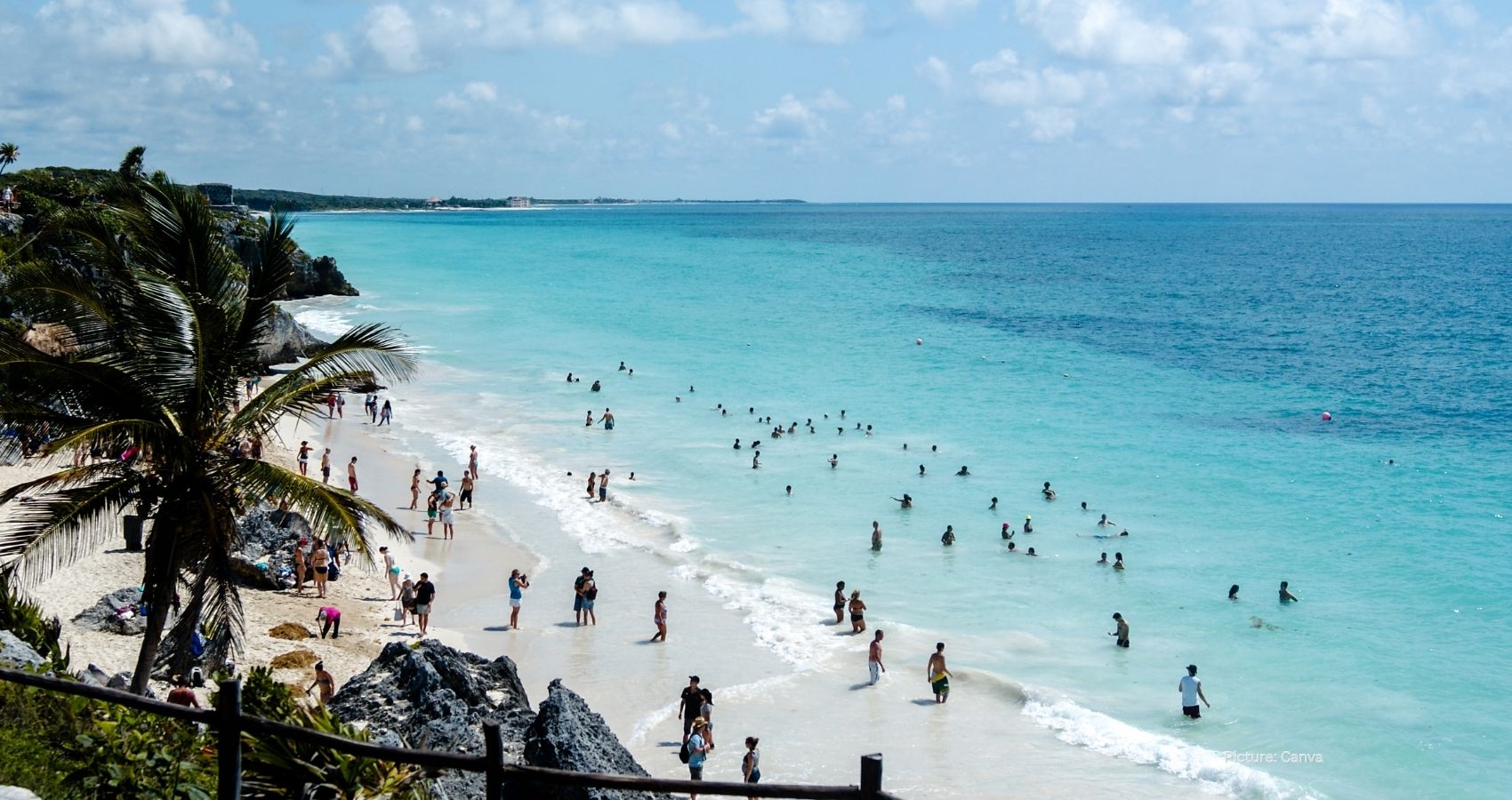
From the moment I stepped onto Playa Chac Mool in Cancun, Mexico, I sensed that this destination would be more than just a Spring Break postcard. The ocean shimmered under a golden sky, and the waves ebbed and crashed with a hypnotic rhythm. Warm, salty, and sun-drenched, the Caribbean showcased nature’s boldest displays on Mexico’s eastern edge. While many refer to Cancun as the “Mexican Miami,” this description feels too simplistic for a place so rich in culture and history. Over five days, I immersed myself in the thrills of cenotes, ancient ruins, and vibrant nightlife, all intertwined with the region’s scenic beauty.
Traveling often brings forth two impulses: the desire to lose oneself in a new place and the instinct to delve beneath its surface. In Riviera Maya, I found both aspects beautifully intertwined.
The highlight of my first day unfolded beneath the waves. A short boat ride from Cancun, just off Isla Mujeres, led me to MUSA—Museo Subacuático de Arte, an underwater sculpture park designed to support reef conservation. As I donned my snorkel gear and slipped into the open water, the current tugged at my body with surprising force. My heart raced, not just from the exertion but from the breathtaking sight below.
Dozens of life-sized sculptures rested on the seafloor: figures seated at desks, men caught mid-stride, and children holding hands. Floating above them, I felt a profound connection—human memory surrendering to marine life, coral, and the passage of time. Witnessing nature collaborate with art in such a unique way was exhilarating.
After surfacing near the boat, I was panting but invigorated. This blend of physical effort and wonder is precisely what I seek when I travel—experiences that resonate deeply within the mind.
Later that evening, still buzzing from my underwater adventure, I returned to Playa Chac Mool. The beach had quieted as the sun dissolved into an orange dusk. In the distance, the clubs of the Hotel Zone began to glow, signaling another version of Cancun awakening as day turned to night.
Nightlife in Cancun is a spectacle in itself. I arrived at Coco Bongo around 9 p.m., quickly becoming immersed in the atmosphere. The venue felt less like a nightclub and more like a full assault on the senses. Acrobats flipped overhead, confetti rained down, and the crowd—an eclectic mix of tourists and locals—moved in unison. The music shifted from Michael Jackson to reggaeton to Queen, each track igniting a new spark of energy. Even the bartenders performed, slinging mezcal shots with effortless flair. For a few hours, my world was reduced to motion, music, and light.
As I walked back to my hotel in the early hours, sand still clinging to my feet and music echoing in my ears, I understood why so many flock to this destination—to reconnect with something elemental in life: joy, release, and presence.
No journey through the Yucatán would be complete without experiencing the ancient history of Chichén Itzá. On my second day, I joined a local tour from Cancun, venturing inland away from the beach clubs and resorts. When El Castillo, the prominent pyramid at Chichén Itzá, unfolded before my eyes, I felt a sense of awe that rendered words inadequate. This marvel of ancient technology, carved in stone, expressed rituals, astronomy, and imagination. I recalled the famed equinox phenomenon when the shadow of a serpent appears to slither down its steps.
Having grown up in India, where ancient temples and sacred architecture carry their own cosmic significance, I felt a familiar reverence for El Castillo. It struck me how civilizations separated by oceans often speak in eerily similar ways—ancient lore told through stone, symmetry, and story. Standing there, I felt not only admiration for the Mayan world but also a quiet kinship with it.
Later, seeking respite from the afternoon heat, I slipped into Cenote Selva Mar. Surrounded by limestone and vines, this cenote felt like an emerald sanctuary hidden beneath the earth’s surface. As I swam quietly, the cool water enveloped me like a soothing embrace. Floating on my back, gazing up at the ring of sky, I felt time loosen, my breathing slow, and the day’s chatter recede.
Travel offers many pleasures, but moments like these—when I stop trying to interpret a place and simply let it hold me—stay with me the longest.
A day later, I journeyed south to Tulum, a destination that seamlessly blends yoga retreats, jungle hideaways, and beach parties. The Tulum Ruins, perched dramatically above the Caribbean, provided another encounter with Mayan history, accompanied by the salty wind and stunning views of turquoise waters and sunning iguanas. I wandered slowly, allowing the place to reveal itself in fragments: the sea below, weathered stone walls, and bright sunlight illuminating the cliffs. Here, beauty and ruin coexist without contradiction.
After another refreshing cenote swim, I explored Playa del Carmen. Quinta Avenida, the famous avenue lined with boutiques, bars, and beach clubs, can feel overwhelmed by tourism. Yet, I discovered pockets of intimacy that brought a smile to my face—a quiet café serving rich Chiapas coffee or a mezcal bar offering a mango mezcalita.
That evening, I jotted down in my journal: “The folks here have found the secret to happiness—swim and sail by day, dance and drink by night.”
On my final full day, I boarded an ADO bus to Playa del Carmen and then took a ferry across a rough sea to Cozumel, Cancun’s wilder, reef-ringed counterpart. By the time I arrived, I felt as though I had crossed into a place that demanded more from me.
I joined a glass-bottom boat tour and snorkeled over coral gardens and sunken boats. At El Cielo reef, I spotted giant starfish resting below, and a sea turtle glided past, serene and unhurried, as if belonging to another order of time entirely. Beneath me stretched the living body of the Mesoamerican Reef System, vast and luminous, extending from Isla Mujeres to Cozumel and beyond toward Belize and Honduras.
On my final morning in Cancun, I returned once more to Playa Chac Mool. The beach was nearly empty, and dawn had just broken as I ventured into the waves for one last swim. The waves pushed and pulled against my chest, invigorating and intimate, as if bidding farewell.
Destinations like Cancun and Riviera Maya are often marketed as mere escapes—cocktails, DJs, turquoise waters, and curated hedonism. However, when I swam farther and looked deeper, I discovered a more layered experience. I found a landscape where ancient stories still breathe through stone, where water serves as both playground and shrine, and where celebration and sacredness coexist. Beneath the resorts and revelry, I felt a region alive with memory. I came seeking adventure, but I left with something richer: the understanding that the Yucatán coast moves to multiple rhythms—the beat of nightlife, the hush of cenotes, and the long echo of vanished civilizations.
According to India Currents.