
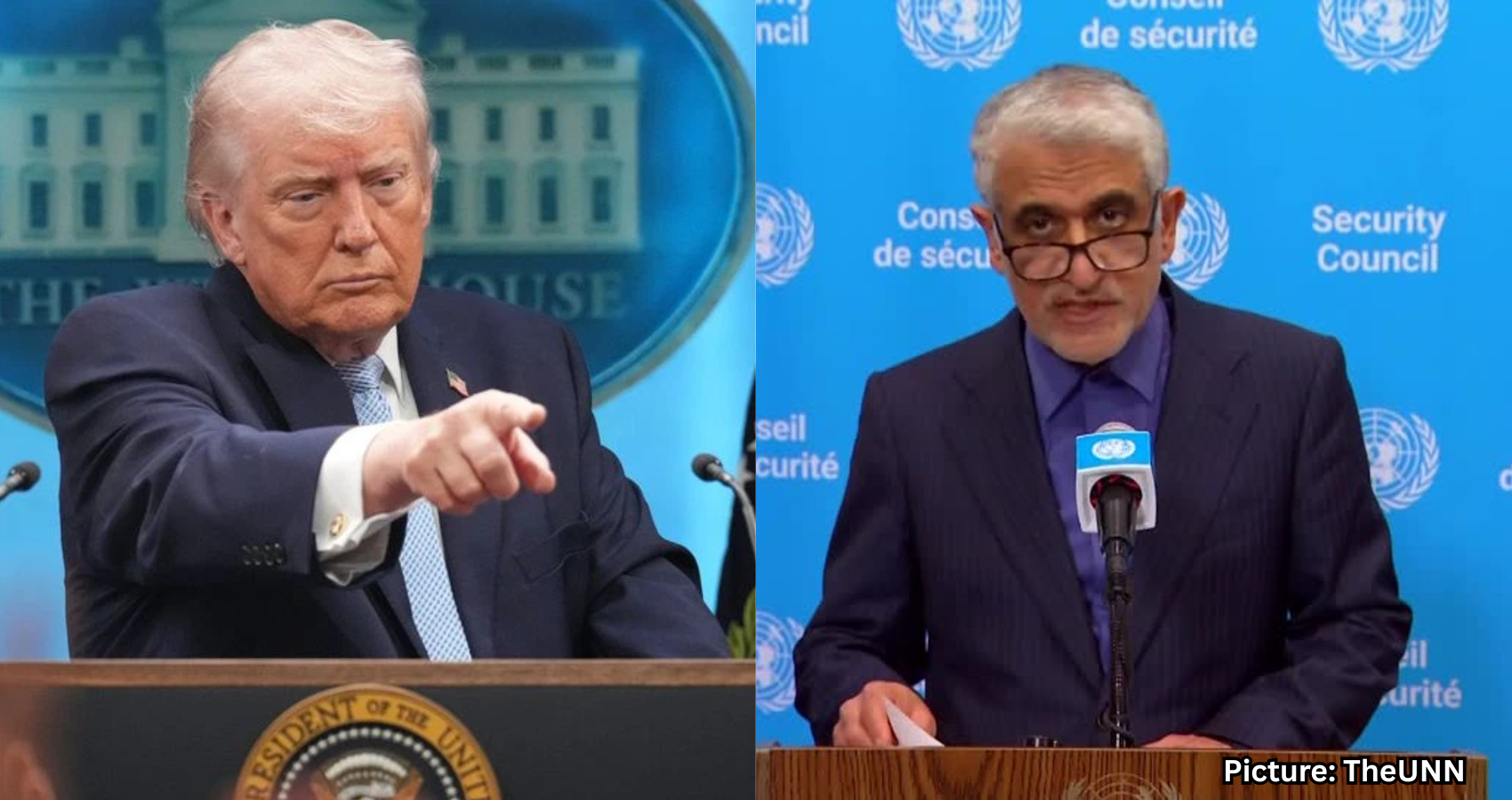
Experts warn that Iran’s negotiating strategy has faltered, revealing deep divisions within its leadership as President Trump cancels planned talks in Pakistan over regime infighting.
In a surprising turn of events, President Donald Trump has canceled planned talks with Iran in Islamabad, Pakistan, citing “infighting and confusion” within the Iranian regime. This decision comes just days after Iranian leaders appeared to present a united front, challenging the long-held narrative of a divide between moderates and hardliners within the country.
Experts, particularly those with Iranian American backgrounds, suggest that recent social media posts from key Iranian officials, including Supreme Leader Mojtaba Khamenei and President Masoud Pezeshkian, indicate that the regime’s “good cop, bad cop” negotiating tactic has unraveled. This strategy, which Iran has employed to mislead adversaries and gain concessions during nuclear negotiations, is now seen as ineffective.
In a post on Truth Social, Trump expressed his frustration with the situation, stating, “Besides which, there is tremendous infighting and confusion within their ‘leadership.’ Nobody knows who is in charge, including them.” He further emphasized that the United States holds all the cards in this negotiation, asserting, “If they want to talk, all they have to do is call!”
The breakdown of the hardliner-moderate dichotomy within Iran could have significant implications for U.S. policy regarding the nuclear talks. Trump hinted at this blurred line between factions last week, noting that Iran is struggling to identify its leadership amidst ongoing internal conflicts.
Khamenei responded to Trump’s remarks by claiming that the apparent unity among Iranian citizens has led to a fracture among their enemies. He stated, “With practical gratitude for this blessing, cohesion has become even greater and more steel-like.” Khamenei accused foreign media of attempting to undermine national unity and security, urging vigilance against such efforts.
Mariam Memarsadeghi, a senior fellow at The Macdonald-Laurier Institute and founder of the Cyrus Forum for Iran’s Future, commented on the situation, stating that the Islamic Republic has historically deceived Western policymakers by presenting moderates during negotiations as a façade for its oppressive tactics. She noted that the Trump administration is in a uniquely advantageous position, but cautioned that dismissing the notion of regime change could hinder efforts to address the threats posed by Iran.
Navid Mohebbi, a former Persian media analyst for the State Department, echoed this sentiment, emphasizing that while rivalries exist within the Iranian regime, they remain united on core principles. He pointed out that disagreements among factions are often tactical rather than fundamental, with real decision-making power resting with the supreme leader and the Islamic Revolutionary Guard Corps (IRGC).
Mohebbi highlighted that so-called moderates have historically lacked authority over key strategic issues and have often been used to soften the regime’s image abroad. He cited the example of former President Hassan Rouhani, who, despite presenting himself as a moderate, oversaw a violent crackdown on protesters during the November 2019 uprising.
While some regional officials acknowledge the existence of tensions between moderates and hardliners, they argue that these factions ultimately work within the same ideological framework. One official described Pezeshkian as a moderate who has failed to fulfill campaign promises, stating, “To be honest, he’s not even been able to do anything.” This perspective suggests that the divide may not be as pronounced as it appears.
Lawdan Bazargan, a political dissident imprisoned by the Islamic Republic in the 1980s, offered a critical analysis of the current situation. She argued that the ongoing conflicts among Iranian officials do not signify the disappearance of the divide but rather expose its true nature. Bazargan asserted that all prominent figures within the regime, including Khamenei, Pezeshkian, and others, operate under a shared commitment to preserving the system and confronting what they perceive as “the forces of evil,” namely the United States and Israel.
The recent developments highlight the complexities of Iran’s internal politics and the challenges they pose for international negotiations. As the situation evolves, the implications for U.S.-Iran relations remain uncertain, with experts urging caution and careful consideration of the regime’s dynamics.
According to Fox News, the ongoing infighting within Iran’s leadership may complicate future diplomatic efforts and reshape the landscape of negotiations.