
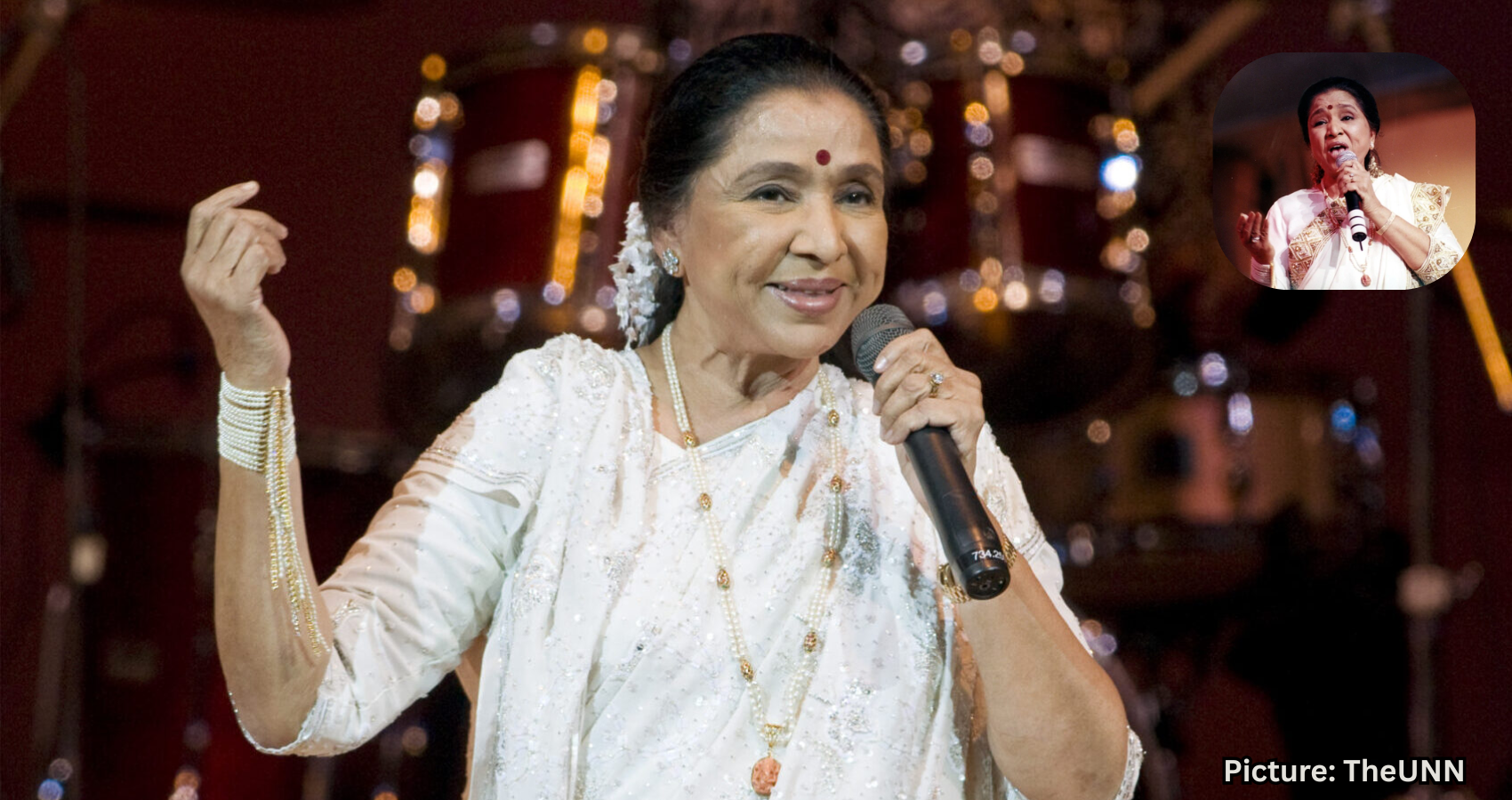
Asha Bhosle, the enchanting voice of Hindi cinema, has passed away, leaving behind a legacy of musical innovation and emotional depth that transcended genres and generations.
India mourns the loss of Asha Bhosle, a voice that could seduce, soothe, tease, and transcend in a single breath. The beloved singer, known as the irrepressible enchantress of Hindi cinema, passed away at Breach Candy Hospital on Sunday after being admitted the previous evening due to a cardiac arrest.
Born in 1933 into a family deeply rooted in music, Asha was the younger sister of the legendary Lata Mangeshkar. While Lata was often regarded as the nightingale of India—pure and ethereal—Asha was the chameleon of the music world, endlessly adaptable and delightfully unpredictable. She began her singing career as a teenager under challenging circumstances, stepping into the limelight after her father’s death and taking on whatever opportunities came her way, even as the industry initially typecast her in secondary roles.
However, Asha Bhosle did not merely survive the trials of her early career; she reinvented the very concept of a playback singer in India.
Her breakthrough came with the innovative composer R. D. Burman, whose genre-defying sound found its perfect match in her versatile voice. Together, they created musical magic that continues to resonate decades later. Songs like “Piya Tu Ab To Aaja” from *Caravan* and “Dum Maro Dum” from *Hare Rama Hare Krishna* were not just hits; they represented cultural shifts, giving voice to desire, rebellion, and mischief—emotions that Hindi film music had rarely explored so boldly.
Yet, to reduce her artistry to cabaret or pop would be a grave injustice. In *Umrao Jaan*, under the direction of Khayyam, she delivered ghazals of profound refinement, with “In Aankhon Ki Masti” standing as a masterclass in restraint and elegance. In *Ijaazat*, her rendition of “Mera Kuch Saaman” floated like a half-remembered dream, redefining the way poetry could be expressed through song. Even in the 1990s, when she collaborated with A. R. Rahman for *Rangeela*, her voice—well into her sixties—sounded astonishingly youthful, proving that Asha Bhosle was not confined to any single era.
Over her illustrious career, she sang in more than 20 languages, recorded thousands of songs, and traversed genres with an audacity that few could match—classical, ghazal, pop, folk, cabaret, and even international collaborations. Few artists have so joyfully defied categorization.
Asha’s personal life mirrored her resilience. A young marriage that faltered, years of professional struggle, and the challenge of carving out her own identity distinct from her iconic sister could have dimmed a lesser spirit. Instead, these experiences seemed to sharpen her instinct for reinvention. Her later marriage to R. D. Burman was both a creative and emotional partnership that enriched Indian music immeasurably.
Her wit was another defining characteristic—delicious and disarming. Asha Bhosle never took herself too seriously, even as the world placed her on a pedestal. She could laugh at her own vampish hits, indulge her culinary passions, and still command the gravitas of a legend when she stepped up to the microphone.
Honors followed her in abundance—national awards, international recognition, and the immeasurable prize of enduring public adoration. Yet perhaps her greatest achievement was expanding the emotional vocabulary of the Hindi film heroine. Through her voice, women could be playful, sensuous, defiant, heartbroken, worldly, or wistful.
In an industry often bound by convention, Asha Bhosle was its joyous subversion.
With her passing, an era does not merely end; it flickers out in a cascade of melodies that will continue to haunt, heal, and exhilarate. For in the end, voices like hers do not die. They linger—in smoky cabarets, in lonely ghazals, in stolen glances and unspoken longings—forever echoing across generations.
This article was republished with permission from The Free Press Journal.