
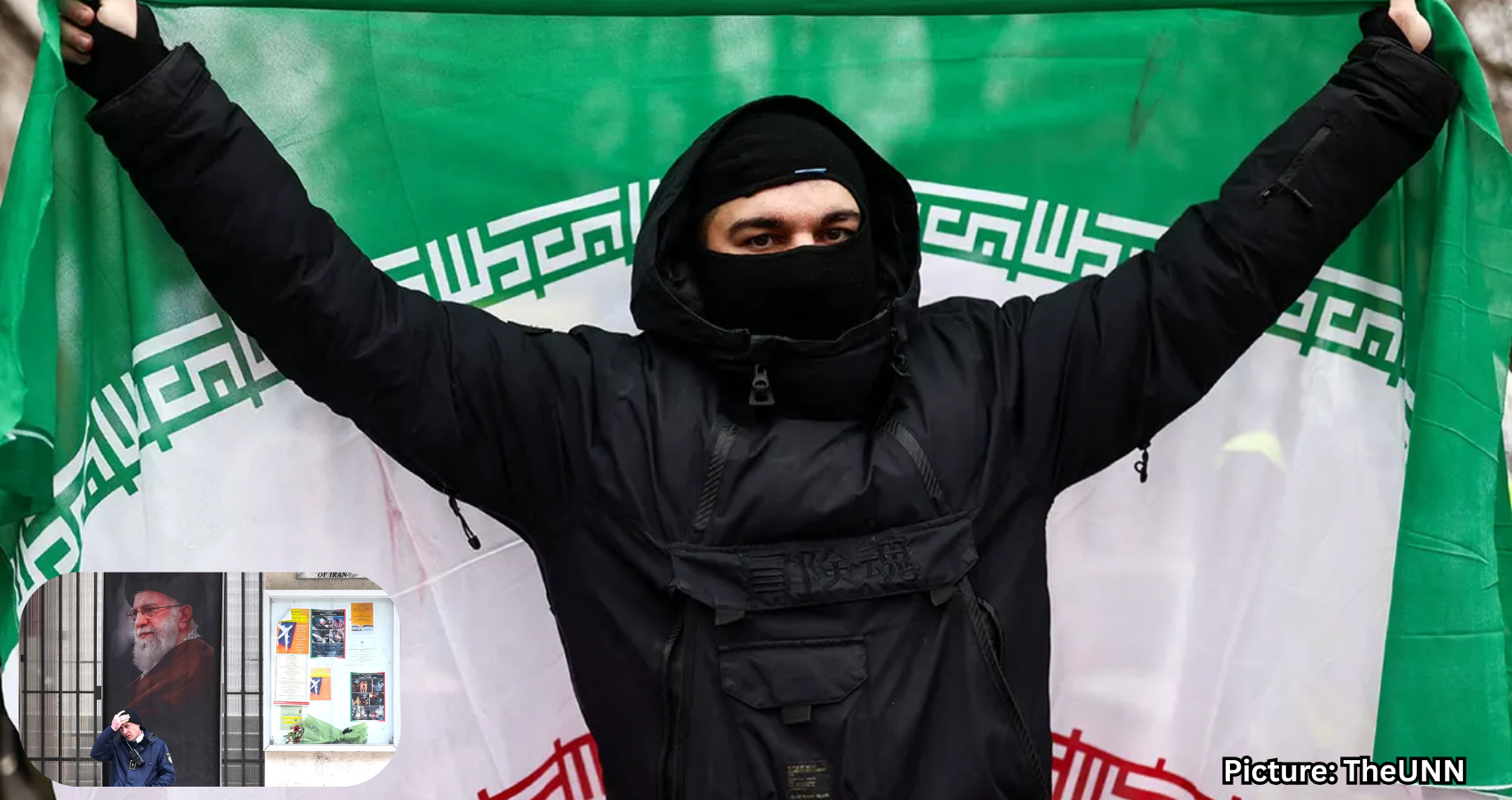
Georgia’s growing ties with Iran have raised alarms over potential sanctions evasion and the influence of the Islamic Revolutionary Guard Corps, according to a recent report.
Once a staunch ally of the United States, Georgia is reportedly shifting its alignment towards Iran, raising concerns about the influence of the Islamic Revolutionary Guard Corps (IRGC) and the evasion of international sanctions. This development comes as Iran finds itself increasingly isolated among its Gulf neighbors.
Recent reports indicate that Tehran has been strengthening its connections in the South Caucasus, particularly with the Republic of Georgia. The former Soviet republic, which had aspirations of joining the European Union and NATO, is now seen as moving closer to Iran.
Giorgi Kandelaki, a former member of the Georgian Parliament and co-author of a report from the Hudson Institute titled “Georgia’s Iranian Turn: Tehran’s Rapid Expansion of Influence in a Once-Committed U.S. Ally,” expressed concerns over this shift. He noted that Iran has established a significant influence infrastructure in Georgia, which includes entities that have been sanctioned by the U.S. for their links to extremism and are perceived as fronts for the IRGC.
“Georgia has an overwhelmingly pro-U.S. public opinion committed to Western values, and it is traditionally viewed as a U.S. ally in Washington,” Kandelaki stated. “This reality presents a terrible precedent, and reversing this trajectory is in the interest of both the U.S. and Georgian society.”
While Georgia has maintained a stance of diplomatic neutrality, the Hudson report outlines the growing ties between the two nations. It highlights how Iran is using Georgia as a base for intelligence operations, infiltrating the country’s religious, educational, and cultural institutions to exert influence over society.
As early as 2007, Iran established the Georgian branch of Al-Mustafa University, which is considered a key institution for promoting the ideology of Ayatollah Ruhollah Khomeini, the founder of the Islamic Republic. According to United Against a Nuclear Iran, the U.S. Treasury Department has indicated that the IRGC-Quds Force utilizes this university as an international recruitment network and a means to further Iran’s ideological and security interests.
The Treasury Department noted that Al-Mustafa has facilitated unwitting visits from tourists from Western countries to Iran, where IRGC-Quds Force members sought to gather intelligence. The university also reportedly organized student exchanges with foreign institutions to develop intelligence sources.
A report from the Foundation for Defense of Democracies estimated that Al-Mustafa’s annual budget is around $100 million, and it has trained tens of thousands of individuals who propagate Iran’s revolutionary ideology worldwide. Iran has also reportedly employed sympathetic Georgians to carry out international crimes that further its domestic agenda.
While there have been no direct links established with the Georgian government, there have been instances involving Georgian nationals. For example, Agil Aslanov, who had connections to organized crime, was allegedly recruited by the Quds Forces to assassinate a prominent Jewish leader in Azerbaijan in 2022. In another case, Georgian national Polad Omarov was indicted in federal court in New York City and sentenced to 25 years in prison for attempting to assassinate Masih Alinejad, a well-known critic of the Iranian regime.
Georgia had previously made significant strides in building political and security ties with the United States following the Rose Revolution in 2003. The country became a cornerstone of regional security in the Black Sea area, aligning itself with the U.S. after decades of Soviet rule. Georgia contributed to missions in Iraq and Afghanistan and signed a Strategic Partnership Charter with the U.S. in 2009.
However, Tbilisi’s relationship with Tehran has deepened under the pro-Russia Georgian Dream party, which came to power in 2012. Analysts suggest that this bond has strengthened following the end of the term of pro-Western President Salome Zourabichvili in 2024, who was succeeded by Mikheil Kavelashvili, a candidate backed by the Georgian Dream party.
Kavelashvili’s appointment followed parliamentary elections in October 2024, which were marred by allegations of irregularities, according to the U.S. embassy in Tbilisi. Since the Georgian Dream’s controversial electoral victory, leadership ties between Georgia and Iran have continued to grow.
In May 2024, Georgian Prime Minister Irakli Kobakhidze visited Iran to attend the funeral of Iranian President Ibrahim Raisi, who died in a helicopter accident. He returned in July for the inauguration of Iran’s current president, Masoud Pezeshkian, where both leaders reportedly praised the strengthening relationship between their countries.
Many Georgian companies have also begun importing oil and petroleum products from Iran, providing a crucial economic lifeline for the Iranian regime and its regional military efforts. According to Georgian NGO Civic IDEA, Iranian oil export revenue was approximately $43 billion in 2024, accounting for about 57% of Iran’s total export revenue.
Between 2022 and 2025, 72 companies registered in Georgia imported Iranian oil and petroleum, including eight linked to donors of the ruling Georgian Dream party. This activity has reportedly bolstered Iran’s revenue stream, even as the country faces heavy sanctions from Western nations.
“Georgia has become Iran’s primary sanctions-evasion hub, funneling hard currency back to Tehran’s war machine and the IRGC through specific schemes in oil imports,” Nicholas Chkhaidze, a national security and strategic communications analyst based in Tbilisi, told Fox News Digital. He explained that these Georgian companies pay in cash for Iranian oil, allowing them to circumvent international banking sanctions.
“The scale is massive, as Tehran uses the revenue from these schemes to fund its regional operations,” Chkhaidze added.
Requests for comment sent to the Georgian government went unanswered, and a spokesman for Iran’s mission to the United Nations declined to comment on the relationship between the two nations.
As the situation evolves, the implications of Georgia’s pivot towards Iran remain a significant concern for U.S. interests in the region, as well as for the stability of the South Caucasus.
According to Fox News, the growing ties between Georgia and Iran could have far-reaching consequences for both nations and the broader geopolitical landscape.