
NASA Administrator Jared Isaacman credits President Trump for the success of the Artemis II mission, which is set to pass the far side of the Moon as it prepares for its historic journey.
NASA Administrator Jared Isaacman has stated that the ongoing Artemis II mission would not be at its current stage without the contributions of former President Donald Trump. As the Orion spacecraft approaches the far side of the Moon, Isaacman emphasized the significance of Trump’s policies in shaping the Artemis program during an interview with Fox News Digital.
“I want to be incredibly clear, we would not be at this moment right now with Artemis II if it wasn’t for President Trump,” Isaacman remarked. “And we certainly would not have an achievable path now to get back to the lunar surface and build that enduring presence.”
Isaacman recalled that on his first day as NASA administrator during Trump’s second term, he received a national space policy directive that mandated regular missions to the Moon, the construction of a lunar base, and advancements in nuclear power and propulsion technology. These initiatives are aimed at enabling American astronauts to eventually plant the Stars and Stripes on Mars.
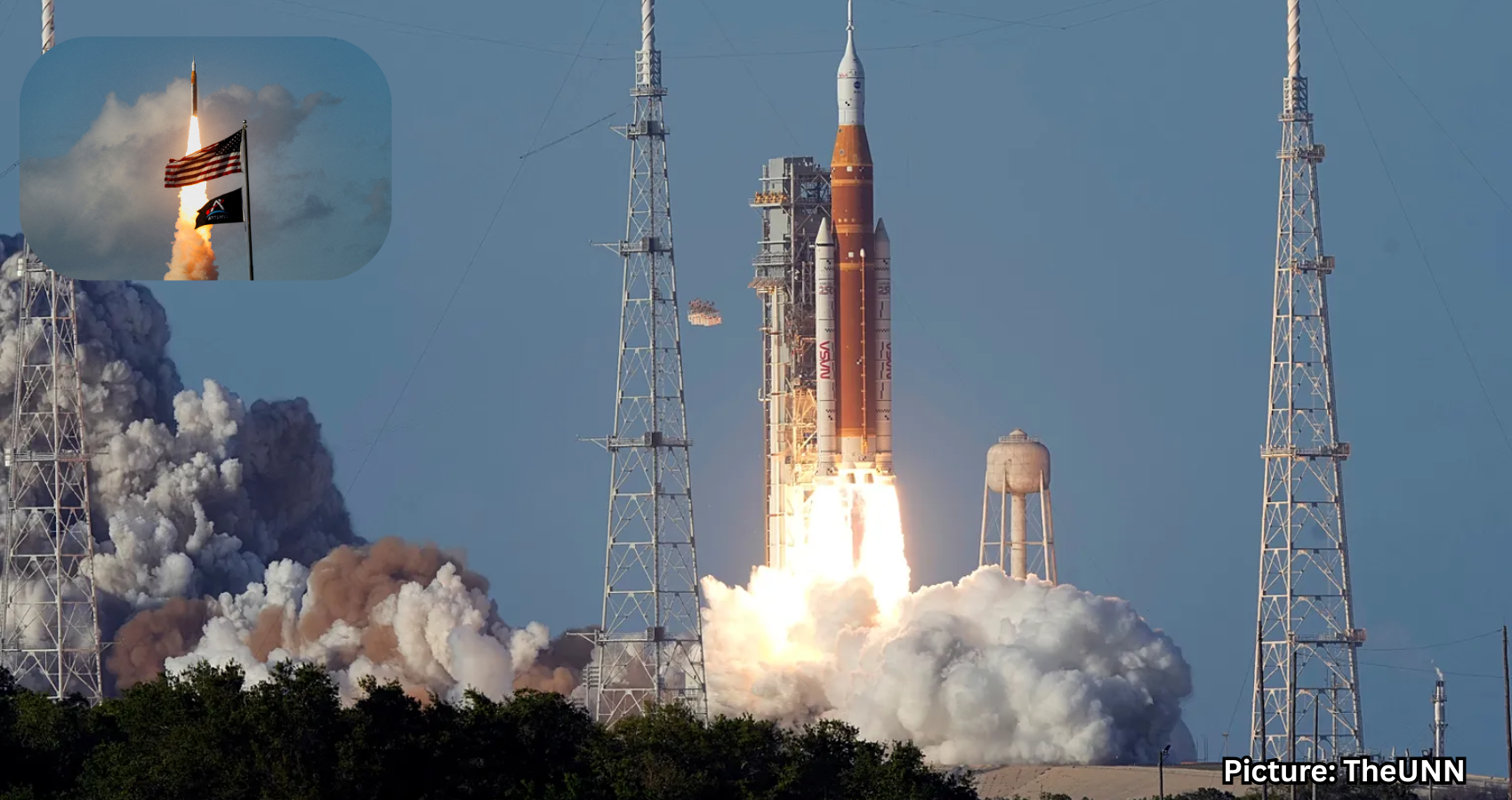
The Artemis II mission successfully launched from Cape Canaveral, Florida, last week, marking a historic milestone as it aims to send humans farther from Earth than ever before. The mission’s objective is to orbit the Moon and return to Earth, with a planned landing in San Diego later this week.
“In the next 24 hours or so, they’re gonna pass behind the far side of the Moon,” Isaacman explained. “These four astronauts will have traveled farther away from Earth than any humans ever before, about 250,000 miles away. We are putting the spacecraft through all its paces, testing out its various systems, including manual controls.”
Isaacman noted that the spacecraft is “performing better than we would have expected” prior to launch. Once the astronauts complete their orbit around the Moon, they will begin their return journey to Earth.
He compared the Artemis II mission to the Apollo programs of the 1960s and 1970s, highlighting the significant advancements in technology that NASA has at its disposal today. “It is not even a close comparison,” Isaacman stated. “The operator consoles or flight controllers have multiple screens, lots of computing power that’s available to them right now. There is certainly an army here supporting NASA, but not the hundreds of thousands of people that you would have had during the Apollo era that had to bubble into that enormous endeavor.”
“That’s why when we pick up where Apollo 17 left off with this mission,” he continued, “it is not to return to the Moon to plant the flag and leave the footprints, but to build an enduring presence, to build a Moon base where we will turn the south pole of the Moon into a scientific and technological proving ground for the capabilities we will need to master.”
Isaacman, who was sworn in as NASA administrator last December, is a longtime space enthusiast and previously commanded the first-ever commercial spacewalk in September 2024. When asked about the personal significance of the Artemis II mission, he credited the NASA workforce and the team behind him for the agency’s achievements.
While acknowledging the team’s efforts, Isaacman also emphasized the importance of focusing on the upcoming Artemis III mission, scheduled for mid-2027. This mission will test docking capabilities in preparation for a planned return of humans to the lunar surface in 2028.
“For everybody else, we got to start working on Artemis III,” Isaacman explained. “You go back to the Apollo era, Apollo 10, as those astronauts were orbiting in lunar orbit, just miles above the surface, two months later, Apollo 11 launched where Neil and Buzz walked on the Moon. That means we have to be able to do multiple world-changing missions in near parallel.”
According to Fox News Digital, Isaacman’s leadership and vision for NASA are pivotal as the agency embarks on this new chapter in space exploration.