
Amidst internal turmoil and external pressures, Iran’s leadership dynamics are shifting, with the Islamic Revolutionary Guard Corps emerging as a dominant force in the country’s political landscape.
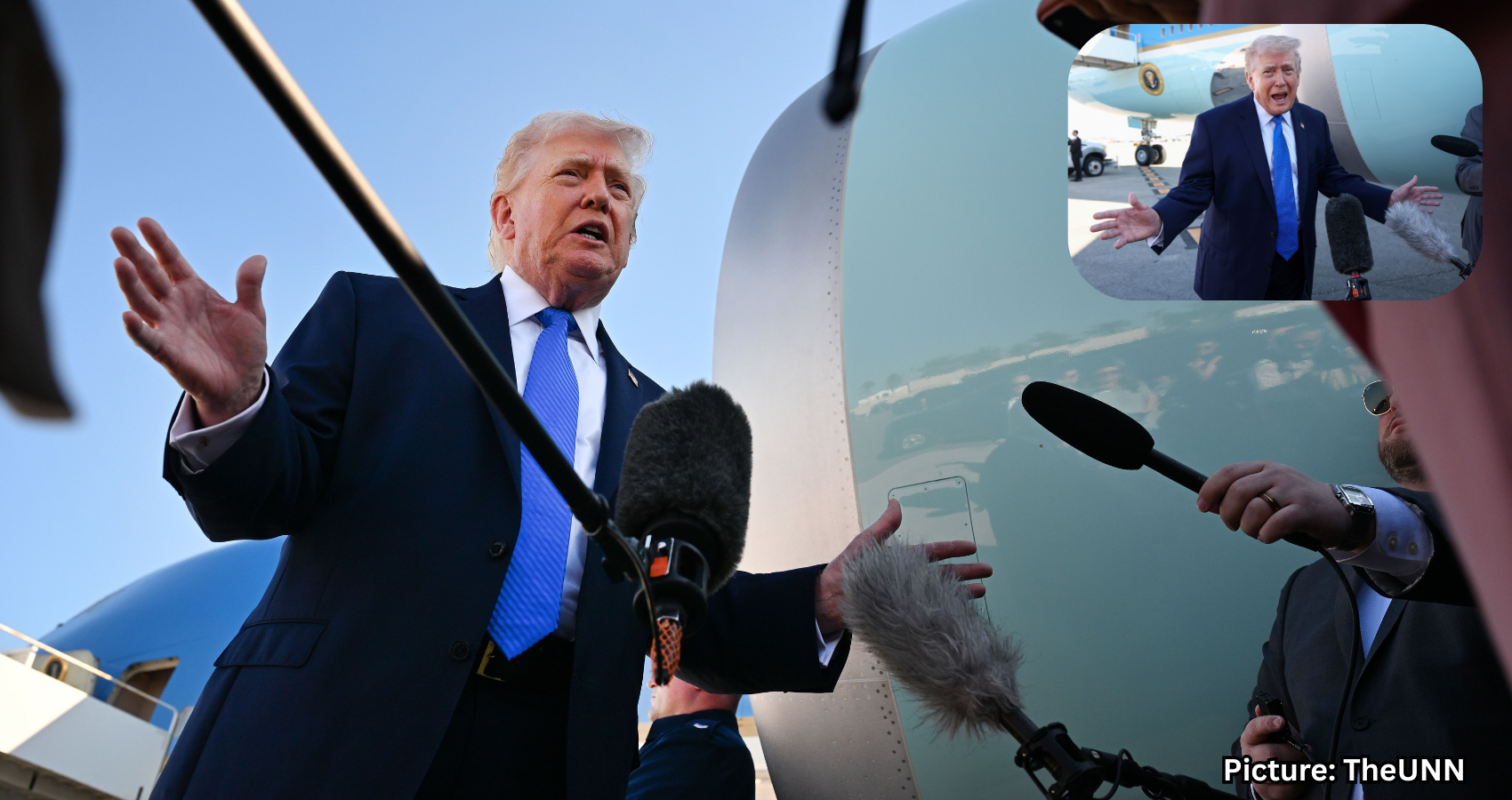
Analysts suggest that the Islamic Revolutionary Guard Corps (IRGC) has solidified its position as the prevailing power in Iran, particularly following recent military strikes that have raised questions about the authority of Supreme Leader Mojtaba Khamenei. President Donald Trump addressed this uncertainty during a recent White House briefing, stating, “Nobody knows who to talk to,” while framing the situation in Iran as both chaotic and ripe with opportunity. He claimed that the U.S. is in discussions with a “top” Iranian figure, despite Tehran’s public denial of any negotiations.
The current political landscape in Iran raises critical questions about leadership and authority. With recent U.S.-Israeli strikes targeting senior Iranian officials and increasing internal divisions, Iran appears to be functioning less like a centralized theocracy and more like a wartime regime characterized by overlapping power centers, with the IRGC at the forefront.
Across various intelligence assessments and reports, a consistent conclusion emerges: the IRGC is now the dominant entity within Iran’s political framework. Behnam Ben Taleblu, a senior fellow at the Foundation for Defense of Democracies, noted that the ongoing conflicts have accelerated a trend toward increased IRGC influence. “No doubt both the 12-Day war and this current conflict have trimmed the commanding heights of the Islamic Republic’s political and military leadership,” he stated. “But it has also expedited the trend lines inherent in Iranian politics, which is the dominance of the security forces and the ascendance of the IRGC.”
Ben Taleblu further emphasized that while the IRGC’s control over the state has intensified, the overall state apparatus is weaker than ever, describing it as a “national security rump state.” He advised that Washington’s focus should not be on negotiating with the IRGC but rather on achieving military success and supporting the Iranian populace opposed to the regime.
If the IRGC is the primary power in Iran, the Supreme National Security Council serves as the mechanism through which this power is exercised. Established after the 1979 revolution, the council is responsible for coordinating military and foreign policy, bringing together senior IRGC commanders and government officials under the supreme leader’s authority. Recently, Iran appointed Mohammad Bagher Zolghadr, a former IRGC commander, as the council’s secretary, reinforcing the IRGC’s central role in political and military decision-making.
A Middle Eastern official familiar with the Iranian political system indicated that the IRGC currently holds the reins of power. “Right now, the power is in the hands of the IRGC,” the source stated, noting that the Supreme National Security Council makes decisions with the backing of most IRGC commanders.
Formally, Iran’s governance structure centers on Supreme Leader Mojtaba Khamenei. However, his actual grip on power is increasingly uncertain. Khamenei inherited significant authority following his father’s death but reportedly lacks the automatic legitimacy his predecessor enjoyed. He has not made any public appearances since assuming power and has only issued written statements, raising concerns about his health and ability to govern effectively, especially after being injured in the February 28 strikes that killed his father and other senior leaders.
Brig. Gen. (res.) Yossi Kuperwasser, head of the Jerusalem Institute for Strategy and Security, suggested that Khamenei’s role may currently be limited. “For the time being, since Mojtaba has been injured, it seems he’s a hologram and not holding power,” he said. “However, if Mojtaba recovers, he will be involved in ruling Iran. He is not just a figurehead. But anyhow, for the time being, the control of Iran is in the hands of the revolutionary guards.”
Trump’s assertion that he is communicating with a “top person” in Iran has drawn attention to one individual in particular: Mohammad Bagher Ghalibaf. Reports indicate that the White House is considering Ghalibaf as a potential interlocutor and even a future leader. A former IRGC commander and current parliament speaker, Ghalibaf embodies a hybrid figure within the Iranian system, blending military credentials with political authority. He has been involved in significant security operations, including the crackdown on student protests in July 1999, and has run for the presidency multiple times since 2005.
Ghalibaf is expected to meet with U.S. special envoys Steve Witkoff and Jared Kushner in Pakistan as early as the end of the week. Ben Taleblu remarked that those who view Ghalibaf’s rise as a sign of IRGC dominance may overlook the longstanding influence of personality over profession in Iranian politics. He noted that previous Supreme National Security Council Secretaries also had IRGC backgrounds.
Despite Ghalibaf’s prominence, he has publicly denied engaging in talks with the United States, and no direct confirmation of negotiations has been provided by either side. Foreign Minister Abbas Araghchi remains one of the most visible figures in international discussions, and if talks were to occur, he would likely be part of the Iranian delegation alongside Ghalibaf. However, analysts caution that Araghchi’s role is limited, as strategic decisions regarding war and negotiations are primarily influenced by the IRGC and the broader security establishment.
Beyond these prominent figures, a wider array of officials continues to shape Iran’s direction. This includes IRGC chief Ahmad Vahidi, Quds Force commander Esmail Qaani, naval commander Alireza Tangsiri, Judiciary Chief Gholamhossein Mohseni-Ejei, President Masoud Pezeshkian, and senior clerical and political figures such as Saeed Jalili and Ayatollah Alireza Arafi. Each represents different pillars of the system, encompassing military power, regional proxy operations, control of strategic waterways, internal repression, and religious legitimacy.
Despite internal divisions, Iran’s leadership remains united by a singular objective: the survival of the regime. Kuperwasser described this split within the leadership, noting the presence of pragmatic elites alongside hardliners. “There are the more pragmatic elites, like Araghchi, Rouhani, and Zarif. There are also the hardliners who have usually held the upper hand … But they are united in one issue — that the regime should survive and stay in power,” he explained.
As the situation in Iran continues to evolve, the complexities of its leadership dynamics will play a crucial role in shaping the country’s future and its interactions on the global stage. Iran’s U.N. mission did not respond to a request for comment prior to publication.