
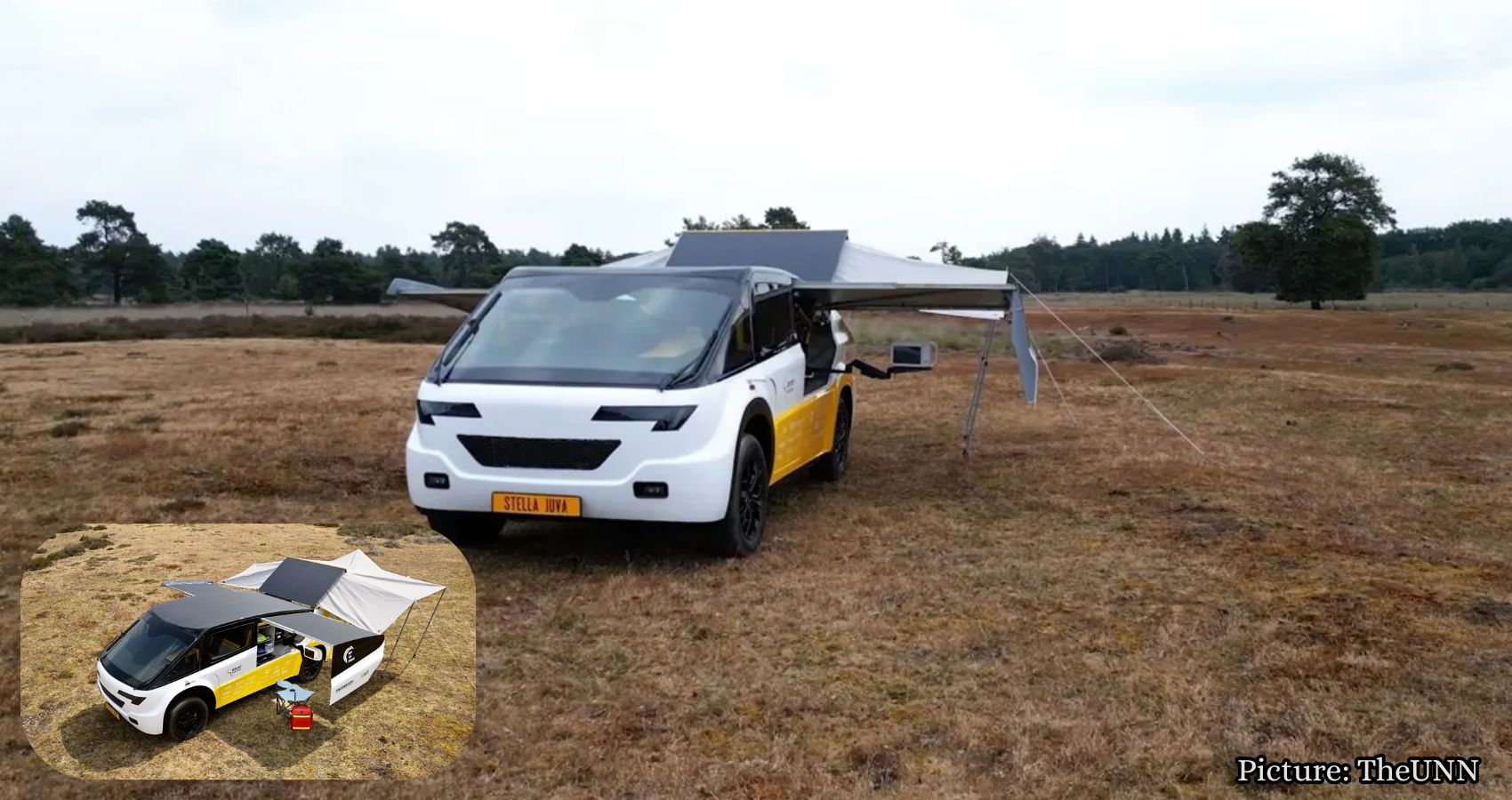
The world’s first solar-powered ambulance, Stella Juva, aims to revolutionize healthcare access in remote areas by providing a mobile clinic equipped with essential medical services and powered by solar energy.
Stella Juva, a groundbreaking solar-powered ambulance developed by students from Solar Team Eindhoven, is set to transform healthcare delivery in remote regions. This innovative vehicle is designed not just to transport patients to hospitals, but to bring medical care directly to underserved communities, particularly in areas where access to healthcare is limited.
The initiative addresses a critical issue: many people around the world live hours away from the nearest hospital and often face unreliable electricity once they arrive. According to the World Health Organization, approximately 1 billion people rely on healthcare facilities that either lack electricity or have inconsistent power supply. Stella Juva aims to bridge this gap by generating its own electricity using solar power, allowing healthcare workers to provide essential services without being dependent on external power sources.
Stella Juva is equipped with high-efficiency solar cells manufactured by AIKO, which utilize All Back Contact technology. This design maximizes the surface area exposed to sunlight by relocating electrical contacts to the back of the solar panels, making it particularly advantageous for a vehicle with limited roof space. The solar panels not only power the vehicle but also support the medical equipment housed within, ensuring that healthcare services can be delivered even in challenging conditions.
The vehicle is powered by a 50-kWh lithium-based battery pack, which stores energy for use when sunlight is not available. Under optimal solar conditions, Stella Juva can travel up to 715 kilometers (approximately 444 miles) in a single day, with a top speed of around 75 mph. However, real-world performance may vary based on weather and terrain conditions.
One of the standout features of Stella Juva is its dual electrical system, which separates the power required for vehicle operation from that needed for medical equipment. This design ensures that if battery levels become critically low, the system can prioritize power for essential medical devices, safeguarding patient care. The vehicle also employs pure sine wave inverters to provide stable electricity, minimizing the risk of voltage fluctuations that could disrupt sensitive medical equipment.
To address the challenge of weight—an important factor for solar vehicles—the students constructed Stella Juva using carbon-fiber composite materials. This choice keeps the total weight around 1,350 kilograms (approximately 3,000 pounds), significantly lighter than conventional ambulances, which can weigh thousands of pounds more. The vehicle’s aerodynamic teardrop shape further enhances its efficiency by reducing wind resistance, allowing it to use more of its energy for travel.
Inside, Stella Juva features a climate-controlled medical cabin equipped to handle a variety of healthcare needs. It can support tuberculosis screenings, pregnancy ultrasounds, malaria testing, and vaccinations. An automated external defibrillator is also included for emergencies, along with refrigeration to keep vaccines and medications at safe temperatures, even in hot conditions. Reliable electricity is crucial for these capabilities, making the solar power system a vital component of the vehicle.
The durability of the solar panels is another critical consideration. AIKO has designed the solar cells used in Stella Juva to withstand the rigors of off-road travel, including vibrations and temperature fluctuations. This resilience is essential for a mobile clinic that operates far from repair facilities, ensuring that it can continue to function effectively in the field.
In August, Solar Team Eindhoven will take Stella Juva to Kenya for field testing in collaboration with Amref Health Africa. This phase will involve simulating healthcare scenarios, such as tuberculosis care, to evaluate the vehicle’s performance in real-world conditions. The success of this testing will be pivotal in determining the viability of Stella Juva as a solution for improving healthcare access in remote areas.
Solar Team Eindhoven has a history of innovative projects, having previously developed solar-powered vehicles that have achieved significant milestones, including winning the World Solar Challenge in Australia. Stella Juva builds on this experience, focusing on the pressing need for accessible healthcare rather than merely showcasing solar technology.
While Stella Juva is currently a university research prototype, the project aims to demonstrate the potential of solar-powered mobile clinics and inspire larger organizations to explore similar concepts. The team has adopted an open approach to their engineering process, allowing others to learn from their work and potentially scale the technology for broader use.
The implications of this project extend beyond the immediate context of healthcare in remote areas. In situations such as natural disasters, where electricity may be disrupted, a mobile medical unit capable of generating its own power could prove invaluable. As solar technology continues to advance, the possibility of creating self-sufficient medical units becomes increasingly feasible.
While Stella Juva has yet to prove itself in the field, the project highlights a significant shift in how healthcare can be delivered. By rethinking the traditional model of medical care, the students at Solar Team Eindhoven are paving the way for innovative solutions that could ultimately improve the lives of millions who currently lack access to reliable healthcare.
As the upcoming field tests approach, the focus will be on how well Stella Juva performs under real-world conditions and whether its solar-powered system can reliably support medical operations. The success of this prototype could lead to more extensive applications of similar technology, potentially changing the landscape of healthcare delivery in underserved regions.
According to Fox News, the project represents a significant step forward in addressing the challenges faced by communities with limited access to healthcare, showcasing the potential of solar technology to make a meaningful impact on global health.