
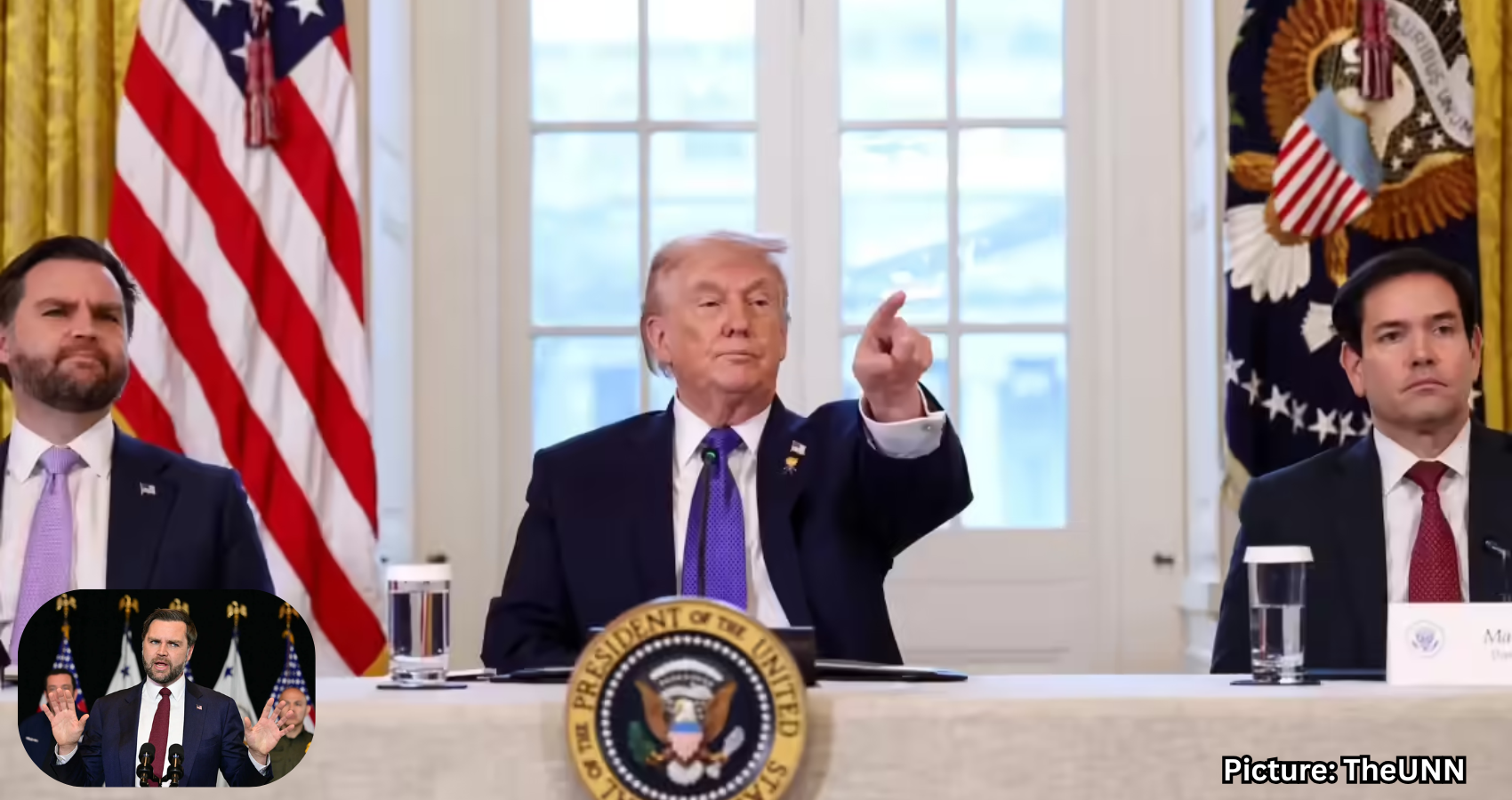
JD Vance’s recent diplomatic efforts regarding Iran reflect a strategic balancing act aimed at securing his political future while navigating complex voter dynamics.
JD Vance’s reported visit to Pakistan to negotiate a ceasefire in the ongoing Iran conflict, alongside a tense phone conversation with Israeli Prime Minister Benjamin Netanyahu, represents a high-stakes maneuver in his preparations for the 2028 presidential election. This approach is not merely a foreign policy initiative; it is a calculated effort to present himself as a pragmatic leader capable of ending a costly war without escalating tensions in the region, all while managing the expectations of both the MAGA base and pro-Israel advocates.
By positioning himself as a key U.S. negotiator and taking a firm stance against Netanyahu’s overly optimistic war projections, Vance aims to mitigate the political fallout of being perceived as “soft” on Iran. His recent communication with Netanyahu conveys two critical messages: to the broader electorate, he is a serious leader who challenges unrealistic military strategies; to the MAGA and pro-Israel factions, he remains an ally while privately critiquing ineffective tactics.
This nuanced approach allows Vance to potentially claim credit for a successful ceasefire or diplomatic off-ramp, while also deflecting blame onto Netanyahu and the more hawkish elements if the negotiations falter or appear weak.
The dynamics of the MAGA movement significantly influence Vance’s strategy. This movement lacks a unified stance on foreign policy, encompassing a range of factions. On one hand, there are Christian-Zionist and pro-Israel hardliners who view Israel as both a biblical and strategic ally. On the other, there are nativist and anti-immigration groups that often harbor hostility toward individuals from the Global South, despite their vocal support for Israel.
Consequently, the MAGA movement’s pro-Israel position is more about cultural alignment than a comprehensive pro-peace agenda. Vance’s diplomatic efforts regarding the Palestinian and Iranian conflicts directly challenge the factions within MAGA that advocate for perpetual warfare. However, they also resonate with other MAGA themes, such as skepticism towards “endless wars” and foreign entanglements, particularly if he frames these negotiations as a controlled exit rather than a capitulation.
From an electoral risk management perspective, Vance’s decisions present a complex landscape of risks and rewards. The potential risks include alienating MAGA hardliners who view any ceasefire as a betrayal, as well as pro-Israel groups that may hold him accountable for curbing Netanyahu’s aggressive stance, especially if the negotiations do not yield positive results. Additionally, he risks being perceived as a “compromiser” by MAGA voters who prioritize confrontation and toughness over negotiation.
Conversely, the rewards of his strategy could be significant. If a ceasefire stabilizes the situation, Vance could position himself as the leader who “ended the war without boots on the ground.” This could appeal to swing-state voters and independents who are weary of ongoing conflicts, allowing him to brand himself as a pragmatic leader rather than an ideological one. Furthermore, by partially distancing himself from the more maximalist tendencies associated with Donald Trump, Vance could enhance his electability among a broader, more diverse electorate while still aligning with MAGA principles.
As Vance navigates this complex political landscape, his ability to balance these competing interests will be crucial in shaping his future as a presidential candidate. His recent diplomatic efforts signal a strategic pivot that could redefine his political identity as he prepares for the upcoming election cycle.
According to Source Name.