
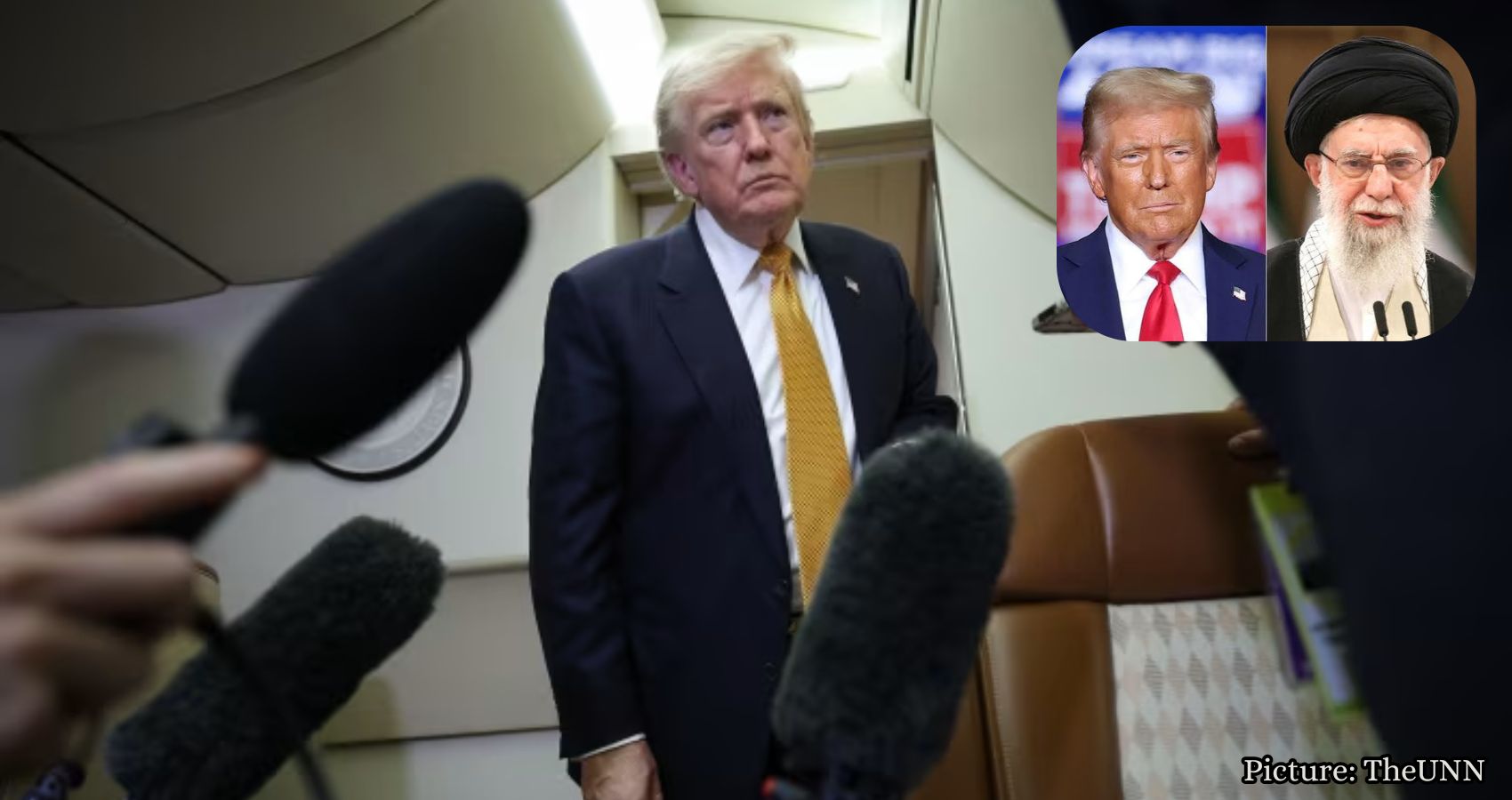
President Trump has warned Iran of potential military action in response to alleged assassination plot allegations, escalating tensions between the two nations.
President Trump has issued a stark warning to Iran, stating that the U.S. military is prepared to respond with overwhelming force if Tehran acts on an alleged assassination plot against him. This declaration comes amid rising tensions between the two nations.
In a series of provocative statements made late Friday, Trump threatened to “decimate and destroy” Iran if the Islamic Republic attempts to carry out a reported assassination plot against him. His comments followed a report from The Wall Street Journal, which indicated that Israeli intelligence had shared information with U.S. officials suggesting that Iranian leaders were considering such an action.
Trump conveyed his message via the social media platform Truth Social, asserting, “1000 Missiles are Locked and Loaded and aimed at the Islamic Republic of Iran, with thousands of more to immediately follow, should the Iranian Government act on its threat, pronounced in many corners of the Globe, to assassinate, or attempt to assassinate, the sitting President of the United States of America, in this case, ME!” He emphasized that military orders had been issued and that U.S. forces are ready for a prolonged engagement if necessary, stating, “Orders have already been given, and the U.S. Military is ready, willing, and able, for a one-year period of time, subject to extension, to completely decimate and destroy all areas of Iran – PRAISE BE TO ALLAH!”
This latest warning from Trump represents a significant escalation in U.S.-Iran relations, which have been marked by hostility and conflict for decades. Relations have deteriorated dramatically since 1979, when the U.S. Embassy in Tehran was seized, and have been punctuated by various military confrontations, economic sanctions, and diplomatic crises. The recent surge in tensions follows a series of retaliatory strikes and the revocation of Iran’s oil sanctions waiver after attacks on vessels in the critical Strait of Hormuz.
Just prior to Trump’s remarks, he attended a NATO summit in Ankara, Turkey, where he labeled Iran as his “No. 1 target” following an exchange of strikes that heightened security concerns. This characterization underscores the ongoing animosity that has characterized U.S. foreign policy under Trump’s administration, which has often taken a hardline stance against Tehran.
In Iran, the atmosphere has also become increasingly charged. Ayatollah Mojtaba Khamenei, the newly appointed Supreme Leader and son of the late Ayatollah Ali Khamenei, vowed to avenge his father’s death, which occurred during a U.S. military engagement earlier this year. In a Telegram post reviewed by Reuters, he stated that avenging his father’s death was a “demand of the nation” and that it “must certainly” occur. This sentiment was echoed at the funeral procession for the late Supreme Leader, where crowds held banners proclaiming, “WE WILL KILL TRUMP.” Such rhetoric highlights the deep-seated emotions and nationalistic fervor that can drive both public sentiment and government policy in Iran.
In light of these threats, Trump reiterated in an interview with The New York Post that he has taken measures to ensure military readiness should Iran act against him. He disclosed that he had “left instructions” for a powerful military response if anything were to happen to him, stating, “I’ve been on their list for a long time. That’s what we’re dealing with.” This admission reflects his awareness of the risks involved in U.S.-Iran relations and the persistent threats he perceives from Iranian leadership.
Despite the heightened rhetoric, Trump downplayed the significance of the intelligence shared by Israeli officials, maintaining that there was no new plot from Iran against him. He remarked, “No, no. Israel came up with nothing. No, no. I’ve been No. 1 [on Iran’s kill list] for a long time, and it’s the way life is, you know.” This statement illustrates a broader context of enduring animosity between the U.S. and Iran, particularly during his administration, and reflects Trump’s perception of his own vulnerabilities.
The current state of affairs raises critical questions regarding U.S. foreign policy and military engagement in the Middle East. The potential for military conflict poses concerns not only within the United States but also among its allies and partners globally. Recent actions, including the revocation of Iran’s oil sanctions waiver and the declaration of a ceasefire as “over,” signal a significant shift in diplomatic engagements and could lead to further military confrontations.
As tensions continue to rise, the international community is closely monitoring developments to gauge the next moves by both the U.S. and Iran. The implications of any military action could have far-reaching consequences, affecting regional stability as well as global oil markets and international relations. A military escalation could draw in other nations and complicate existing alliances, further destabilizing the region.
In this charged environment, Iran’s response remains uncertain, with further retaliatory actions possible. The potential for escalation is a pressing concern for stakeholders worldwide, as both nations navigate this perilous situation. The actions taken in the coming days and weeks will be critical in shaping not only the future of U.S.-Iran relations but also the broader geopolitical landscape in the Middle East, according to The Wall Street Journal.