
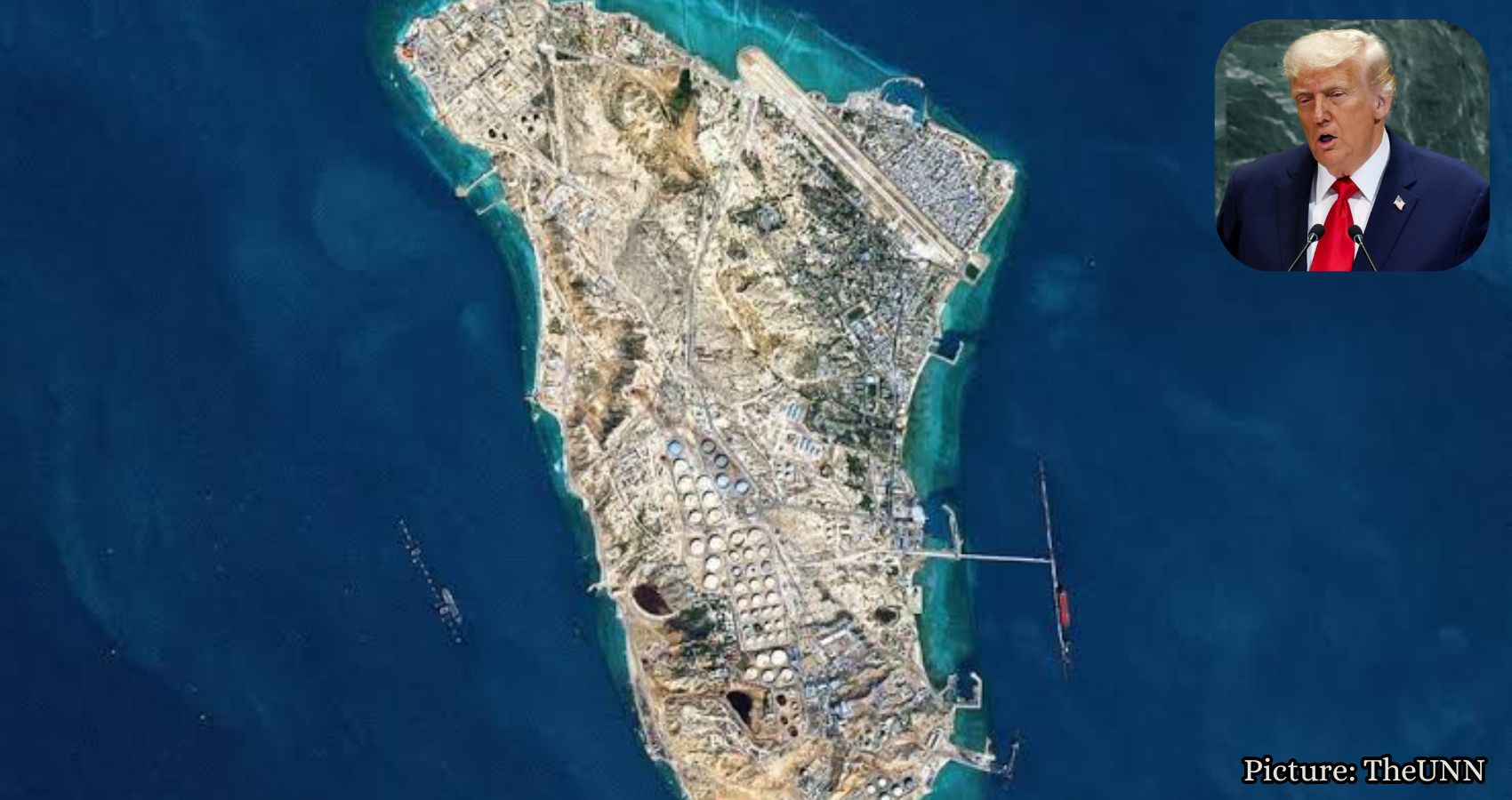
Military experts outline the potential U.S. operation to seize Iran’s Kharg Island, emphasizing the challenges of holding it against retaliatory attacks while preserving its vital oil infrastructure.
Military experts have detailed how U.S. Marines could potentially seize Iran’s Kharg Island within hours, but they caution that maintaining control against missile and drone attacks would be significantly more challenging.
In a hypothetical scenario, hundreds of U.S. Marines would storm ashore as helicopters thunder overhead, while Navy warships and fighter jets establish overwhelming air and sea superiority. Commanders would issue a final warning to Iranian forces: surrender or face being overrun. This is how military analysts envision the initial hours of a U.S. operation to capture Kharg Island, a strategically vital location that handles approximately 90% of Iran’s crude oil exports and has become a focal point of Washington’s economic pressure on Tehran.
The discussion surrounding a potential takeover of Kharg Island gained renewed attention after President Donald Trump declined to dismiss the possibility. In an exclusive interview with Fox News chief foreign correspondent Trey Yingst, Trump stated, “I can’t say that to you because if I did, it would be foolish.” He further explained that previous U.S. strikes intentionally avoided targeting the island’s oil facilities due to their significance to the global economy.
Vice Adm. (Ret.) Robert Harward, former deputy commander of U.S. Central Command, emphasized the importance of minimizing risk in any military operation. He noted that a Marine Expeditionary Unit could conduct an amphibious assault while U.S. naval and air forces establish complete control over the area, allowing Iranian defenders the opportunity to surrender before major combat ensues. The primary objective, he explained, would not only be to capture the island but also to preserve the oil infrastructure for a potential post-Islamic Republic government.
“The real objective at the end of the day is to minimize risk,” Harward stated. “Not only to your own forces, but to the people you’re coming in contact with,” while also limiting damage to facilities that could eventually be transferred to a government focused on supporting its citizens rather than promoting the Islamic Revolution.
Trump’s comments echoed Harward’s assessment that preserving Kharg’s oil facilities would likely be a key military objective. He mentioned that he had instructed U.S. forces during previous strikes to “hit everything but the oil,” explaining that damaging the export terminal could have serious repercussions for the global economy.
However, military experts caution that capturing Kharg Island may be the simplest part of the mission. Located just 16 miles off Iran’s Gulf coast, the eight-square-mile island is well within range of Iranian missiles, drones, and shore-based anti-ship weapons. While analysts believe U.S. forces could likely seize the island within hours, holding it against sustained retaliation from the mainland could require a much larger and prolonged military commitment, heightening the risk of direct conflict with Iran.
Kharg’s strategic importance dates back to before Iran’s modern oil industry. British forces briefly occupied the island during confrontations with Persia in the 19th century, using its location to exert pressure on Tehran. Nearly a century later, Iran designated Kharg as a deep-water oil terminal due to its sheltered waters, which could accommodate large tankers. Construction began in the late 1950s, and the terminal began operations in 1960, transforming the island into the principal outlet for Iranian crude oil.
“Everybody talks about seizing Kharg,” said Nicholas Carl, assistant director of the Critical Threats Project at the American Enterprise Institute. “Iran has spent decades investing in denial capabilities designed specifically to keep U.S. forces away from its shores.” These capabilities include anti-ship cruise missiles, drones, naval mines, and numerous fast attack craft intended to overwhelm superior naval forces.
Military planners have long regarded Iran’s anti-access strategy as one of the most sophisticated in the Middle East. Rather than matching the U.S. Navy ship for ship, Tehran has heavily invested in asymmetric weapons designed to make any amphibious assault costly.
Harward acknowledged that once American forces were on Kharg, the primary danger would shift from conventional naval combat to missile and drone attacks launched from the nearby mainland. “Iran doesn’t really have air power,” he explained. “The concern is whether they launch missiles and drones at the island with U.S. forces on the ground. That’s the biggest risk.” He noted that the operation’s viability would ultimately depend on intelligence regarding the number and disposition of Iranian forces, as well as any potential booby traps or improvised explosive devices.
Despite these risks, Harward argued that any Iranian retaliation would come at a significant cost for Tehran. “If they start striking Kharg itself, they become accountable for damaging their own economic lifeline,” he said. This situation illustrates the distinction between tactical success and strategic success. While seizing an eight-square-mile island presents one military challenge, defending it against sustained attacks from Iranian territory poses another, more complex problem.
Harward suggested that Washington still has several options short of launching an amphibious assault. With the U.S.-led blockade already constraining Iran’s oil exports, he argued that additional economic pressure could target overland transportation routes, border crossings, and air traffic, rather than committing ground troops. “There is still a lot you could do to enhance the economic challenges to Iran,” he said. “Synchronizing military, economic, and political pressure is really the strategy.”
Some strategists have also questioned whether Kharg is the most valuable military objective. Mark Fox, a retired Vice Admiral and former commander of the 5th Fleet, previously stated that Kharg is fundamentally an oil terminal rather than a military stronghold. He suggested that smaller islands, such as Greater Tunb, Lesser Tunb, and Abu Musa—disputed territories near the Strait of Hormuz—could represent more manageable military objectives while creating significant strategic dilemmas for Tehran due to their location along a crucial shipping lane.
For Harward, the larger question extends beyond any single island. “I think the only real end state to ensure long-term stability and security in the region is a government of Iran that renounces the Islamic Revolution and focuses on the Iranian people,” he said. Achieving this would require addressing Tehran’s nuclear ambitions, halting support for proxy groups, ensuring freedom of navigation through the Strait of Hormuz, and ending the regime’s domestic repression.
Whether Washington ever decides to seize Kharg Island, military planners agree on one point: while capturing Iran’s economic lifeline may be achievable in a matter of hours, successfully holding it—and managing the regional escalation that could follow—would be a far longer and more complex endeavor, according to Fox News.