
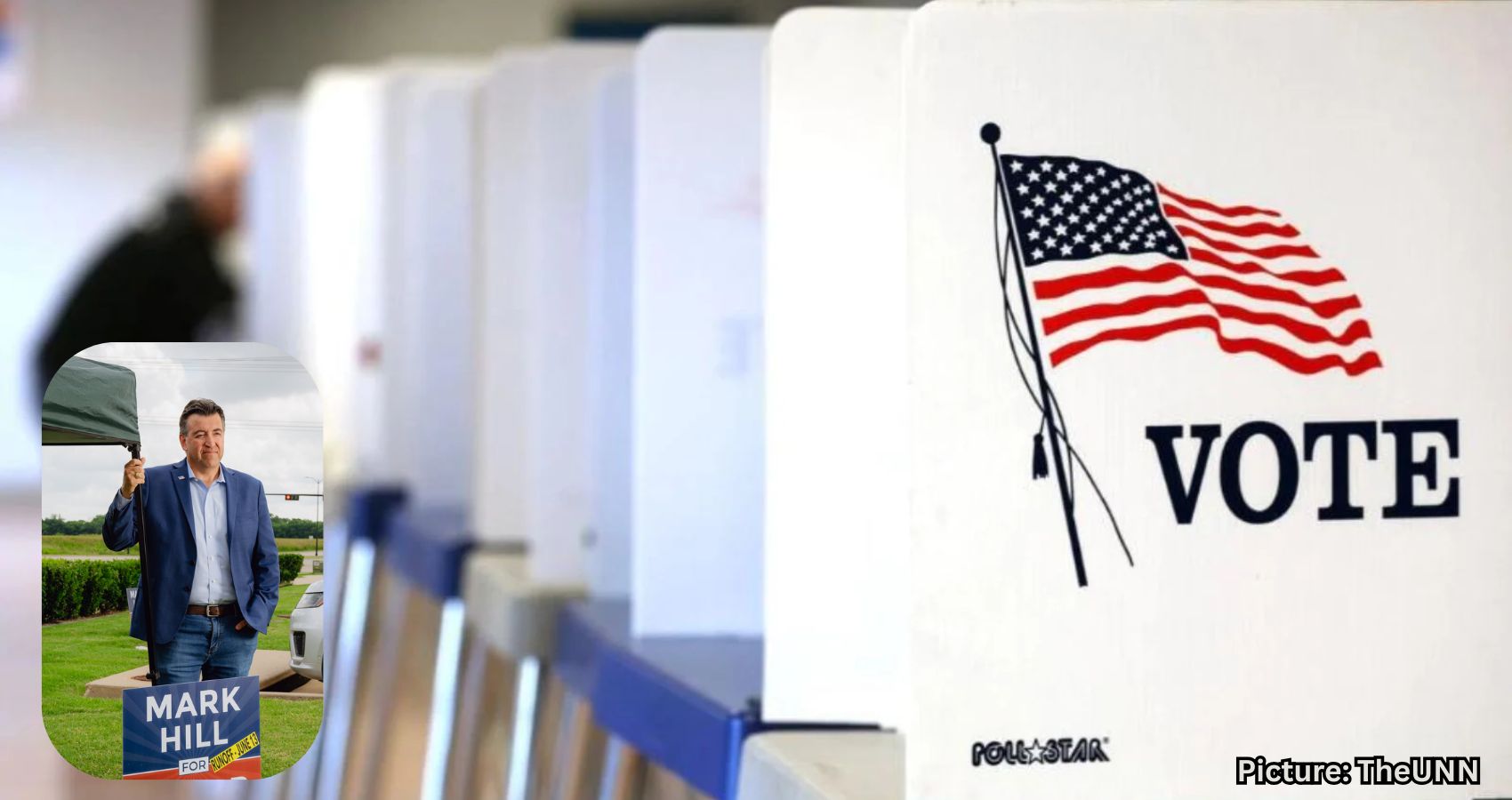
A Texas mayoral election saw voters favor a unity-focused candidate, rejecting anti-Muslim rhetoric and signaling a shift in the political landscape of the rapidly growing city of Frisco.
A divisive mayoral race in Frisco, Texas, concluded with the election of a candidate who emphasized unity, marking a significant setback for a rival whose campaign was characterized by anti-Muslim rhetoric and culture-war messaging.
Frisco, a suburb located north of Dallas, has emerged as one of the fastest-growing cities in the United States, becoming a focal point for discussions surrounding immigration, religion, and demographic change. In a runoff election held on Saturday, voters chose Mark Hill, a conservative attorney and former school board member, over Rod Vilhauer. The contest garnered statewide attention amid broader political battles unfolding across Texas.
This election was viewed as a litmus test for the appeal of increasingly aggressive anti-Muslim and anti-immigrant rhetoric that has gained traction in certain segments of Texas politics. Frisco, known for its diversity and economic dynamism, presented a contrasting backdrop to these divisive themes.
The political climate in Frisco has become increasingly tense over the past year, as the city has grappled with rapid population growth and changing demographics. Heated debates surrounding immigration and local governance have led to public meetings becoming contentious, prompting outgoing city leaders to temporarily suspend public comment sessions to restore civility.
The mayoral contest unfolded against the backdrop of a high-profile criminal trial that attracted national attention and heightened racial tensions within the city. Activists and social media influencers from outside the community amplified divisions, transforming local issues into national political flashpoints.
Hill’s campaign focused on lowering the political temperature and redirecting city government efforts toward economic development, infrastructure, and public services. He argued that ongoing culture-war battles could jeopardize Frisco’s reputation as a desirable destination for businesses, families, and major employers.
The election results contrast with recent Texas Republican contests where candidates employing hardline immigration rhetoric have found success. Notably, elements targeting Islamic practices and sharia law were incorporated into the Texas Republican Party’s platform during its recent state convention, underscoring the broader political environment surrounding the Frisco race.
Frisco’s decision may indicate the limits of such divisive messaging in affluent, rapidly growing suburban communities where economic growth has been driven by increasingly diverse populations. The city has attracted corporate headquarters, professional sports organizations, and residents from across the United States and abroad, making it a microcosm of the demographic shifts reshaping many American suburbs.
For immigrant communities, this election is likely to serve as a barometer for how suburban voters respond to identity-based political campaigns. As immigration and cultural issues remain central themes in national politics, the outcome in Frisco offers a reminder that economic growth, demographic change, and political polarization continue to intersect in communities across America.
According to The American Bazaar, the results reflect a growing desire among voters for unity over division in local governance.