
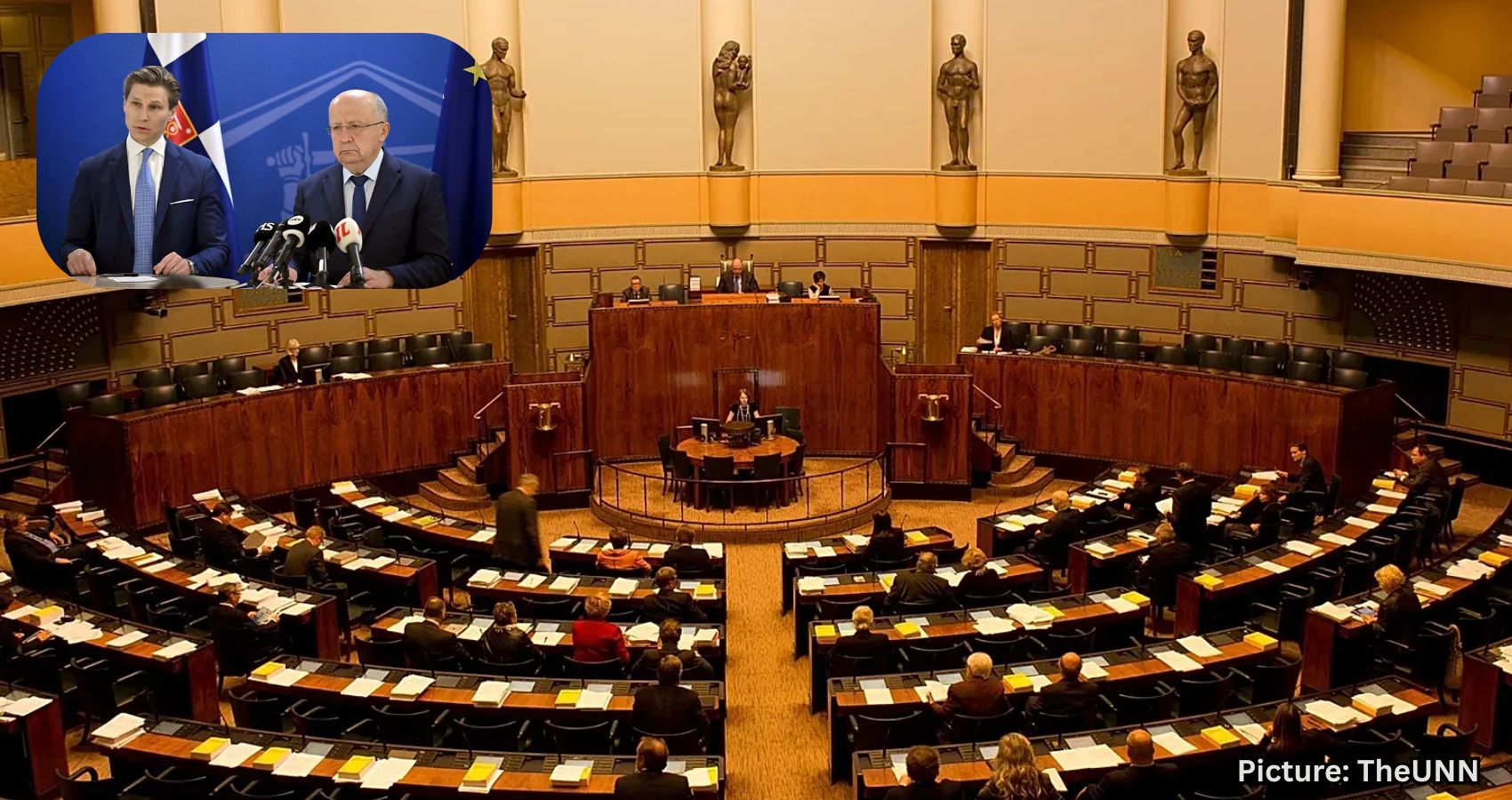
Finland’s parliament has voted to lift a decades-old ban on nuclear weapons, marking a significant shift in its defense policy to align more closely with NATO.
On Wednesday, Finland’s parliament approved a pivotal amendment to the Nuclear Energy Act, effectively lifting a long-standing ban on nuclear weapons. This decision represents a significant defense policy shift aimed at aligning the country more closely with the North Atlantic Treaty Organization (NATO) deterrence strategy.
Defense Minister Antti Häkkänen hailed the amendment as a “historic reform” that enhances both Finland’s security and that of the NATO alliance. He noted that the parliament approved the amendment with a strong two-thirds majority. “This historic reform strengthens the security of Finland and of NATO as a whole,” Häkkänen stated in a post on X.
This legislative change comes in the wake of Finland’s accession to NATO in April 2023, a move prompted by Russia’s full-scale invasion of Ukraine. Joining NATO effectively doubled the alliance’s border with Russia, marking a decisive end to Finland’s decades of military non-alignment.
The debate surrounding nuclear weapons policy has been one of the most complex issues faced by the Finnish Ministry of Defence during this parliamentary term. Häkkänen explained that the decision followed years of study, discussions with nuclear-armed states and other allies, and assessments of how Finland’s security could be best reinforced within NATO.
The newly approved measure repeals provisions in Finland’s 1987 Nuclear Energy Act that prohibited the import, production, possession, and detonation of nuclear explosives. If enacted, this legislation would permit the transportation, supply, or possession of nuclear weapons in Finland, contingent upon the needs of the country’s military defense.
According to Euro News, the vote saw 125 deputies in favor of the government proposal, while 61 opposed it and 13 abstained. The bill will now proceed to the president for final approval.
Häkkänen expressed gratitude to the members of parliament who supported the legislative proposal, thanking them for their strong backing. He also acknowledged the expertise of defense professionals both at home and abroad who contributed to this initiative.
Despite the bill’s passage, it has faced criticism from opposition lawmakers. They have raised concerns that the decision could escalate tensions, potentially making Finland a primary target and deviating from regional norms. Several neighboring countries have historically rejected hosting or permitting nuclear weapons.
The introduction of this proposed law also elicited a strong reaction from Russia last March. Kremlin spokesman Dmitry Peskov remarked that the decision could lead to increased tensions on the European continent. “This statement adds to Finland’s vulnerability, a vulnerability provoked by the actions of the Finnish authorities,” Peskov stated. He further warned that if Finland were to deploy nuclear weapons on its territory, it would be perceived as a threat, prompting Russia to take appropriate measures.
As Finland navigates this historic shift in its defense policy, the implications for regional security and international relations remain to be seen. The decision underscores a broader trend among NATO allies to bolster their defense capabilities in response to evolving geopolitical challenges.
According to Euro News, the move marks a significant moment in Finland’s military history, reflecting a growing alignment with NATO’s strategic objectives.