
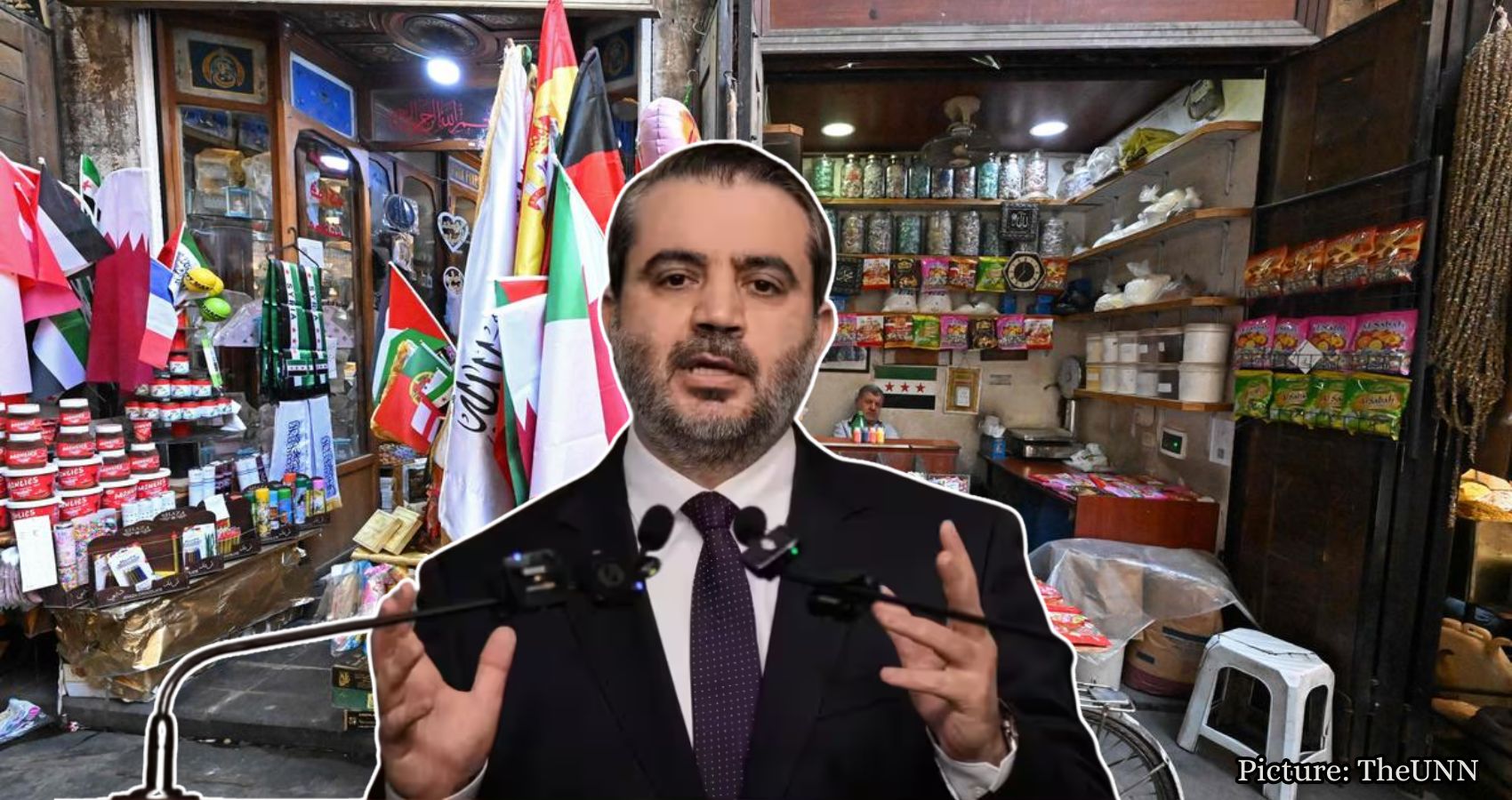
The United States has officially removed Syria from its list of state sponsors of terrorism, a significant step towards economic recovery and investment in the war-torn nation.
The United States has formally removed Syria from its list of state sponsors of terrorism, a decision announced by Secretary of State Marco Rubio. This action, which comes after nearly 50 years of designation, is expected to eliminate major barriers to investment and economic recovery in the country.
In a statement, Rubio noted that he authorized the rescission following the completion of a mandatory 45-day congressional notification period. The process was initiated by former President Donald Trump in July, when he confirmed to Congress that Syria’s government had ceased its support for acts of international terrorism.
Rubio also announced the delisting of Hay’at Tahrir al-Sham (HTS) as a Specially Designated Global Terrorist (SDGT). He described these actions as “another historic step by President Trump to give the Syrian people a path to prosperity.”
Over the past year, the U.S. government has taken unprecedented measures to provide sanctions relief to the Syrian populace. Rubio referenced Trump’s June 2025 executive order titled “Providing for the Revocation of Syria Sanctions,” which aimed to accelerate sanctions relief by terminating the Syria Sanctions Program and the national emergency concerning Syria. This order also directed reviews of other Syria-related sanctions and terrorist designations.
Rubio attributed these actions to the positive steps taken by the Syrian government under President Ahmed al-Sharaa, who came to power after ousting President Bashar al-Assad in December 2024 during an offensive led by HTS rebels. Syria had remained on the State Sponsors of Terrorism list since 1979, a designation that persisted throughout al-Assad’s regime.
In his remarks, Rubio highlighted the significant counterterrorism efforts made by the Syrian government in the past year. He noted that Syria formally joined the Global Coalition to Defeat ISIS in November and has conducted operations to disrupt the terror networks of ISIS, al-Qa’ida, Hizballah, and Iran-aligned groups.
By rescinding Syria’s designation as a state sponsor of terrorism and HTS’s designation as a Specially Designated Global Terrorist, Rubio stated that the U.S. is removing the final major barriers to private-sector investment in Syria. This move is intended to promote the country’s economic recovery and reintegration into the global economy.
Syrian Foreign Minister Asaad al-Shibani expressed optimism about the implications of lifting the designation, stating that it would help restore Syria’s connections to the global financial system and encourage investment following nearly 14 years of war. He remarked, “There is no longer any obstacle to investment, doing business and rebuilding economic life in Syria.”
Treasury Secretary Scott Bessent echoed these sentiments, stating that the recent actions would foster additional investment in Syria, contributing to political and economic stability. He emphasized that this aligns with President Trump’s commitment to deliver sanctions relief to the nation.
The governor of the Central Bank of Syria also hailed the lifting of the designation as a “historic step that returns it to its natural place within the global economic system.”
On the same day, Trump shared a photo on Truth Social featuring al-Sharaa and al-Shibani holding his signed June 2025 executive order directing sanctions relief for Syria. With Syria’s removal from the terrorism blacklist, Cuba, Iran, and North Korea remain the only countries designated by Washington as state sponsors of terrorism.
This significant policy shift marks a new chapter in U.S.-Syria relations and reflects a broader strategy to support the Syrian people in their recovery efforts.
According to Reuters, the implications of this decision could reshape the economic landscape in Syria, paving the way for much-needed investment and rebuilding in the war-torn nation.