
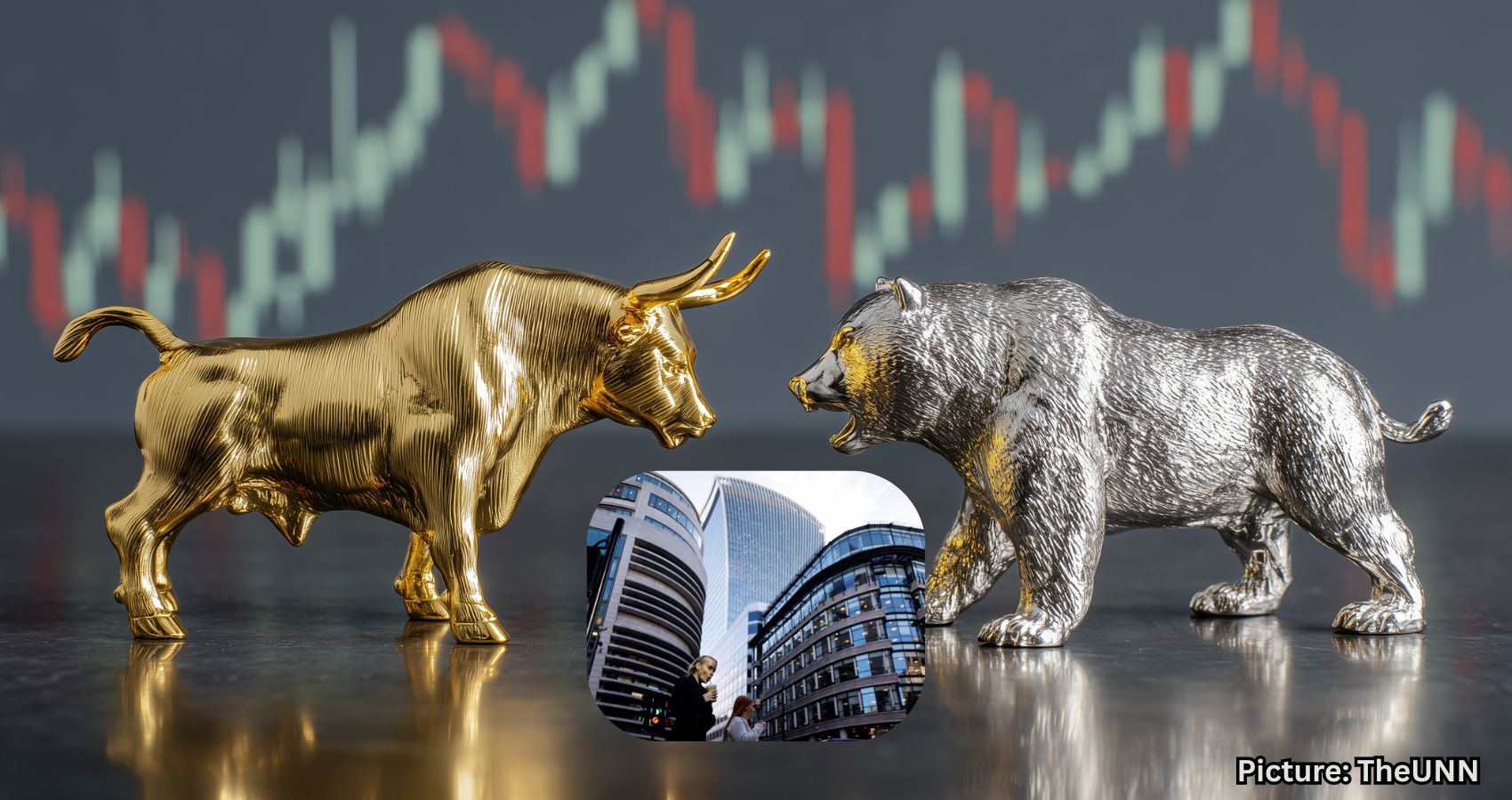
After a week of significant losses, Wall Street faces uncertainty as concerns over AI valuations and interest rates continue to loom, raising questions about the end of the current market correction.
After experiencing seven consecutive sessions of losses, Wall Street may be on the verge of a relief rally. However, ongoing worries regarding artificial intelligence (AI) valuations, interest rates, and a weakening market breadth suggest that the correction may not be over yet.
The recent selloff has been sharp, leading to a bullish narrative: the market appears oversold, fear levels are elevated, and much of the negative news may already be reflected in current prices. As futures prepare to reopen, a relief rally seems plausible. Yet, three critical questions arise from this scenario: Is the market truly oversold? Is it ready for a bounce? And, most importantly, is the correction over? While these questions are interconnected, they are not synonymous.
The case for a bounce is supported by historical trends. The S&P 500 has fallen for seven consecutive sessions, marking its longest losing streak since February 2020, while the VIX, a measure of market volatility, has reached its highest level since April 2025. Historically, since 1950, the S&P 500 has recorded 17 instances of declines of 8% or more over five sessions. Remarkably, the index was higher three months later in 15 of those instances, with a median gain of 8.1%.
However, the term “oversold” merely indicates the intensity of recent selling and does not imply that stocks are undervalued or that sellers have exhausted their positions. Markets can remain oversold for extended periods, and an oversold bounce may serve as a temporary pause in a downtrend rather than signaling the beginning of a sustained recovery.
It is essential to distinguish between a correction and a bear market. One strategist pointed out that only five of the past 15 corrections from all-time highs since 1983 transitioned into bear markets. While this sample size is limited, other studies suggest that approximately 25% to 40% of corrections have evolved into bear markets. Nevertheless, corrections typically do not escalate into bear markets.
It is crucial to note that asserting “this is not a bear market” is different from claiming “the correction is over.” An investor could be correct about the former while still being premature regarding the latter.
The downside risks cannot be overlooked. On Friday, the S&P 500 fell by 3.7% to close at 6,910.39, finishing the week down approximately 8.6% and more than 11% below its record high set on October 6. The Dow Jones Industrial Average also entered correction territory, while the Nasdaq Composite lost around 10% for the week, placing it in negative territory for 2026. The Nasdaq-100 closed just 0.2% shy of a bear market, down 19.8% from its peak.
The underlying causes of these declines remain unaddressed. Concerns about AI valuations and spending, coupled with a political backlash against data-center expansion, have weighed heavily on the sector. Additionally, the Federal Reserve is tightening monetary policy, having raised interest rates in September, with another hike anticipated in December. The S&P 500 closed Friday approximately 6% below its 200-day moving average, a key long-term trend indicator.
While none of this guarantees that a bear market is imminent, it is important to recognize that markets do not require a new shock to continue declining. A reassessment of growth expectations and valuations can be sufficient to drive further declines.
To foster a more convincing recovery, investors should focus on three key indicators: a rebound that holds, a pullback that remains above recent lows, and broader participation beyond a select few large technology companies. Currently, market breadth appears weak. Last week, decliners outnumbered advancers by a ratio of approximately three to one on four out of five trading sessions, and new 52-week lows significantly outnumbered new highs on the Nasdaq. These metrics serve as tests of the prevailing thesis rather than predictions of future performance. An initial rally would be encouraging, but it is essential to assess what the market does following this initial burst of optimism.
While a short-term bounce is plausible, and a correction that does not lead to a prolonged bear market remains a credible scenario, the evidence does not yet confirm that the market has reached its low.
This perspective is not intended to incite panic but rather to encourage a distinction between a reasonable hypothesis and a confirmed outcome. The strongest bullish argument is not merely that “stocks have fallen enough,” but rather that “stocks have experienced significant declines, and buyers are beginning to demonstrate their ability to regain control.”
As the market navigates this turbulent period, investors are advised to remain vigilant and informed. The situation is fluid, and ongoing developments will shape the outlook for the coming weeks and months.
According to The American Bazaar, the current market dynamics warrant careful observation as investors weigh their options in this uncertain environment.