
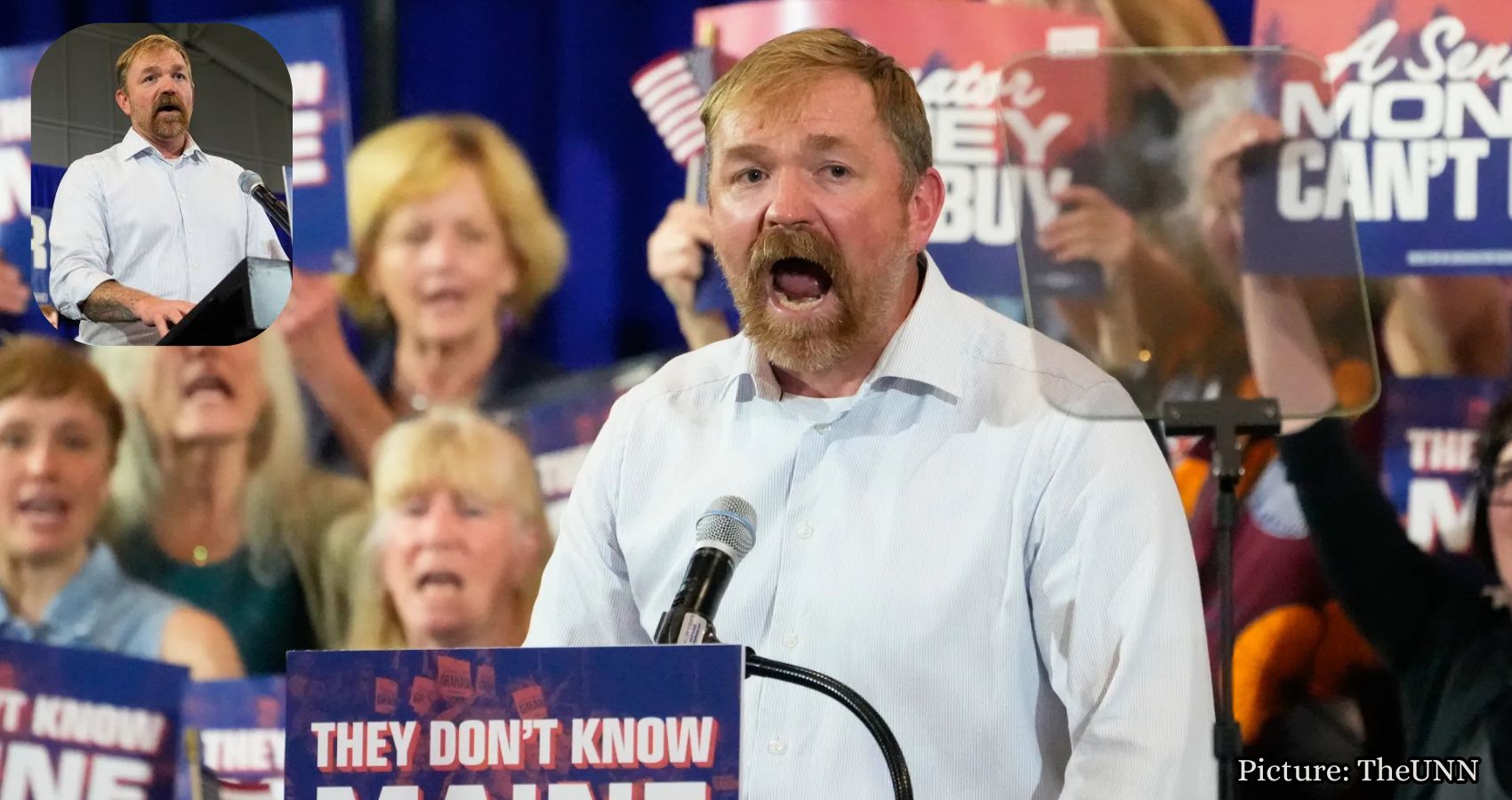
Senator Bernie Sanders faces increasing criticism for his endorsements of controversial candidates, including Graham Platner, amid concerns over their past actions and the implications for the Democratic Party.
Senator Bernie Sanders, I-Vt., has endorsed over 70 candidates during this election cycle, but his support for disgraced former Senate candidate Graham Platner has drawn significant scrutiny. The self-identified Democratic socialist has been a vocal advocate for Platner, asserting his commitment to ensuring that Platner becomes the next senator from Maine. Sanders actively participated in campaign events and promoted Platner on social media, despite ongoing scandals surrounding the candidate’s past.
However, the situation took a dramatic turn following a report from Politico that detailed allegations of sexual assault against Platner. Less than 24 hours after the report was published, Sanders joined many of his Democratic colleagues in calling for Platner to withdraw from the race.
This incident has raised questions about Sanders’ influence within the Democratic Party, particularly as political commentator Rachel Bade noted the growing list of candidates endorsed by Sanders who have faced controversies. “The Graham Platner fiasco was bad, yes. But now, some Dems are tallying up everywhere else Sanders and his orbit bet wrong this cycle, raising questions about their judgment in elevating untested, unvetted candidates with skeletons nobody bothered to check for,” Bade wrote on X.
In addition to Platner, Sanders has endorsed several other candidates whose pasts have sparked controversy. Adam Hamawy, who has connections to a convicted terrorist linked to the 1993 World Trade Center bombing, won a Democratic primary with Sanders’ backing. Similarly, Melat Kiros, a socialist newcomer in Colorado, defeated a long-time incumbent with Sanders’ endorsement, despite her controversial remarks regarding American foreign policy and the 9/11 attacks.
Randy Villegas, another candidate supported by Sanders in California, is under scrutiny for his past votes related to confidential settlements in child sex-abuse cases during his tenure as a teacher. Sanders has also backed Cori Bush, who has faced criticism for using campaign funds to pay her husband and for her strong support of defunding the police.
Some Democrats are expressing frustration over Sanders’ endorsement choices. Senator John Fetterman, D-Pa., questioned Sanders’ strategy, suggesting that he should reconsider his support for certain candidates. “So, I don’t know why you want to keep pushing these kinds of people,” Fetterman said in an interview with Fox News. “Maybe he should consider sitting a few out and stop pushing these kinds of communists.”
Sanders’ endorsement history is not limited to this election cycle. In 2018, he supported Andrew Gillum, a former candidate for Florida governor, who later faced scandals, including a drug-related arrest and a highly publicized incident in a hotel room. Sanders had previously praised Gillum for his commitment to healthcare and sustainable energy.
In 2019, Sanders rescinded his endorsement of Cenk Uygur, founder of the Young Turks, after past racist remarks surfaced online. Uygur had been touted by Sanders as a candidate who would serve ordinary people and not powerful interests.
Sanders has also supported members of the “Squad,” including Representatives Ilhan Omar, D-Minn., and Rashida Tlaib, D-Mich., both of whom have faced accusations of antisemitism and have advocated for defunding the police. Tlaib recently criticized the lengthy prison sentences given to individuals involved in a violent attack on a Texas immigration facility, calling it a “travesty and totally unjustified.”
Political commentator Shannon Watts highlighted Sanders’ pattern of endorsing candidates with questionable character, referencing his support for Nate Blouin, who lost his primary earlier this year and had previously mocked sexual assault. “It’s almost like there’s a pattern,” Watts remarked.
Natalie Baldassarre, Press Secretary for the Republican National Committee, echoed these sentiments, stating, “Whether it’s alleged rapist Graham Platner, anti-cop Abdul El-Sayed, or ‘trans kid lover’ James Talarico, Bernie Sanders’ clown car of unvetted and untested candidates is showing the American people just how unfit they are for public office.”
In the current midterm cycle, Sanders has endorsed 19 federal candidates, nine of whom have never held office. He has also backed 54 candidates in state and local races, significantly more than fellow progressives such as Senator Elizabeth Warren, D-Mass., and Representative Ro Khanna, D-Calif.
Baldassarre believes that more of Sanders’ candidates require scrutiny, stating, “We will continue to expose these candidates for who they are — radical socialists who will push their extreme ideology and strip every American of their safety, sanity, and freedom.”
The next test of Sanders’ influence will come in early August when Abdul El-Sayed, a progressive doctor, competes against Representative Haley Stevens, D-Mich., in a primary for the Democratic nomination for the U.S. Senate. El-Sayed has previously called for defunding the police and abolishing ICE, positions that align with Sanders’ ideology.
As the Democratic Party grapples with the implications of Sanders’ endorsements, all eyes will be on the upcoming Michigan Senate primary. Sanders did not respond to requests for comment regarding his endorsement track record, leaving many to speculate on the future direction of his political influence.
According to Politico, the fallout from the Platner incident may serve as a pivotal moment for Sanders and his endorsement strategy moving forward.