
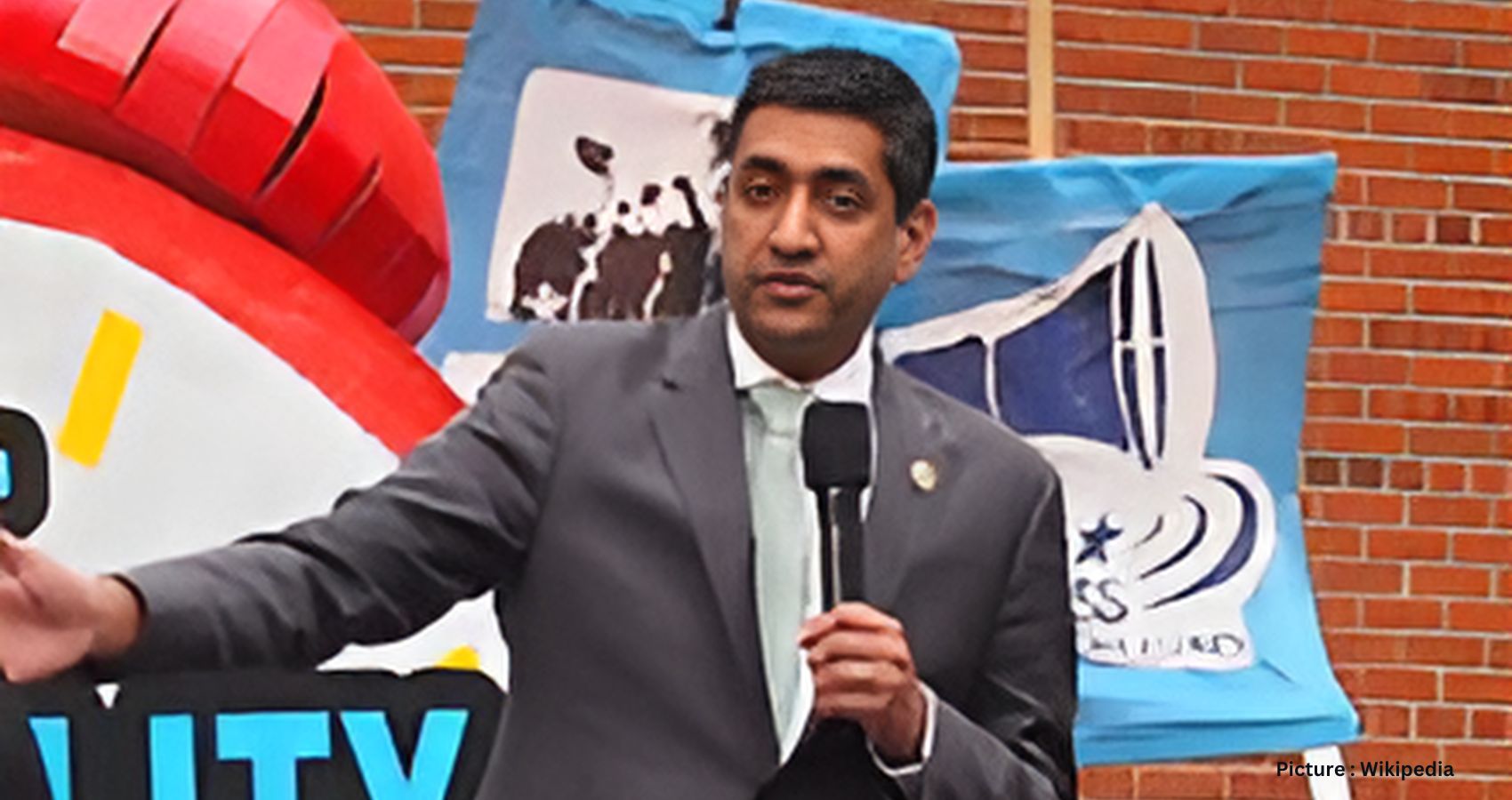
Rep. Ro Khanna has become the first U.S. lawmaker to sign an anti-AIPAC peace pledge, emphasizing a shift towards diplomacy in U.S. foreign policy regarding the Middle East.
Representative Ro Khanna has made history by becoming the first member of Congress to sign an anti-AIPAC peace pledge. This move aligns him with a burgeoning movement aimed at diminishing the influence of pro-Israel lobbying groups on U.S. foreign policy while advocating for diplomatic solutions to conflicts in the Middle East.
The announcement was prominently featured by Democracy Now! during its June 18 news segment, which highlighted Khanna’s unique position as the first U.S. lawmaker to endorse the pledge.
Khanna, who represents California’s Silicon Valley-based congressional district, has established himself as a prominent progressive voice on foreign policy issues. Throughout his tenure, he has consistently advocated for congressional oversight of military interventions, opposed what he terms “forever wars,” and championed diplomatic engagement as a primary strategy for resolving international disputes.
This pledge comes at a time of intensified debate in Washington regarding U.S. policy towards Israel, Gaza, and the broader Middle East. Progressive lawmakers are increasingly scrutinizing the role of major lobbying organizations in shaping U.S. foreign policy, calling for a greater focus on diplomacy, human rights, and congressional authority over military actions.
Khanna has previously supported initiatives aimed at curtailing unauthorized military involvement abroad and has argued that Congress should have a more significant role in decisions related to war and national security. His advocacy for diplomatic solutions in international conflicts underscores his commitment to a more restrained approach to U.S. foreign policy.
The anti-AIPAC peace pledge is likely to resonate with factions within the Democratic Party that have grown critical of traditional U.S. approaches to the Israeli-Palestinian conflict. Supporters of the pledge view it as a commitment to peace-oriented policymaking, while critics may perceive it as a challenge to long-standing political alliances in Washington.
Khanna’s decision to sign the pledge marks a significant moment in the ongoing discourse surrounding foreign policy within Congress. Lawmakers are increasingly facing pressure from activists and constituents who are advocating for a reassessment of U.S. engagement in the Middle East.
According to Democracy Now!, Khanna’s endorsement of the anti-AIPAC peace pledge signals a shift in the political landscape, as more lawmakers consider the implications of U.S. foreign policy in the region.