
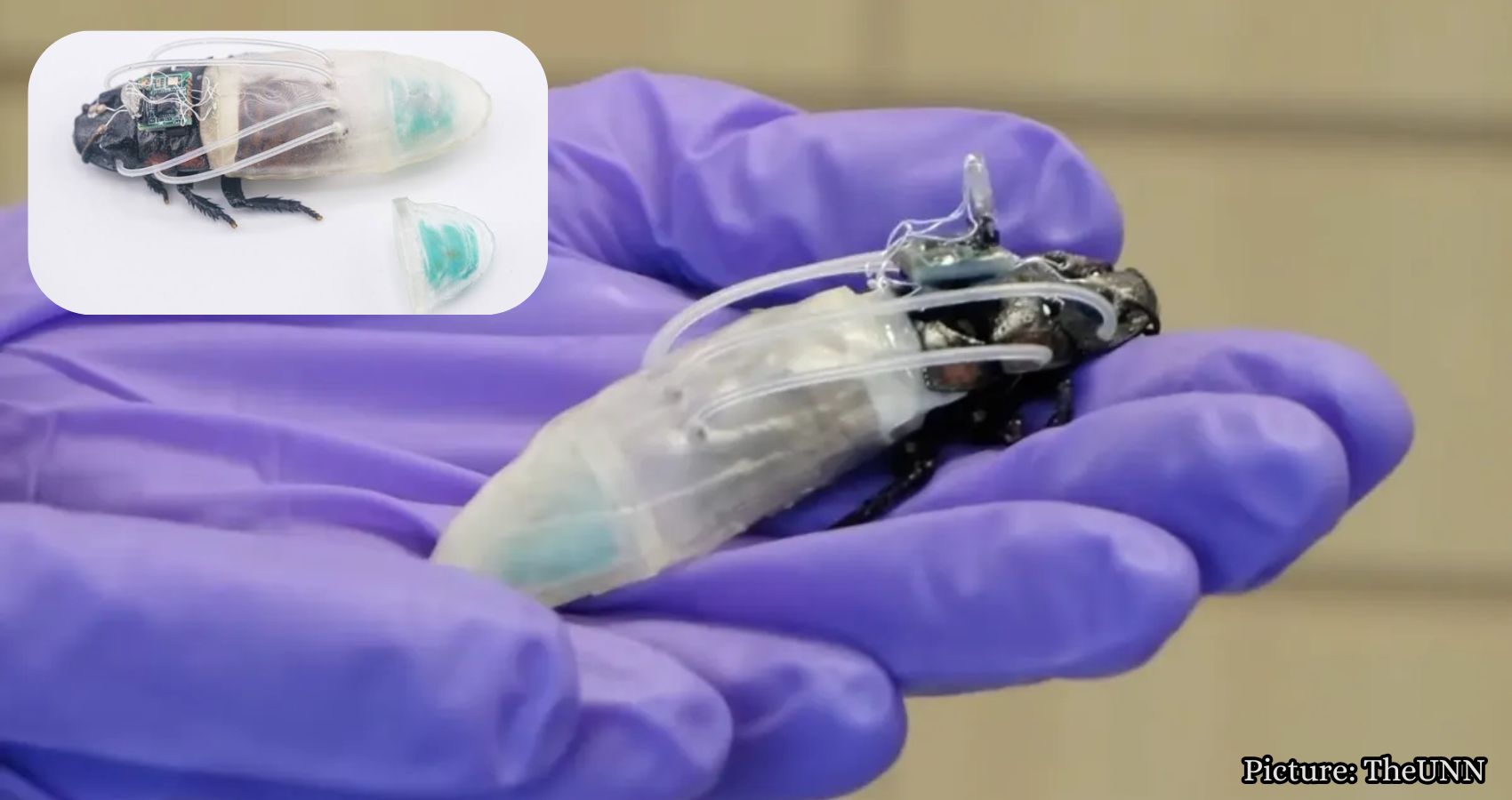
The development of a flexible diving suit for cyborg cockroaches opens new possibilities for rescue operations in disaster zones, allowing these insects to navigate challenging environments underwater.
Researchers from NTU Singapore and Waseda University have created a unique solution for disaster response: a flexible diving suit designed for cyborg cockroaches. This innovative setup allows the insects to survive and move underwater, as well as navigate through low-oxygen spaces, for up to three hours.
The study detailing this advancement was published in Nature Communications. The primary aim is to enhance the capabilities of cyborg insects in rescue operations following floods, earthquakes, or other disasters where access is hindered by rubble, drains, and tight spaces.
A cyborg cockroach is essentially a living insect outfitted with tiny electronics that guide its movement. Unlike traditional robots that rely on motors, these insects utilize their own muscles to walk, significantly reducing the energy required for operation. However, like all living creatures, cockroaches need air to breathe. They do so through small openings known as spiracles, which cannot extract oxygen from water when submerged.
This is where the diving suit comes into play. The suit is equipped with an oxygen-generation tank, a flexible waterproof shell, and four silicone oxygen tubes. Together, these components ensure that water is kept out while delivering oxygen directly to the cockroach’s breathing openings.
The oxygen tank is 3D-printed from a clear resin-like material. Inside, researchers have placed a sponge treated with manganese dioxide and a small amount of diluted hydrogen peroxide. This chemical reaction releases oxygen gradually, which then travels through the suit and into tubes connected to the cockroach’s spiracles, effectively creating a miniature oxygen supply system. Researchers liken this setup to the tanks used by human divers.
The team conducted their tests using the Madagascar hissing cockroach, a species commonly employed in cyborg insect research due to its size, strength, and lack of wings. With the diving suit, these cyborg cockroaches can transition from land-based crawlers to amphibious rescue robots capable of traversing both dry and wet terrain.
This capability could prove invaluable in disaster scenarios where conventional robots may struggle. Disaster sites often feature collapsed structures, standing water, and narrow gaps that can impede access. A small insect-guided system could maneuver through these challenging environments, potentially equipped with sensors or cameras in future iterations.
During testing, the cyborg cockroaches equipped with the diving suit remained active underwater for up to three hours. In contrast, control cockroaches without the suit suffocated within approximately two minutes. The researchers also simulated rescue conditions using plastic tunnels, which included sections filled with carbon dioxide followed by water. The cyborg cockroaches successfully navigated through these obstacles.
Additionally, the team tested the insects in narrow underwater gaps. With implanted electronics rather than a bulky backpack, the cyborg cockroach was able to traverse a crevice just two centimeters high—an area where many small robots could easily become stuck.
The key takeaway from this research is that future rescue robots may not always resemble traditional machines. Instead, they could leverage the natural abilities of living insects, enhanced with technology to address specific challenges. A cyborg cockroach can crawl through debris, squeeze into tight spaces, and consume minimal energy. With the added capability of underwater movement, it becomes a more effective tool in flooded disaster zones.
This technology could facilitate inspections of flooded pipes, drains, tunnels, or damaged buildings following heavy rains, earthquakes, or infrastructure failures. The researchers are continuing to refine the system, aiming to test it in more disaster-like environments, enhance the durability of the suit, and incorporate sensors and navigation tools for practical field use.
While it may be some time before cyborg cockroaches are deployed in real-world rescue operations, this research illustrates a potential future direction for search technology. Rescue teams require tools that can access areas unsafe for humans. If a small living insect can carry electronics, navigate through rubble, and operate underwater, it could become a vital component of a comprehensive rescue system.
Ultimately, this innovative approach could lead to faster inspections after floods, improved access to damaged structures, and more effective solutions in critical situations. The concept of a cyborg cockroach in a diving suit may seem unconventional, but the underlying motivation is serious: to find new ways to navigate the hazardous environments that often accompany disasters.
As researchers continue to explore the possibilities of this technology, the question remains: how will the integration of sensors, cameras, and advanced navigation capabilities transform these tiny creatures into life-saving tools? Would you feel comfortable with the use of cyborg insects in search-and-rescue missions if they could expedite the process of locating individuals in need? Let us know your thoughts.
According to Fox News, this research represents a significant step forward in the evolution of rescue technology.