
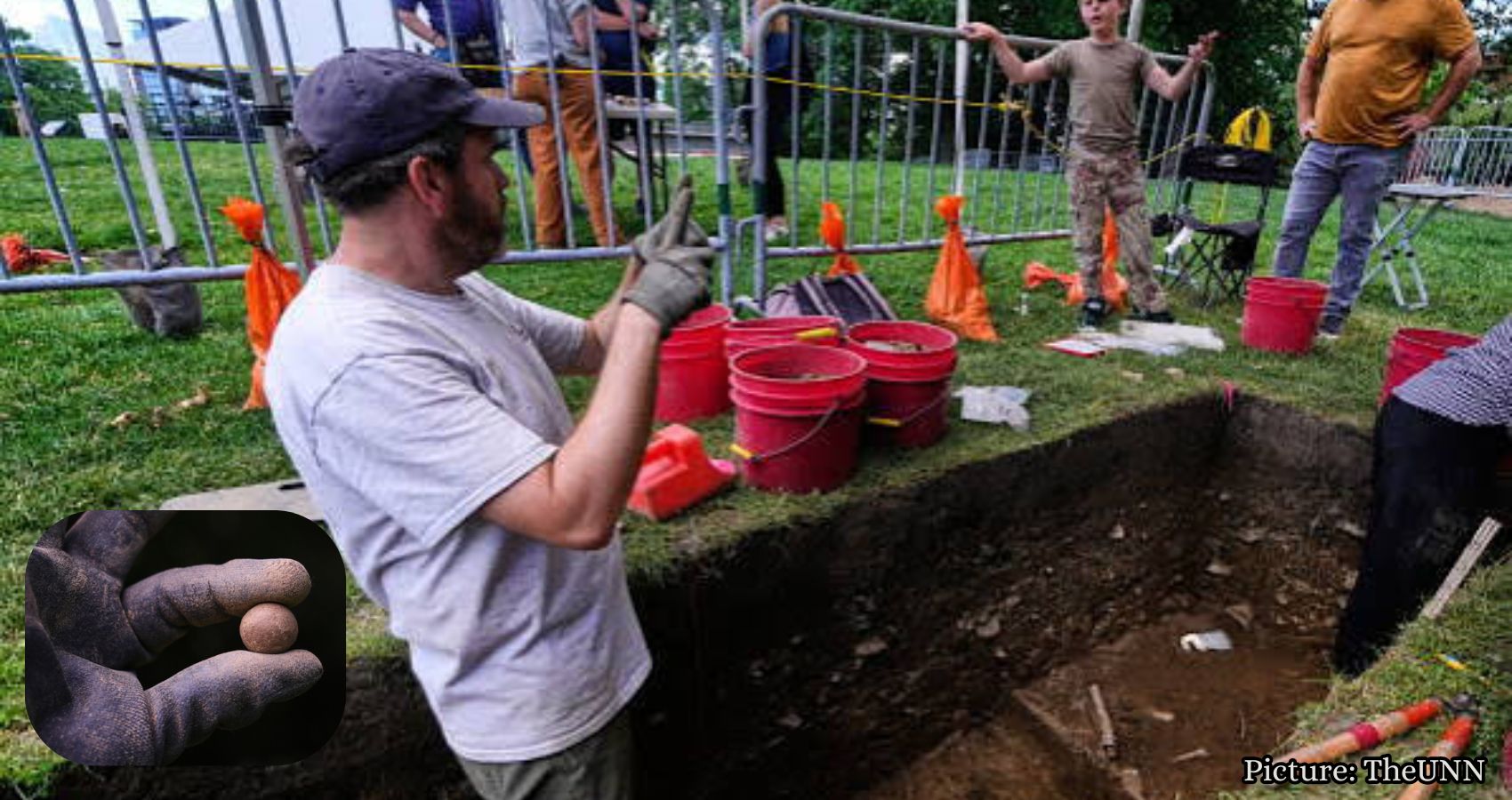
Archaeologists at the Bunker Hill Monument in Charlestown, Massachusetts, are uncovering Revolutionary War artifacts, shedding light on the historic battle as the nation prepares for its 250th anniversary.
In a significant archaeological dig at the Bunker Hill Monument in Charlestown, Massachusetts, researchers are unearthing artifacts from the Revolutionary War, including gun flints, musket balls, and ceramics. These discoveries, which have remained hidden for 251 years, come as the nation approaches its 250th birthday, marking a pivotal moment in American history.
This excavation is among the first at the site of the Battle of Bunker Hill, fought on June 17, 1775. The primary goal of the project is to learn more about the redoubt, an earthen fortification that colonial soldiers constructed by hand overnight before the battle commenced. “We know that the fortification was up here, but nobody has been able to identify where specifically it is after all of these years,” said Lauryn Sharp, the Project Archaeologist for the City of Boston. “Even with the monument being built, there wasn’t any evidence of where the actual redoubt was, so this is kind of the first hand that we are adding this information back into the story.”
As the dig progresses, archaeologists hope to uncover additional clues about the Battle of Bunker Hill, which is known as the bloodiest single day of the Revolutionary War. So far, the team has discovered two English gun flints, a French gun flint, and two musket balls believed to be British. “This project has been extremely successful, and we’re learning new things about the battle that we didn’t know before,” said Joel Bohy, a historian and material culture specialist involved in the excavation.
Bohy examined one of the musket balls found in one of the two trenches dug during the project. “I haven’t weighed it yet, but it is possibly from a provincial gun. So we’ve got materials used from both sides, it seems, all in this one trench,” he noted. He explained that the musket ball showed signs of having struck the ground at medium velocity and featured a sprue that was unusually prominent, indicating how it was molded.
In addition to battle-related artifacts, the crews have also uncovered items that may not be directly linked to the conflict, such as a men’s curling iron, 18th-century ceramics, and pipe stems. These finds contribute to a broader understanding of life during that era.
The City of Boston’s archaeology program is collaborating with the American Veterans Archaeological Recovery (AVAR) to lead the dig. AVAR focuses on helping veterans transition into careers in professional archaeology, specializing in battlefields and conflict sites both in the United States and abroad. “Just being a veteran, just having served, it does give you more emotional understanding of real lived experience and what conflict is like and combat is like and taking orders is like,” said Dr. Stephen Humphreys, CEO of AVAR.
Humphreys emphasized the significance of this project from both military and historical perspectives. “But what archaeology can do is it can give you more insight into the very real experiences of those typical soldiers on the ground. And of course, that’s what my crew knows already from having served,” he explained. “For a lot of these individuals, a lot of people who fought in this battle, there really isn’t anything left of them except for maybe a musket ball or a gun flint or a button.”
While the artifacts discovered during the dig are exciting, the teams involved are mindful of the human stories behind the history. “251 years ago, next week, there were a lot of men who fought and died here from both sides. So as much as we get excited about these finds, we need to remember the human side of this also,” Bohy remarked.
The artifacts will undergo examination in a laboratory and will eventually be added to a digital database, enhancing the historical narrative surrounding the battle. “We think we know a lot about history, and we read books and things like that, but when we dig into the ground like this and we can possibly identify where the redoubt walls were, and we find objects coming out of the hole, it makes history more three-dimensional,” Bohy noted.
Initially, the City of Boston planned to conclude the project after two weeks; however, there is a possibility of extending the excavation. Meanwhile, some members of AVAR are preparing to travel abroad. “We’re really honored to be taking some of these same veterans and some of our crew over to Sicily to work on a bomber from World War II to see if we can give resolution to some family members,” Humphreys said. “This is just part of a larger lineup for us of conflict sites where we hope to bring some closure to families and let more Americans know about our military history.”
As the dig continues, the findings at Bunker Hill promise to enrich our understanding of this crucial moment in American history, reminding us of the sacrifices made by those who fought for independence.
According to Fox News, the ongoing excavation is poised to reveal more about the lives and experiences of the soldiers who participated in the battle.