
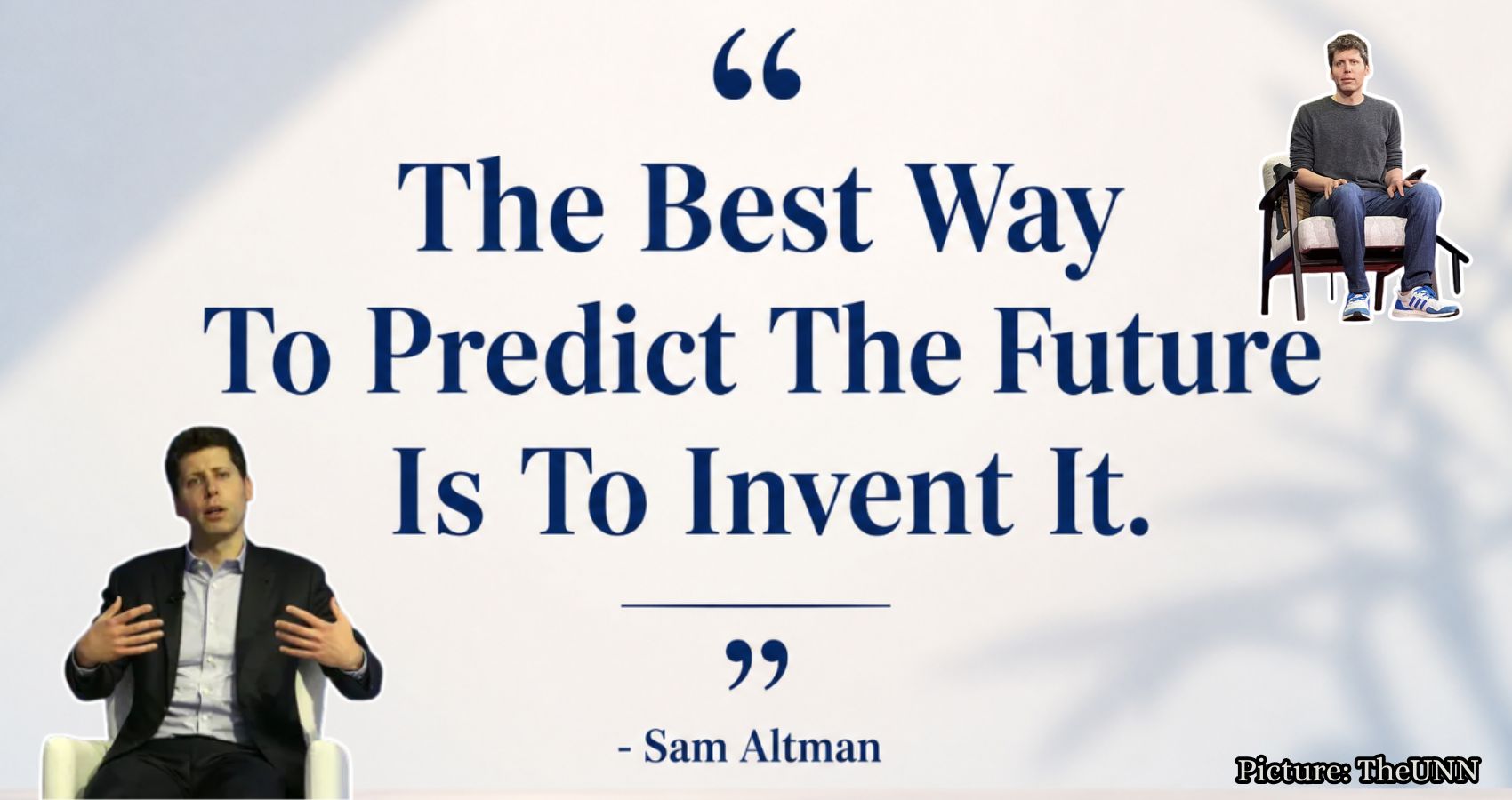
Sam Altman’s quote, “The best way to predict the future is to invent it,” inspires active participation in shaping tomorrow rather than passively waiting for change.
“The best way to predict the future is to invent it.” This thought-provoking statement by Sam Altman, the technology entrepreneur and CEO of OpenAI, challenges us to reconsider our relationship with the future. Instead of being passive observers, we are encouraged to take an active role in creating the world we envision.
At its essence, Altman’s quote emphasizes the importance of action, innovation, and ambition. Predicting the future can be a daunting task, given the ever-evolving landscape of technology, society, and human behavior. Rather than spending time attempting to forecast what tomorrow will bring, the focus should shift to actively working towards the future we desire.
This mindset is particularly empowering for entrepreneurs, scientists, and innovators. A new product, invention, or idea has the potential to reshape public expectations and eventually become an integral part of daily life. Altman’s words serve as a reminder that we have the power to influence the course of our future.
The underlying message of the quote is straightforward yet profound: do not merely wait for change—be the catalyst for it. Many technologies that are now commonplace were once considered far-fetched or impossible. Innovations such as smartphones, artificial intelligence, electric vehicles, and reusable rockets have fundamentally altered our perceptions of the future.
Embracing the mindset suggested by Altman fosters curiosity and encourages experimentation. Even in the face of uncertainty, taking the initial step can unlock opportunities that were previously unimaginable. This proactive approach is essential in an age marked by rapid technological advancements.
The relevance of Altman’s quote is particularly pronounced today, as we navigate an era characterized by swift developments in various fields. Artificial intelligence is transforming workplaces, education, communication, and creative industries, while emerging technologies in robotics, biotechnology, clean energy, and space exploration continue to reshape our world.
In such a fast-paced environment, attempting to predict the next big breakthrough can be overwhelming. Instead, a more constructive question arises: What can I build, improve, or contribute today that could influence tomorrow?
For entrepreneurs and aspiring innovators, Altman’s quote serves as a powerful reminder that monumental ideas often originate from small, decisive actions. It is not always necessary to have a clear vision of the end result. What truly matters is recognizing a problem, developing a viable idea, and being open to testing it in the real world.
Moreover, failure should not be viewed as a setback but rather as an integral part of the innovation process. An unsuccessful experiment can yield valuable insights that inform and enhance future endeavors.
In conclusion, Sam Altman’s quote encapsulates a vital philosophy for anyone looking to make a meaningful impact. By embracing the notion that we can invent the future, we empower ourselves to take initiative, foster innovation, and contribute to a world that reflects our aspirations.
According to The Sunday Guardian, this perspective is essential for navigating the complexities of modern life and technology.