
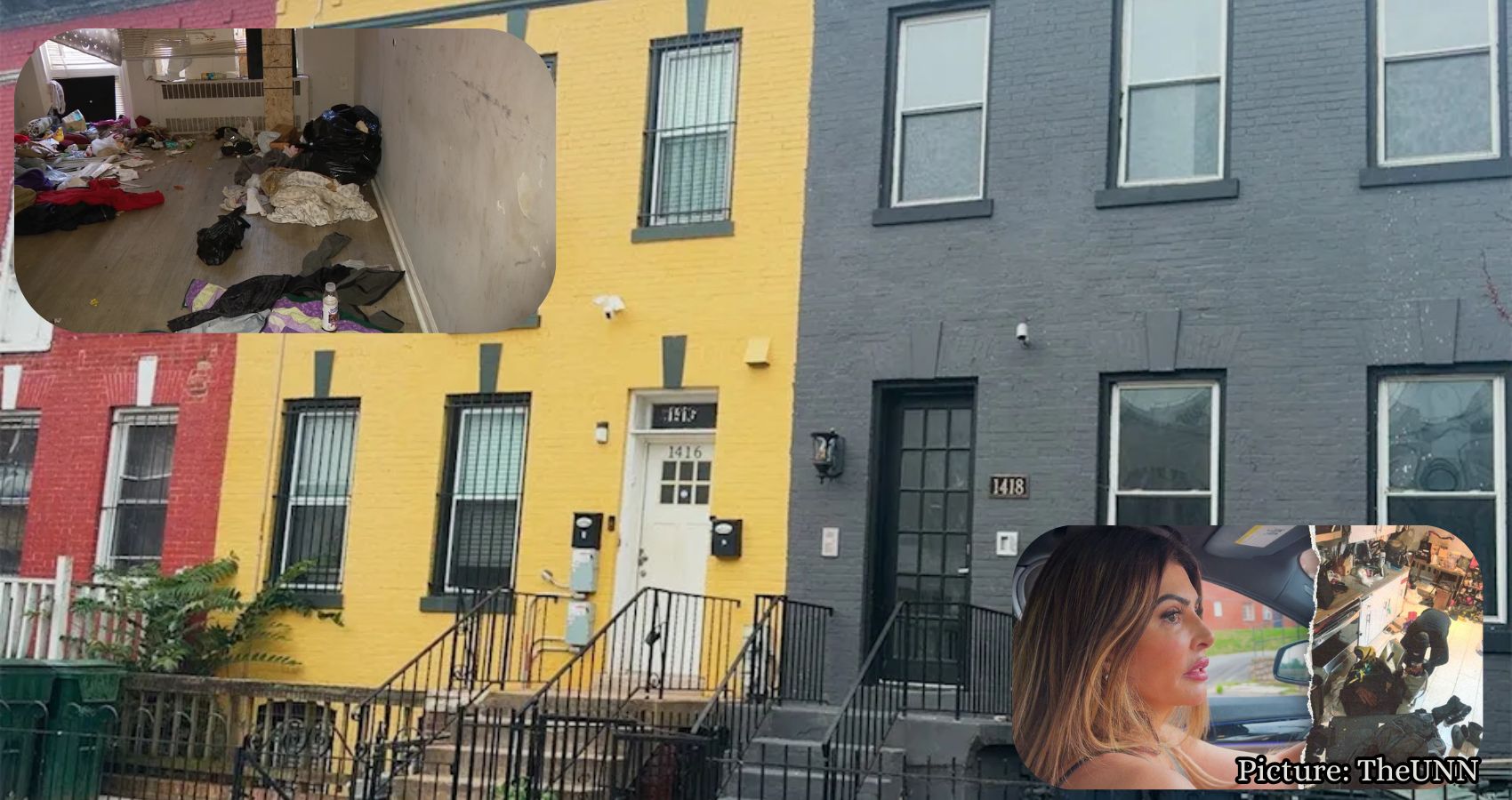
A D.C. property owner claims her basement apartment has become a drug haven due to squatters, as she faces a lengthy legal battle with little help from local authorities.
In Washington, D.C., a property owner is sounding the alarm over a squatting crisis that has turned her basement apartment into a hub for illegal activity. Tatyana Day Velasquez, who owns a small three-unit building in Columbia Heights, describes her experience as a nightmare, exacerbated by what she perceives as a lack of accountability from city officials.
“I lived in several countries, including Third World countries, but it seems to me that I’m living in a Fourth World country in D.C.,” Velasquez told Fox News Digital. “I’ve never seen something like it. There’s no accountability for what goes on. Everybody just throws the ball to each other, and there’s no help. So how can somebody resolve a problem like mine if you don’t get help?”
For the past eight months, Velasquez has struggled to reclaim her property from squatters who have taken over the basement apartment. She describes the situation as chaotic, with unfamiliar faces coming and going at all hours, frequent altercations, and a pervasive chemical odor permeating the building. Photos and videos provided by Velasquez depict a disturbing scene, with drug paraphernalia, including needles and pipes, strewn throughout the apartment.
“They don’t pay rent,” she stated. “I mean they’re making money by drug dealing, obviously.”
The legal battle has escalated to D.C. Superior Court, where Velasquez is fighting to evict the squatters. She argues that the courts are overwhelmed with cases like hers, making it difficult for property owners to reclaim their spaces.
According to court documents, Velasquez learned that unauthorized occupants had taken over her apartment after the previous tenant informed her he had moved out. One of the squatters claimed he had received a key from the former tenant, but the lease explicitly prohibits unauthorized occupants and drug-related activities.
Three separate tenants have since vacated the building, citing safety concerns. One tenant expressed feeling unsafe enough to sleep elsewhere, as detailed in court documents.
“How could that be possible?” Velasquez asked. “They are not guests. They’re not invitees. This property is not a business. So, they are not implied consent to get inside; they are trespassers.”
However, police reports complicate the narrative. A June 26 report from the Metropolitan Police Department indicated that one of the occupants had “established residency” by living with a tenant on the lease. As a result, police treated the situation as a landlord-tenant dispute and did not make any arrests.
Under D.C. law, property owners are generally prohibited from removing occupants themselves and must instead navigate the court system, a process that can take months. The D.C. Office of the Tenant Advocate states that occupants must be given a chance to contest a property owner’s claims before an eviction can occur.
Velasquez believes that the current laws favor squatters, arguing that they violate her rights as a property owner. “I believe this is predatory tactics, and I also believe that by letting squatters have rights, it’s a violation of the Fourth Amendment and Fourteenth Amendment because you no longer have private property,” she asserted. “The government decides what your property is going to be used as.”
Despite the ongoing legal issues, Velasquez continues to face financial burdens. She is still responsible for property taxes and other expenses associated with the building, even as she struggles to generate any income from it.
Determined to regain control, Velasquez visits the property daily to confront the squatters, as her pleas for assistance have largely gone unanswered. “I have to go there every day because, you know, I haven’t received much help from the police, and the neighbors are tired of it,” she explained.
Her confrontations have turned physical on multiple occasions, leading to assaults and further distress. “I’ve been assaulted a couple of times, and there’s nothing I can do because I’m responsible for the property and for the safety of other tenants,” Velasquez said.
Neighbors have expressed their concerns about the broader implications of the situation. One neighbor, Lloyd, commented, “You say you want to protect women… but then you turn around and do something like this.” He noted that the disturbances have begun to affect the entire neighborhood.
The ongoing legal battle highlights the challenges faced by property owners in D.C. as they navigate a system that seems to favor squatters over landlords. Lloyd remarked on the ripple effect of such issues, stating, “It’s like one negative thing permeates another negative thing, so you become a fungus in the neighborhood with nuclear waste attached to you.”
A spokesperson for the D.C. police acknowledged the limitations of their authority once someone establishes residency at a property. They emphasized that officers can respond to calls and investigate crimes but cannot remove established residents based solely on a property owner’s claims.
John Gibbs, Director of the Institute for Economic Policy Studies at the Heritage Foundation, commented on the broader implications of squatting in D.C. “Squatting is not primarily a housing policy problem; it is a property-rights enforcement problem,” he stated. He suggested that legislative changes could help restore property owners’ rights and streamline the eviction process.
Recent developments include an eviction served by U.S. Marshals, resulting in one squatter’s arrest for violating a protective order. However, Velasquez reports that the situation remains unresolved, as squatters continue to return to the property.
For Velasquez, her experience is emblematic of a larger issue facing small landlords in D.C. “These small landlords cannot survive in D.C.,” she lamented. “I don’t know what the end game is from the city, but they don’t care about the small guys, the small landlords.”
As the legal battle continues, Velasquez’s story serves as a stark reminder of the challenges faced by property owners in urban areas grappling with squatting and the complexities of landlord-tenant laws.
According to Fox News, the situation remains dire for Velasquez and others like her, as they navigate a system that often leaves them feeling powerless.