
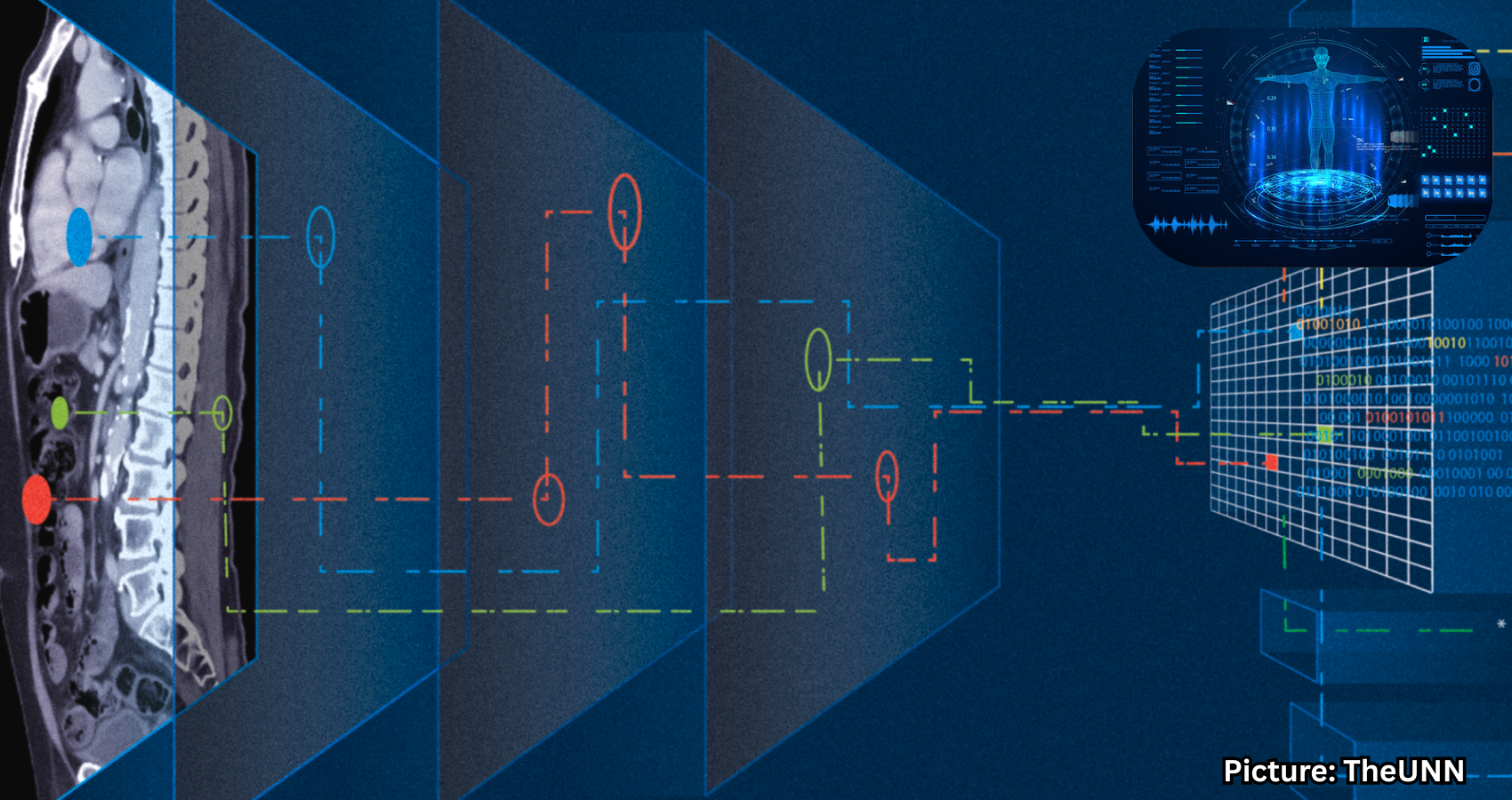
Penn Medicine scientists are revolutionizing mRNA gene editing and personalized therapies, merging artificial intelligence with innovative thinking to redefine modern medicine.
Penn Medicine scientists are at the forefront of a medical revolution, blending artificial intelligence (AI) with ingenuity to transform mRNA gene editing and personalized therapies. This innovative approach is redefining the landscape of modern medicine.
The inspiration for this transformation can be traced back to the iconic television character Angus MacGyver, portrayed by Richard Dean Anderson from 1985 to 1992. MacGyver became a cultural symbol of resourcefulness, relying on scientific knowledge and creativity rather than brute force. His ability to turn everyday objects into life-saving tools resonated with viewers, instilling a belief that intelligence and creativity could overcome any obstacle.
Today, this philosophy is vividly exemplified by researchers at Penn Medicine, who are applying MacGyver-like thinking to solve complex medical challenges. One notable figure in this movement is Drew Weissman, a physician-scientist at Penn’s Perelman School of Medicine. For decades, the concept of using messenger RNA (mRNA) as a therapeutic tool was dismissed as fringe science. However, Weissman, alongside biochemist Katalin Karikó, refused to accept this verdict. They dedicated years to developing a method for chemically modifying mRNA to evade the body’s immune response.
In 2005, Weissman and Karikó published their groundbreaking discovery, which remained largely unnoticed until the emergence of the COVID-19 pandemic in 2020. Their modified mRNA technology became the foundation for the Pfizer/BioNTech and Moderna vaccines, marking a significant milestone in medical history. In 2023, both scientists were awarded the Nobel Prize in Physiology or Medicine, solidifying Penn Medicine’s legacy of medical breakthroughs.
Weissman’s work continues as he explores the next frontier of mRNA technology. Penn Medicine is actively developing mRNA vaccines targeting various infectious diseases. Weissman has even discussed working on treatments for “every imaginable infectious disease.” Early research has already yielded a promising mRNA vaccine aimed at preventing allergic reactions, potentially offering relief to millions suffering from seasonal and food allergies.
Another remarkable story emerging from Penn Medicine is that of KJ Muldoon, who was born in August 2024 with a rare genetic disorder known as severe carbamoyl phosphate synthetase 1 deficiency (CPS1). This condition, affecting only one in 1.3 million infants, prevents the body from eliminating ammonia, leading to severe health complications. KJ was given a grim prognosis, with only six months to live.
However, two scientists at Penn, Kiran Musunuru and Rebecca Ahrens-Nicklas, embodied the MacGyver spirit as they sought innovative solutions for KJ’s condition. Musunuru, a professor at Penn Medicine, had been developing CRISPR-based therapies for cardiovascular diseases, while Ahrens-Nicklas focused on rare metabolic disorders. Together, they collaborated with Jennifer Doudna’s team, co-discoverer of CRISPR technology, to create a bespoke gene therapy targeting KJ’s specific mutation.
In an unprecedented achievement, KJ became the first person to receive a personalized CRISPR gene editing therapy in February 2025. After three infusions, he began to thrive, celebrating his first birthday with improved health. This groundbreaking work was published in the *New England Journal of Medicine* and recognized as one of the Top 10 Clinical Research Achievements for 2026.
More than 30 million Americans live with rare genetic diseases, and KJ’s therapy has set a new precedent for personalized medicine, where treatments are tailored to individual genetic mutations rather than generalized conditions. Musunuru and Ahrens-Nicklas, along with their colleagues at Penn, are paving the way for a new era of medical innovation.
While the MacGyver analogy is compelling, it is essential to acknowledge that the scientists at Penn Medicine are not working in isolation. They are leveraging an extraordinary array of tools and resources. With a research budget of $1.33 billion in 2026, Penn Medicine ranks among the top research institutions in the nation. AI has become an integral part of their research infrastructure, enhancing their capabilities in groundbreaking ways.
Professor Christos Davatzikos is leading one of the first AI-guided radiation therapy projects, utilizing machine learning to analyze brain MRI scans and predict the progression of neurological diseases. Meanwhile, David Fajgenbaum, a physician at Penn who has battled Castleman disease, co-founded Every Cure, a nonprofit that employs AI to match existing drugs with rare diseases. This initiative has received significant federal funding to expedite its mission.
In early 2026, Penn AI announced the recipients of its “Discovering the Future of AI” awards, including a project called ApexMol, led by César de la Fuente. This initiative aims to develop an AI system that designs biomolecules by integrating natural language with three-dimensional molecular structures, significantly accelerating drug discovery and democratizing access to molecular science.
Another key figure at Penn Medicine is Carl June, the architect of CAR T cell therapy, which has revolutionized cancer treatment. After years of skepticism, June’s work led to the first personalized cellular therapy receiving FDA approval in 2017. His team continues to innovate, with a next-generation CAR T cell therapy showing remarkable success in treating resistant B-cell lymphomas.
The potential of AI in drug discovery is immense. The global market for AI-driven drug discovery is projected to grow significantly, with more than 200 AI-designed drugs currently in clinical development. AI’s ability to streamline the drug development process is transforming the landscape, reducing the time from hypothesis to approval and increasing the likelihood of success.
As Penn Medicine continues to harness the power of AI, the possibilities for medical advancements are boundless. The integration of AI into their research processes is not just enhancing individual discoveries; it is reshaping the very framework of medical research.
Penn Medicine’s legacy, spanning 261 years, is a testament to the power of creativity and determination in the face of challenges. From the first medical school in the Americas to the forefront of gene editing and AI-powered drug discovery, the institution exemplifies the MacGyver ethos. The innovative spirit of its scientists, combined with cutting-edge technology, positions Penn Medicine at a pivotal moment in the history of medicine.
As they continue to push boundaries, the future of medicine is being written along University Avenue, where the extraordinary potential of AI and human ingenuity converge to create a healthier world.
According to The American Bazaar.