
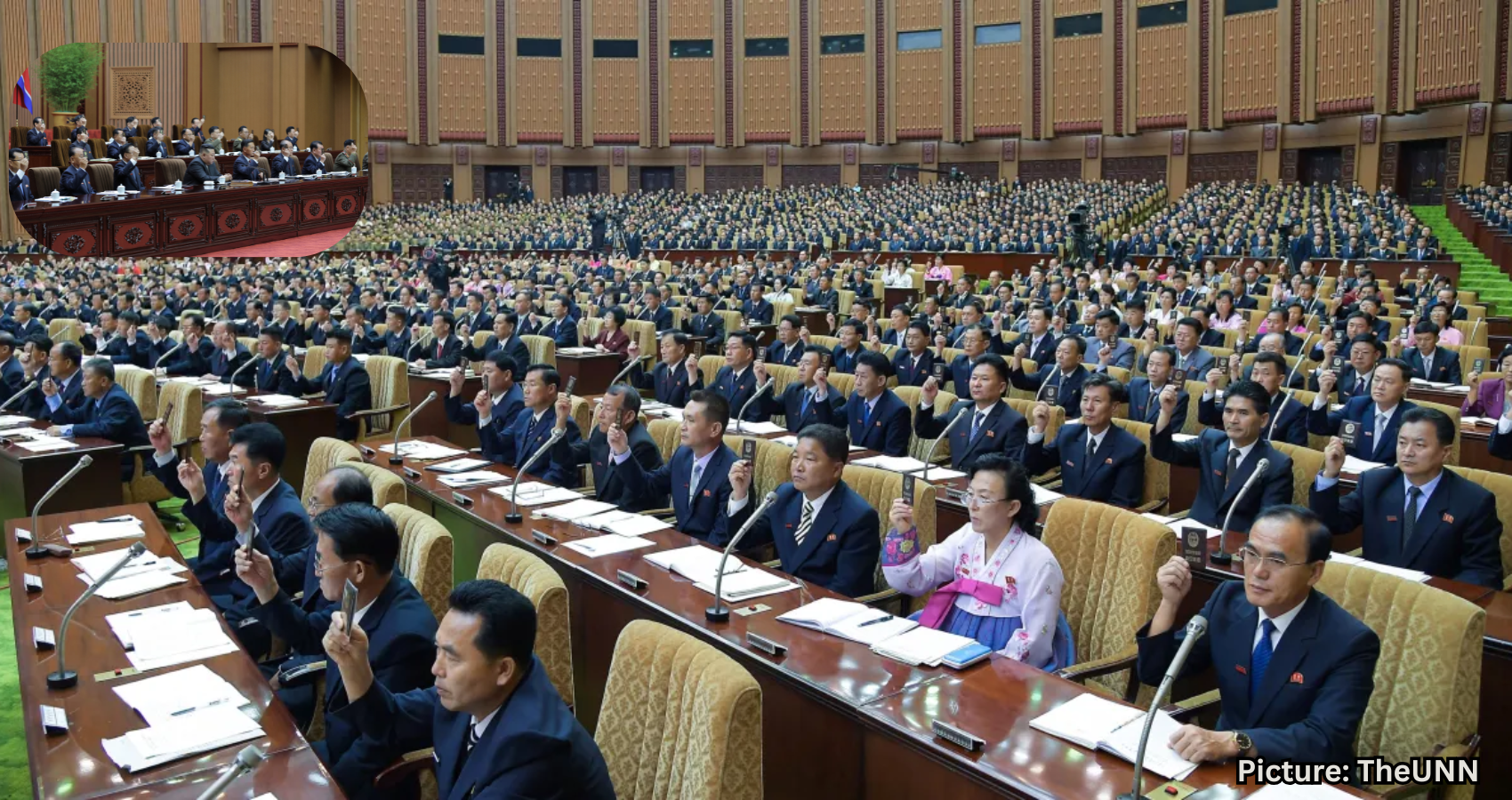
North Korea’s updated constitution mandates an automatic nuclear strike in the event of Kim Jong Un’s assassination, reflecting escalating global tensions and a hardening stance towards its adversaries.
North Korea has reportedly revised its constitution to include a provision for an automatic nuclear strike if leader Kim Jong Un is assassinated. This significant change comes amid heightened global tensions, particularly following the recent assassination of Iran’s Supreme Leader Ali Khamenei during a U.S.-Israeli military operation.
The update was approved during a session of North Korea’s Supreme People’s Assembly, which convened on March 22 in Pyongyang. According to a report by The Telegraph, the constitutional amendment was discussed in the context of increased security concerns in the region.
South Korea’s National Intelligence Service (NIS) briefed senior government officials on the constitutional update this week. The revised policy outlines specific procedures for retaliatory action in the event that North Korea’s leadership is incapacitated or killed.
The updated provision states, “If the command-and-control system over the state’s nuclear forces is placed in danger by hostile forces’ attacks … a nuclear strike shall be launched automatically and immediately.” This declaration underscores North Korea’s commitment to maintaining a robust nuclear deterrent.
In a related development, Kim Jong Un has taken a hard-line stance towards South Korea, labeling it the “most hostile enemy.” He has emphasized the need to strengthen North Korea’s nuclear capabilities while asserting that the two Koreas should be treated as separate states. This perspective is reflected in the recent constitutional changes, which define North Korea’s territory as bordering South Korea and eliminate references to reunification.
This marks the first time North Korea has included a territorial clause in its constitution, signaling a significant shift in its approach to inter-Korean relations. Kim’s rhetoric has also included accusations against the United States, describing its actions as “state terrorism and aggression.” He has indicated that North Korea may adopt a more proactive stance in opposition to U.S. policies amid rising global tensions.
The implications of these constitutional changes are profound, as they not only reinforce North Korea’s nuclear posture but also reflect a broader strategy of isolation and deterrence in the face of perceived threats. As the international community continues to monitor developments on the Korean Peninsula, the potential for escalated military responses remains a critical concern.
This constitutional revision and its implications highlight the precarious nature of security in East Asia, particularly as North Korea seeks to solidify its nuclear capabilities and assert its sovereignty in an increasingly hostile environment.
According to Fox News Digital, the situation remains fluid, and further developments are likely as North Korea navigates its relationships with both South Korea and the United States.