
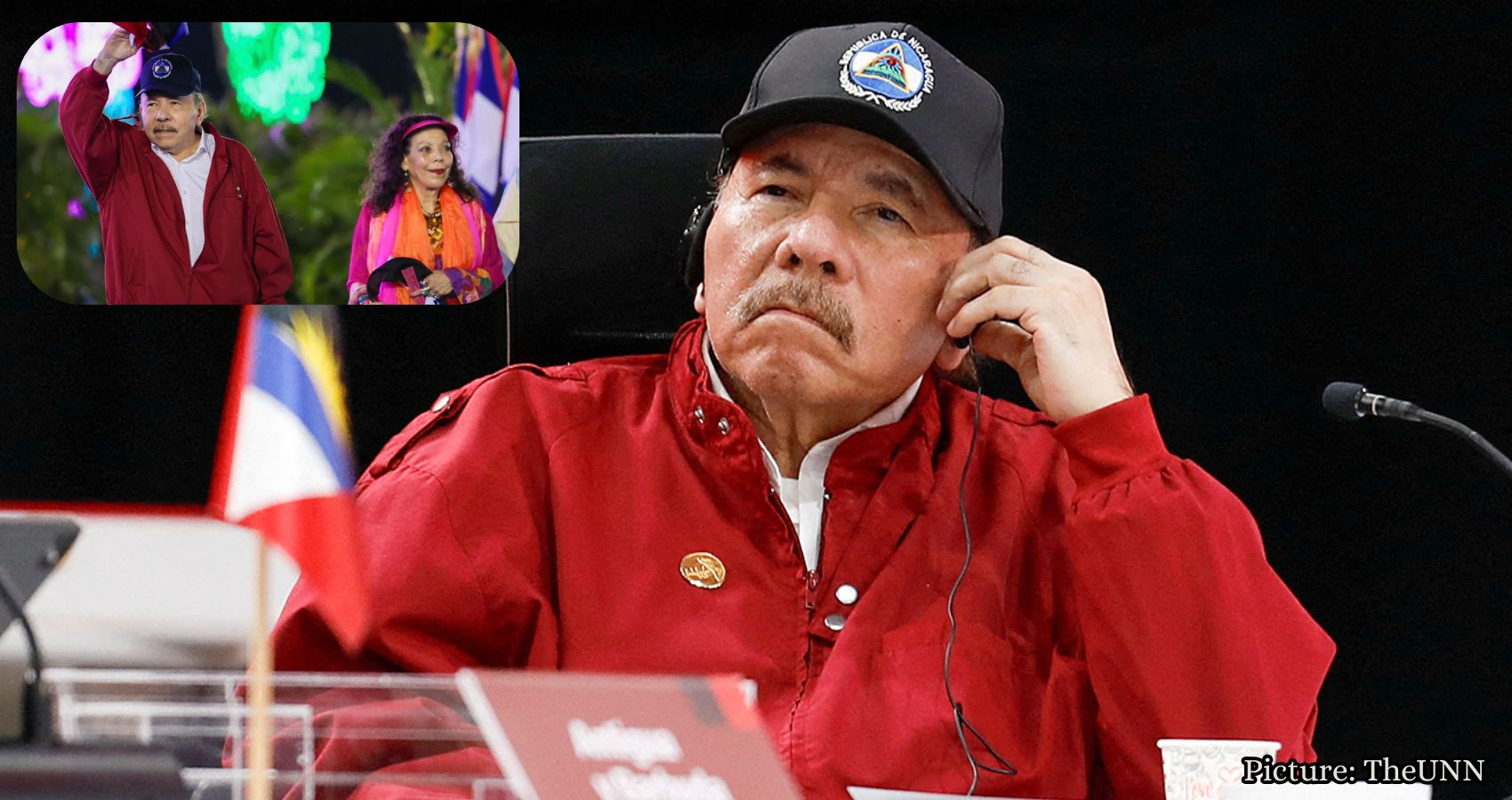
Nicaragua’s parliament is set to abolish elections, following President Daniel Ortega’s declaration that no future elections will be held, drawing widespread international condemnation.
Nicaragua’s lawmakers have announced plans to eliminate elections in the country, a move that follows President Daniel Ortega’s recent declaration that there will be no more elections. This decision has sparked outrage from the international community.
The announcement was made on Tuesday by Nicaragua’s congress, which is under the control of Ortega and his wife, Rosario Murillo. Lawmakers stated that the proposed constitutional changes aim to ensure Nicaragua’s “peace, security, and stability.” This legislative action aligns with Ortega’s earlier promise to halt elections, effectively closing off any potential avenues for opposition to challenge the government.
During a speech commemorating the 1979 Sandinista revolution, Ortega declared, “There won’t be any more elections here for them to try to seize the government and seize power.” He emphasized that the era of parties backed by the United States and the Somocistas returning to power is over, stating, “never again.”
Ortega’s declaration appears to eliminate the possibility of future electoral challenges as he and Murillo continue to consolidate their control over Nicaragua’s political institutions. The couple has expanded their authority through sweeping constitutional reforms that took effect in 2025. These changes included extending the presidential term from five years to six and placing legislative, judicial, and electoral institutions under presidential authority.
As Nicaragua’s longest-serving leader, Ortega is set to remain in power until early 2028. However, his recent statement effectively cancels the upcoming elections, which were scheduled for November 2027. Critics argue that Ortega has already undermined meaningful electoral competition in previous elections held in 2011, 2016, and 2021.
Many prominent opposition leaders have faced imprisonment, exile, or have had their Nicaraguan citizenship revoked. Additionally, opposition parties and independent civic organizations have lost their legal status. A United Nations group of experts has accused the Ortega-Murillo government of systematically violating human rights in a campaign to eliminate dissent and maintain power. Some of these alleged violations may constitute crimes against humanity.
The government has also been criticized for its violent crackdown on anti-government protests in 2018, which resulted in the deaths of over 300 individuals, according to international human rights organizations.
Ortega’s move to abolish elections has drawn widespread condemnation from foreign governments, including the United States. U.S. Secretary of State Marco Rubio stated, “Daniel Ortega’s declaration that under his family’s dictatorship, Nicaragua will never again hold elections lays bare their true authoritarian nature. Daniel Ortega and Rosario Murillo have abandoned even the pretense of popular consent.”
Rubio emphasized that the Nicaraguan people have the right to choose their own leaders through democratic elections, urging the international community to unite against the Ortega-Murillo dictatorship. He asserted that the regime cannot expect to maintain normal relations with other nations while undermining the fundamental principles of democracy.
The Trump administration has labeled the Ortega-Murillo government as a dictatorship and has imposed sanctions on government officials and their allies. The U.S. State Department has also enacted visa restrictions affecting more than 2,350 Nicaraguan officials and their families.
Volker Türk, the United Nations’ high commissioner for human rights, condemned Nicaragua’s legislative intentions, stating that “people of all political viewpoints must be allowed to vote and run for office.” He noted that these developments further deepen the severe restrictions on fundamental freedoms, dismantle civic space, and erode the rule of law.
As the situation unfolds, the international community continues to monitor Nicaragua’s political landscape with growing concern.
According to The Associated Press and Reuters.