
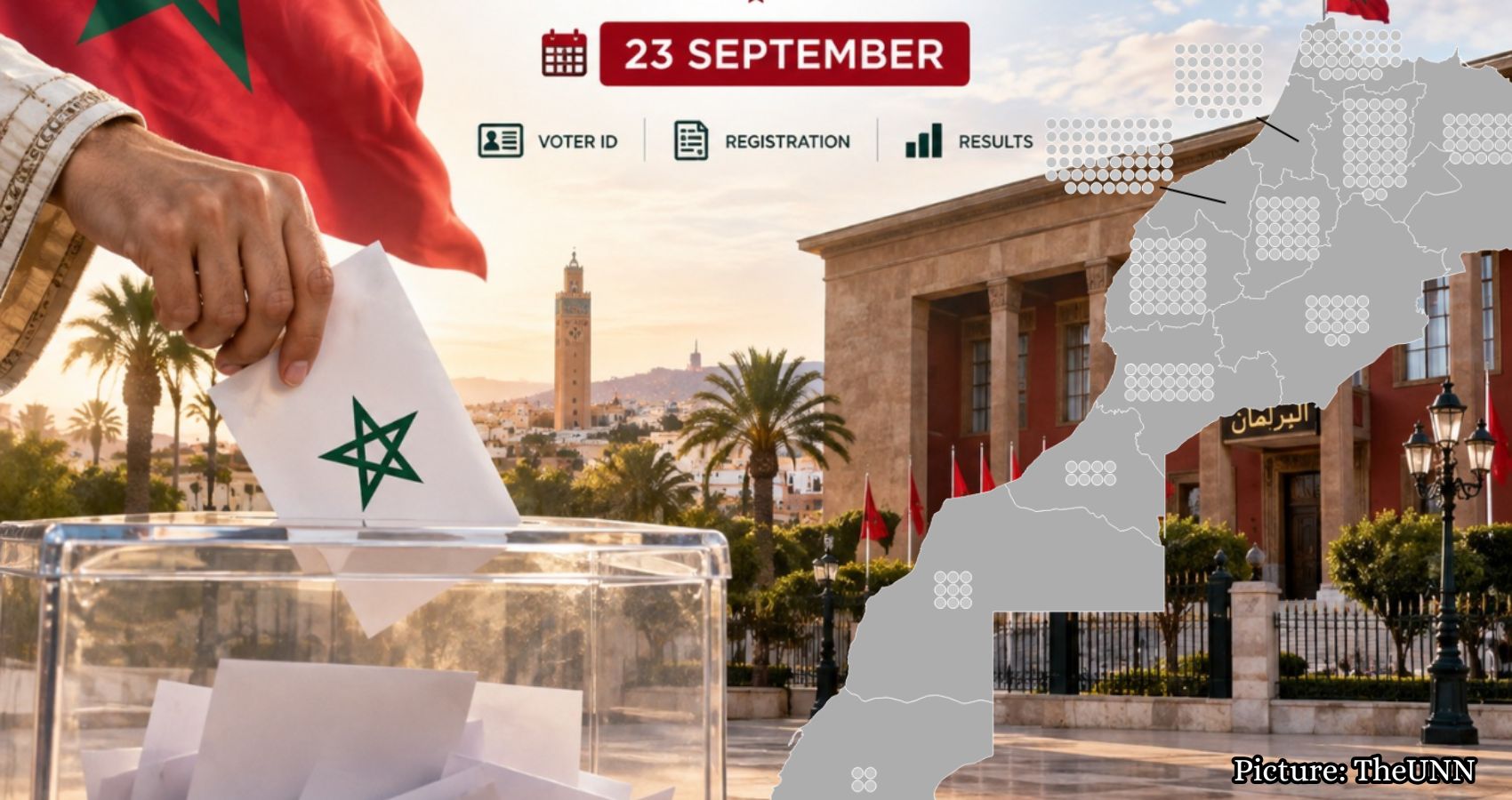
Morocco’s 2026 legislative election will shape the future of its House of Representatives, with results expected to be announced shortly after polling day on September 23, 2026.
Morocco is gearing up for its 2026 legislative election, which will determine the composition of the 395-member House of Representatives, the lower house of Parliament. This election is taking place against a backdrop of pressing issues such as job creation, public services, youth engagement, and political participation.
The election is crucial for shaping the next government of Morocco. It is important to note that the provisional results will be announced shortly after the election, but these results will undergo a validation process before they are finalized under the constitutional and electoral framework.
The 2026 election will fill 395 seats in the House of Representatives, with 305 seats elected through local constituencies and 90 allocated through regional constituencies. The election employs a system of direct universal suffrage and list-based proportional representation, allowing voters to select an electoral list rather than individual candidates. Seats are distributed using the largest-remainder method.
According to Morocco’s official election calendar, polling is scheduled for September 23, 2026, with provisional results expected to be announced starting September 24. These provisional results are part of the electoral process, which will be followed by a necessary validation procedure. The formation of the new government will occur after the results have been officially validated.
As of now, there are 15,801,162 registered voters in Morocco. The electorate is composed of 54% men and 46% women, with 55% of registered voters residing in urban areas and 45% in rural regions. Notably, voters aged 60 and above represent 29% of the registered electorate, while those aged 18 to 24 account for just 4%.
The election features a total of 27 political parties, according to Morocco’s official election portal, although the government’s candidate figures indicate 28 political formations, including a coalition created specifically for this election. Two independent candidate lists have also been submitted.
Key political parties participating in the election include the National Rally of Independents (RNI), the Authenticity and Modernity Party (PAM), the Istiqlal Party (PI), the Justice and Development Party (PJD), the Party of Progress and Socialism (PPS), the Socialist Union of Popular Forces (USFP), the Popular Movement (MP), the Constitutional Union (UC), the Alliance of the Left, the Front of Democratic Forces (FFD), and the Democratic and Social Movement (MDS).
Among the candidates to watch are Nizar Baraka, secretary-general of the Istiqlal Party and Morocco’s transport and logistics minister; Fatima-Zahra Mansouri, a leading figure in PAM and mayor of Marrakech; and Mehdi Bensaid, another senior PAM member. Other notable figures include Rachid Talbi Alami, Mustapha Baitas, and Mohamed Sadiki from RNI, as well as former Prime Minister Abdelilah Benkirane, who is seeking a return to the political scene.
The distribution of the 395 parliamentary seats spans across Morocco’s 12 administrative regions. Casablanca-Settat has the largest allocation with 69 seats, followed by Rabat-Salé-Kénitra with 49, Fès-Meknès with 47, and Marrakech-Safi with 46.
The Interior Ministry has reported 1,850 candidate lists and 7,288 candidacies for the election, averaging more than 18 candidates per seat. There are 1,615 lists for local constituencies involving 5,505 candidates, while regional constituencies feature 235 candidate lists, including 1,783 women candidates. In total, 2,658 women are contesting the election, with 875 running in local constituencies. Additionally, 227 sitting parliamentarians have submitted their candidacies.
A significant change in this election is the new rule regarding regional electoral lists, which must now consist exclusively of women candidates. Women contesting these regional constituencies are also permitted to stand in local constituencies.
The campaign has focused on several major issues, including employment, wages, housing, healthcare, education, infrastructure, and regional development. Youth participation has emerged as a critical theme, with many young Moroccans expressing concerns about job opportunities and public services. Political parties are leveraging campaign promises related to job creation and economic development to attract younger voters.
Additionally, Morocco’s preparations for co-hosting the 2030 FIFA World Cup are influencing the election, with significant infrastructure and investment projects expected to be key policy issues for the incoming government.
Vote counting will commence after polling, with votes allocated to electoral lists according to Morocco’s proportional representation system. The electoral quotient will determine the initial allocation of seats, with remaining seats distributed based on the largest-remainder rule. Candidates will receive seats according to their position on the relevant list.
Provisional results will be made available starting September 24, 2026, as per the official election calendar. However, these results will not represent the final stage of the electoral process, as they will undergo a validation process before the new government is formed.
For those seeking official updates, the Moroccan government’s election portal and information released by the Ministry of Interior will provide the latest news. The Constitutional Court will also play a role in the post-election validation process.
Once the election results are validated, the process will move toward the formation of the new government. The official election calendar outlines the appointment of the Head of Government and the formation of the new government as the final steps following validation. Thus, this election will not only determine the composition of the House of Representatives but also play a vital role in the constitutional process for establishing the next government.
This report is based on official election information and current reporting available at the time of publication. Results, candidate details, and other election information may change as authorities release further updates, according to The Sunday Guardian.