
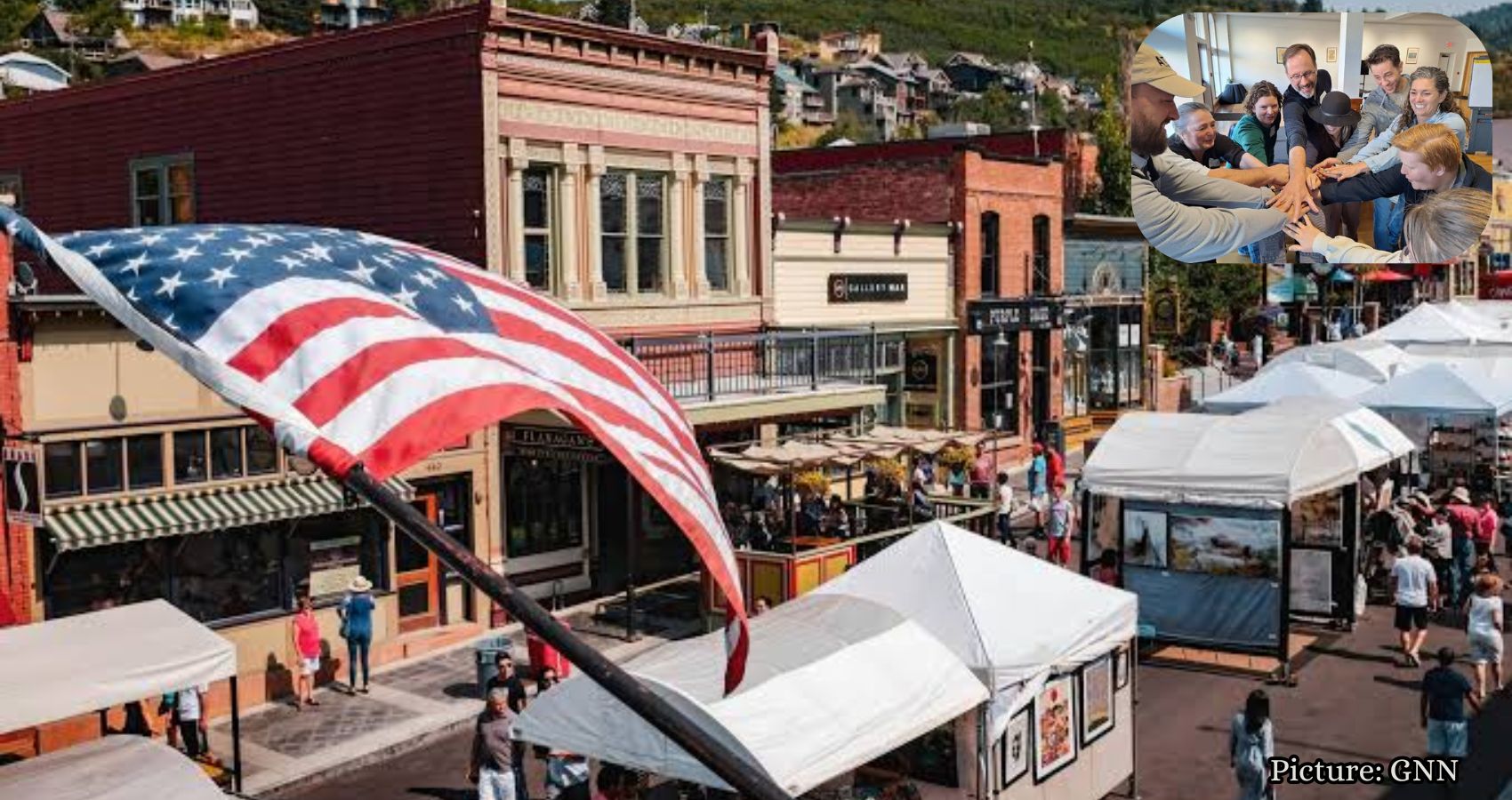
Washington State Main Street Program utilizes the Belonging Barometer to assess community connection and belonging, aiming to enhance the vibrancy of downtown areas across the state.
For decades, community revitalization efforts have primarily focused on quantifiable metrics such as the number of new businesses, jobs created, building rehabilitations, affordable housing units, and financial investments. While these metrics are significant, they do not provide a comprehensive view of community well-being.
The Washington State Main Street Program sought to address a different question: Do residents feel a sense of belonging in their downtown areas? To explore this, the organization turned to the Belonging Barometer.
The Washington State Main Street Program supports approximately 80 downtown organizations statewide, assisting communities in preserving historic sites while fostering vibrant and economically thriving downtowns. Although program leaders recognized the social value of their initiatives—such as bringing neighbors together and creating welcoming spaces—they found it challenging to measure these outcomes effectively.
“We’ve always known about the social impact of our work,” said Lydia Felty of the Washington State Main Street Program. “But articulating that social return on investment has been elusive.”
Traditionally, success was gauged through tangible outcomes like rehabilitated buildings, newly opened businesses, and job creation. While these metrics captured economic impact, they failed to address equally important questions: Do residents feel connected to their community? Do they feel welcome in downtown spaces? Do they believe they can influence their community’s future?
“We kept asking ourselves, ‘How do you know if an event achieved something beyond bringing people downtown or increasing sales for local businesses?’ Those metrics are important—but they don’t tell the full story,” Felty explained.
Upon being introduced to the Belonging Barometer by a longtime colleague, the team recognized its potential and began implementing it.
“The Belonging Barometer provides such a clear framework for how to approach this work with a very clear ‘why,’” Felty noted. “It’s difficult work, but the framework makes it accessible.”
Importantly, the survey was designed to be adaptable for various settings. Instead of measuring belonging in a broad sense, Washington Main Street tailored the survey to focus specifically on residents’ experiences in their downtown communities. Questions delved into whether individuals felt emotionally connected to their downtown, welcomed by others, and empowered to influence decisions affecting their community.
“The survey felt incredibly adaptable,” Felty said. “If it can work nationally, locally, in workplaces, schools, and communities, surely we can apply it to our own situation.”
Rather than launching the initiative statewide, the Washington State Main Street Program opted for a manageable pilot project. In the fall of 2024, four communities participated in the first cohort. The objective was to establish a baseline and understand how the Belonging Barometer could be applied in a Main Street context. Alongside the survey, the team incorporated historical research, site visits, and community interviews to gain insights into each downtown’s unique story and context.
Recognizing that belonging is deeply tied to place, they aimed for the data to reflect more than mere survey scores.
“We leaned into the idea of place-based belonging,” Felty explained. “What does it actually mean for people to feel like they belong in this specific downtown?”
Some of the most impactful insights emerged from personal stories. One participant recounted attending a sensory-friendly downtown parade with a grandchild who has autism. For that family, the event exemplified the downtown’s commitment to creating an accessible space where they felt welcome.
“That really stood out,” Felty said. “It was one of those moments where someone could genuinely say, ‘We belong here.’”
Such stories reinforced what many community leaders had long suspected: intentional programming can significantly influence whether individuals feel included.
The pilot project confirmed one of the team’s initial hypotheses: individuals engaged with their local Main Street organizations generally reported a stronger sense of belonging. While the team acknowledges that it is too early to draw broad causal conclusions, the findings provided valuable insights and a foundation for further exploration.
More importantly, the process itself began to shift conversations. Community partners and local organizations utilized the findings to rethink existing programs, considering who might still feel excluded, how volunteers could feel more connected, and what minor adjustments could make events more welcoming.
“Even if the data doesn’t immediately tell you to do X, Y, or Z, having belonging in the collective consciousness changes the way people think,” Felty stated. “It encourages organizations to make small adjustments and be more intentional about integrating resources that help people feel more connected.”
For Felty, one of the Belonging Barometer’s greatest strengths lies in its ability to help organizations measure something that many have long believed to be important but struggled to quantify.
“So often we’re measuring dollars, jobs, spending, or attendance,” she said. “Those are all important, but they only tell one part of the story.”
“Being able to measure belonging—being able to measure social impact—means we’re better able to create communities where people genuinely feel connected to each other and to the places they live. That’s the heart of the work.”
Following the pilot’s success, the Washington State Main Street Program is expanding to a second cohort of communities while continuing to learn alongside others using the Belonging Barometer. Felty encourages organizations not to wait until they have a perfect plan.
“The blueprint is already there,” she said. “You can pick it up, adapt it to your own context, and start learning.”
The Belonging Barometer provides organizations with a practical starting point and a growing community of practitioners eager to share their discoveries. Ultimately, while every community is unique, the fundamental question remains:
Do people feel like they belong here?
The first step toward answering that question is simply asking it.
Ready to get started?
Download the free Belonging Barometer Quick Start Guide and survey questions to begin measuring belonging in your community, according to American Immigration Council.